






OpenAsset Shred vs. Kantiv (formerly Joist.ai): An honest comparison for AEC proposal teams

Sep 30, 2026
9 min
Should you choose Kantiv (formerly Joist.ai) or OpenAsset Shred for your firm’s next RFP season? And if Shred costs more, what does that gap actually buy you?
These are the two questions every AEC marketing or bid team raises once Kantiv lands on the shortlist next to Shred, OpenAsset’s AI-powered proposal product. Both tools are built specifically for AEC proposal teams, which is why a feature-by-feature comparison matters more here than it would for a generic AI writing tool.
Below, we will examine where Kantiv is genuinely ahead, where Shred pulls ahead, an honest look at value, and a clear answer on which one is the best AI proposal-writing tool for your firm.
What is Shred and what is Kantiv (formerly Joist.ai)?
OpenAsset Shred: Overview
Shred is OpenAsset’s AI-powered proposal management layer for AEC marketing and bid teams, built to draft and assemble RFP responses using a firm’s own project history.
It includes Proposal Studio for drafting, collaboration, InDesign output, a configurable Go/No-Go scoring tool, Draft Reviewer for pre-submission gap checks, and AI Chat for searching and engaging with past proposal content. OpenAssets’ foundational model provider is Claude, built by Anthropic.
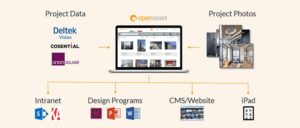
Shred can be used alone, but works best when used in conjunction with OpenAsset DAM, an AEC-specific digital asset management solution that syncs projects, people, and text assets into Shred.
Kantiv: Overview
Kantiv (formerly Joist.ai) is an AEC-native “pursuit intelligence platform.” It organizes a firm’s proposals, project narratives, resumes, images, and client history into one system that surfaces relevant expertise during a pursuit.
Are they in the same category?
Increasingly, yes. Both target AEC marketing and bid teams who need help drafting compliant, branded proposals under a tight deadline, and are well-regarded for their ability to do so.
The main difference is architectural: OpenAsset built an asset layer first over 20+ years ago (OpenAsset DAM), and added the AI proposal layer, Shred, on top in 2025. Kantiv built the proposal platform first, where files can be directly uploaded or integrated via Egnyte, and added an image layer in August 2026. Both companies now sell a bundle. The main questions you should consider when comparing the two are:
- How do each product’s asset-layer and proposal-layer compare?
- Which part of the bundle does your firm need the most?
Kantiv’s simpler asset layer reduces day-to-day asset-hunting pain for proposal teams, but it doesn’t replace the governance and taxonomy that a true marketing system of record provides, like OpenAsset’s DAM.
Shred vs. Kantiv (formerly Joist.ai): a side-by-side comparison
The table below highlights the key features an architecture, engineering, or construction firm may be looking for in proposal software, and how they compare between the two platforms.
| Criteria | OpenAsset Shred + DAM | Kantiv (formerly Joist.ai) |
| Multi-file RFP support | Can parse requirements from multiple files uploaded alongside RFP, including addenda, scope of work, evaluation criteria. PDFs, XML, PNG, JPEG, PPT/PPTX, and all major file formats supported | Single RFP/RFX upload capability, with addendum support. Support for multiple documents/file types unconfirmed |
| RFP Requirement extraction | Extracts verbatim RFP requirements into a structured matrix to draft against; proposal-level checking via AI Chat | Automated RFP analysis and requirement mapping; verbatim extraction and traceability depth unconfirmed |
| Pre-submission review | Draft Reviewer (Aug 2026): criteria gaps per response, plus whole-proposal RFP requirements. Qualitative findings, no score | Compliance check step in Workspaces. Granularity (per-response vs. whole-document) unconfirmed |
| Asset layer (DAM integration) | Full DAM: images, project and employee records synced from Deltek/Unanet, project sheet and resume generation, Portals, Text Library, image ranks, access controls | Image Hub: search without tagging, reverse image search, usage tracking, coverage-gap detection, IPTC/EXIF ingest, variants. Proposal-scoped. Kantiv also integrates with Egnyte, which offers some storage capabilities, but it doesn’t manage and contextualize assets the way a DAM does. |
| InDesign workflow | Drag-and-drop from Proposal Studio into a formatted layout, export into custom InDesign templates | Companion panel: search, chat, image drag-and-drop, personalization controls for font size and color, upload/sync; no layout/assembly automation |
| Go/No-Go scoring | Configurable survey: custom questions, High/Med/Low weighting, custom scoring bands | AI-assisted qualification. Pursuit history and analytics inform go/no-go; configurable weighted scoring not a marketed capability |
| SF-330 | Not automated; surfaces content to populate forms | Native generation |
| Task management | Section assignment in Proposal Studio, with email reminders | Full task layer: assignees, due dates, subtasks, activity log |
| Brand style guide/voice and tone enforcement | Features in development. Available indirectly via uploading a brand voice and tone style guide document, and prompting the AI to adjust tone and analyze brand voice compliance. | Voice and tone profiles, QA/QC style enforcement, brand voice analysis |
| AI model | Tailored to AEC workflows with input from experienced AEC marketers. Multi-model approach, primarily Claude (Anthropic); account-scoped. | Multi-LLM orchestration; OpenAI and Anthropic named, with ZDR agreements. The specific models used for each task are not publicly disclosed |
| AEC integrations | OpenAsset, Deltek Vision, Deltek Vantagepoint, Unanet, Procore (via OpenAsset DAM) | SharePoint, Egnyte (Jun 2026 partnership). Deltek Vantagepoint |
| Security | SOC 2 Type II | SOC 2 Type II, ISO 27001, CMMC Level 1, (vendor-stated) |
| Price tier | Custom quote tiered by firm size/users, typically low to mid five figures annually (Shred layer only). | Custom quote, but pricing structure not publicly available. Priced lower than Shred, per buyer reports. |
This reflects OpenAsset’s competitive assessment as of September 2026, cross-checked against Kantiv’s website, its Adobe Exchange plugin listing, and its August 2026 Image Hub launch materials.
Where Kantiv lands ahead
If you’re comparing the two tools purely as proposal software, Kantiv is ahead of Shred in the following categories:
1. Native SF-330 generation
Shred can surface SF-330 content, such as firm name, licenses, and resume answers, but doesn’t populate the form. Kantiv generates a form. This is an important workflow difference for firms dealing in federal and state DOT work.
2. Task management
Kantiv has a dedicated task management layer with assignees, due dates, subtasks, and an activity log. Shred has section assignment inside Proposal Studio with email notifications.
For firms who want project-management style tracking within the proposal tool, Kantiv’s robust approach may work better. Shred’s more lightweight approach is a better fit for teams who already have a broader task management system, and just need a reliable way to notify and assign contributors when they’re needed for proposal input.
3. Voice, tone, and style enforcement
Kantiv has built-out features to maintain distinct voice and tone profiles for proposals, LinkedIn, Instagram, and award submissions. It also has readability scoring, passive voice detection, a configurable Words to Avoid list, and brand voice analysis.
Shred’s equivalents are still developing. While a workaround is achievable by uploading voice and tone guidelines to Shred and prompting the AI to follow certain tone requirements, this process is more manual and cumbersome than Kantiv’s.
Where Shred outperforms Kantiv
Shred has several things going for it over Kantiv, especially when it’s combined with OpenAsset DAM.
1. Better depth and reach of the asset layer
Kantiv competes with the niche of OpenAsset’s DAM in two ways:
- Through its manual uploading function and Egnyte connection. Kantiv’s AI helps you draft proposals from whatever images, resumes, and project narratives a proposal team manually uploads or connects via Egnyte.
- Through Image Hub, which allows you to upload visual assets, like project photos.
While these features may be enough for some firms, they were built for pursuits, and aren’t as deep and robust as OpenAsset’s DAM layer. OpenAsset DAM holds project and employee records synced from Deltek or Unanet, generates project sheets and resumes from those records, shares content externally through Portals, stores governed boilerplate in the Text Library, and controls approval state and access permissions asset by asset. Essentially, it can hold your entire firm’s collection of assets.
That serves your web team, your recruiters, your award submissions, and your BD group — not just the proposal team. And, when it’s linked to Shred, it can offer a deeper and more contextualized well of content to pull from for proposal generation than what Kantiv offers.
2. RFP requirement extraction & draft review
Shred extracts requirements verbatim and in document order, deliberately without merging or reorganizing them, so the marketer stays in control of the outline. Draft Reviewer, which shipped in August 2026, then checks every response against its corresponding criterion and sweeps the whole proposal for missing structural requirements — mandatory sections, attachments, certifications, formatting rules. Findings are in plain English, flagged red for hard violations.
While Kantiv also has requirement extraction and a final review process, it may not be as robust as Shred’s. One mid-size engineering firm we spoke with used Kantiv and noticed that a 3% DVBE (Disadvantaged, Veteran-Owned Business Enterprise) teaming requirement slipped past the tool’s analysis, surfacing only at 4 pm on a Friday before the deadline, forcing a last-minute restructure. They reported, “This RFP fooled Kantiv”. For firms dealing with very complex requirements or who want better assurance on compliance, Shred may be the better option.
3. Multi-file support for RFP intake
Most RFPs don’t arrive as one tidy PDF. There’s the actual RFP, but then there’s also a scope of work, an evaluation criteria attachment, your BD team’s notes from three client conversations, and an addendum that lands two weeks in.
As of September 2026, Shred now offers multi-file support in its Pursuit Workspace, which allows all these documents to be uploaded alongside the RFP. Every major file format is supported, including PDF, Word, Excel, and PowerPoint. Shred analyzes all of them together as a single pursuit, and parses the requirements to flag important connections and inconsistencies between documents. For example, if a programming document mentions the client is targeting LEED Platinum and the RFP only says “sustainability,” Shred connects the two and surfaces it before you start writing.
Kantiv doesn’t publicly advertise multi-file support, and its published workflow heavily centers on parsing just the RFP/RFX document, with some addenda support advertised. This implies its multi-file support capabilities aren’t nearly as robust as Shred’s. For firms with pursuits that routinely involve multiple supporting documents alongside the RFP, Shred may be the better choice.
4. Configurable go/no-go grading
Shred’s Go/No-Go became fully configurable in June 2026. Admins can add, edit, reorder, and section their own questions, assign High/Medium/Low weighting, and set custom scoring bands for No Go, Discuss Further, and Go. Firms with an existing qualification process bring it in as-is. Firms without one start from the defaults.
Kantiv’s AI-based pursuit analytics inform go/no-go decisions well, but it lacks admin-controlled weighted scoring. This matters if your firm needs granular control over go/no-go decisions and wants to manage them within your proposal platform.
5. Track record
OpenAsset has been in the AEC industry for 20+ years and has over 1,100+ clients, many of which are internationally known, award-winning firms that make prestigious lists like the ENR top 20 contractors. Kantiv was founded in 2022 with a $4M seed round and boasts 200+ clients.
While this doesn’t necessarily say much about each company’s product quality, many firms may prefer the safe, industry-standard choice of OpenAsset over the new kid on the block.
Why the OpenAsset DAM layer changes what’s possible
A proposal AI tool without a connected asset library is only as good as what someone remembers to upload. Kantiv drafts proposals from whatever the proposal team manually uploads or connects with Egynte — which, depending on their bandwidth and your firm’s repository of past proposals, could be a lot of information to go off of, or just a small handful of proposals.
By contrast, Shred draws from OpenAsset’s structured project database where past project photos, employee CVs, completed project data, and proposal language are already organized and current. This much broader, deeper collection of assets allows Shred’s AI to have a deeper, more context-rich understanding of not just how your proposals are structured, but how your entire firm is structured.
It can surface and recommend relevant people, projects, images, and more from your firm’s entire project history to use in your proposals. It understands what resumes, text, and project references are associated with your best work, and recommends content that not only fulfills the technical RFP requirements, but considers your firm’s greatest hits and winning proposal formulas.
One AEC firm summed up the practical effect:
“Shred alone is a great tool but not the tool. You need OpenAsset for it to make sense.”
— OpenAsset Shred Customer
No other AI proposal tool in the AEC market combines a native DAM with an AI proposal layer the way Shred and OpenAsset DAM do.
What about AI model transparency, data governance, and security?
Security is one of those areas where almost every credible B2B SaaS vendor can say the same few things: encryption in transit and at rest, single sign-on, some form of SOC 2. Both OpenAsset and Kantiv clear that bar. The differences that actually matter show up a level down — in what’s been audited, how deep that audit goes, and how the product is actually built underneath.
General security
Kantiv describes itself as SOC 2 Type II and ISO 27001 compliant.
OpenAsset holds a SOC 2 Type II report tested across all five Trust Service Criteria: Security, Availability, Processing Integrity, Confidentiality, and Privacy. OpenAsset is also actively working toward ISO/IEC 27001 and ISO/IEC 42001:2023 (the newer standard specifically for how AI systems are governed, not just how data is generally secured). Both of these frameworks are in progress and not currently certified.
LLM architecture and data governance
Kantiv’s site states that it uses multi-LLM orchestration with Zero Data Retention agreements in place with OpenAI and Anthropic.
OpenAsset Shred is powered by advanced LLMs, provided by Anthropic, and deployed within a private, tenant-isolated environment. This solution is tailored for AEC workflows with input from experienced AEC marketers. OpenAsset does not use customers’ content to train AI models that serve other customers.
Here’s why that matters: Kantiv’s Zero Data Retention agreement is a promise about what a third-party provider does with your data once they’ve received it on their own system. Essentially, it’s a policy layer built on top of product architecture, and your content still leaves the Kantiv product environment to generate a response.
OpenAsset Shred was built the other way around. Before any policy or training exclusion enters the picture, the product architecture generates an answer within the product. OpenAsset’s LLMs and foundation models run inside a private, tenant-isolated environment that OpenAsset controls, not one that a third-party provider operates or has access to. Your content is never sent to a model provider’s own infrastructure to generate a response.
This means your content stays yours in practice, not just on paper: it’s pulled from your own account and combined with the model at the moment of the request, never retained between sessions, and never shared with other customers or the model provider.
The fact that OpenAsset Shred’s AI workflows were designed with input from experienced AEC marketers also ensures that its outputs reflect the industry-specific nuances of AEC proposal writing, something that off-the-shelf LLMs can’t do.
How much does each cost?
Neither vendor publishes pricing; both require a sales conversation.
From our internal data, Kantiv seems to price based on users, modules selected, and optional integrations, with each implementation configured per firm. OpenAsset Shred prices based on firm size and users. Buyers who have evaluated both consistently report Kantiv coming in slightly lower than OpenAsset Shred.
However, Shred’s price reflects one of two products that are usually bought together but priced independently. OpenAsset DAM is separate, and when combined with Shred, often comes out to a better value than what you would get if you purchased Kantiv plus an asset management system. So the real comparison is three-way:
- Kantiv: Pursuit platform with proposal-scoped image management.
- OpenAsset Shred alone: OpenAsset’s AI proposal layer, which is directly comparable to Kantiv.
- OpenAsset Shred + DAM: An AI proposal tool layer that draws on a firm-wide asset and records system to offer a richer proposal creation experience and a solution to asset management needs that go beyond proposals.
Firms that already run a DAM, or genuinely don’t need one, should weigh Shred standalone against Kantiv. Firms whose project photos, resumes, and boilerplate live in scattered folders should weigh the bundle, and should recognize that it’s a bigger purchase that solves a bigger problem.
To learn more about what ROI you can get from Shred, check out our ROI calculator.
Who should choose Kantiv
Kantiv is the better fit for firms whose bottleneck is the proposal workflow itself rather than the content underneath it. Choose Kantiv when:
SF-330s are a regular part of your work
Native form generation is a shipped Kantiv capability and a Shred gap. If you’re bidding federal or state DOT work with any kind of volume, that’s a straightforward answer.
Your proposals involve a lot of contributors
Assignees, due dates, subtasks, and an activity log give you a real coordination layer. Shred’s section assignment with email reminders covers a simpler process, but it isn’t built for a ten-person pursuit with overlapping deadlines.
Brand voice consistency is your recurring frustration
Kantiv includes distinct tone profiles, readability scoring, passive voice detection, a Words to Avoid list, and brand voice analysis. If you’ve been losing hours editing AI output back into your firm’s voice, Kantiv’s tooling is more built-out than Shred’s workarounds.
You don’t have a DAM and don’t plan to buy one
Kantiv’s manual upload and Egnyte connection plus Image Hub covers a proposal team’s day-to-day needs, especially for smaller teams who only have a handful of proposals to upload and use as a reference anyway. If no one outside proposals is hunting for assets, or you don’t have hundreds of past projects with complex permissions and associated assets you’d like to inform your proposal process, you may not need the wider layer.
Budget is the deciding factor
Buyers who evaluate both report Kantiv coming in lower. If your ceiling doesn’t stretch to a DAM-plus-AI platform this cycle, Kantiv may be the more budget-friendly option.
Who should choose OpenAsset Shred
Shred is the better fit for firms where the proposal problem is really a content problem, and for teams where a missed requirement carries real cost. Choose Shred when:
Your assets need to serve more than proposals
Recruiting, award submissions, the website, BD — if four teams are hunting through the same folders for the same project photos, an image library scoped to pursuits won’t fix that. This is the clearest case for bundling OpenAsset DAM and Shred.
You already use, or are considering, a DAM
With OpenAsset DAM, your approved images, project records, and employee records are already structured and synced from Deltek, Procure, or Unanet. Shred reads straight from them. Adding a second, partial library alongside the real one means maintaining both indefinitely.
A missed requirement would disqualify your submission
DBE, DVBE, and other state-specific set-asides are non-negotiable on your bids, and you want verbatim extraction plus a structured review pass before the deadline.
Your RFPs come with a pile of supporting documents
If your pursuits regularly include a scope of work, evaluation criteria, site visit notes, BD notes, and addenda, Shred’s ability to contextualize all of these as a single pursuit and surface connections and contradictions between them is a game-changer.
You want Go/No-Go to reflect how your firm actually decides
Shred allows you to create your own questions, your own weighting, your own scoring thresholds — configured by an admin and applied consistently across every pursuit.
You have a big project history to draw on
Shred excels when it’s working from a robust library of 20+ past proposals, resumes, project photos, and won/loss data stored in a structured, contextualized way within your DAM. If you have a library of such assets, using OpenAsset Shred + DAM is the best way to use them to build winning proposals.
You run Procore, or Unanet and want that data in the loop
Not just manually uploaded files, but live project data feeding the draft.
The bottom line
Assessed purely as proposal software, Kantiv and Shred are very close. Kantiv is ahead on SF-330 generation, task management, and voice and style enforcement. Shred is ahead on requirement extraction, pre-submission review, and configurable bid qualification. A reasonable firm could choose either one.
However, the comparison changes when you widen the frame. Kantiv is a pursuit platform with a less built-out asset layer. Shred is a proposal layer sitting on twenty years of asset infrastructure.
Which one is the better purchase for your firm depends less on a feature checklist and more on the answer to this question: is your team slow because the proposal process is clunky, or because the content you need is scattered across drives, inboxes, and people’s memories?
If it’s the first, compare the two proposal layers directly and pick the one that fits your workflow. If it’s the second, you’re not really shopping for proposal software; you’re shopping for an asset management solution that can support your proposal process, which OpenAsset provides.
How to take action now:
- Pull your last three lost or near-missed RFPs and check whether a buried requirement contributed.
- Ask where your project photos, resumes, and boilerplate live today — then ask your recruiting and web teams the same question and see whether you get the same answer.
- If SF-330 generation or contributor coordination is critical, demo both and compare those workflows directly.
- If OpenAsset DAM is already in your stack, ask your account team what a Shred trial would look like. See how OpenAsset DAM organizes AEC project assets.
Frequently asked questions about OpenAsset Shred vs. Kantiv (formerly Joist.ai)
Kantiv is cheaper. What does Shred’s higher price actually buy?
Mostly, depth and a connected data layer. Shred extracts compliance requirements verbatim into a structured, traceable matrix rather than a review pass, and its price reflects an AI proposal layer built to work with OpenAsset’s governed project database, current photos, CVs, and approved boilerplate, rather than a few past proposal files the proposal team uploaded. You’re paying for the quality and currency of the data the AI draws on, not just the AI.
Does Shred have an InDesign plugin like Kantiv does?
Not exactly, and it’s not a like-for-like comparison. Kantiv’s InDesign companion panel does search, chat, image drag-and-drop, compliance mapping, proposal upload, and syncing; but nothing confirms it assembles a formatted layout. Shred’s InDesign workflow runs through drag-and-drop from Proposal Studio, pulling already-formatted content blocks directly into your document.
How does Shred prevent the kind of missed compliance requirement described above?
By turning the RFP into a requirements checklist instead of leaving compliance buried in prose. George Bains, OpenAsset’s VP of AI Innovation & Enablement, frames it this way: a requirement scattered in an appendix becomes its own line item once it’s extracted, which makes it harder to lose under deadline pressure than a single mention deep in a 40-page document.
How do Shred and Kantiv compare on RFP criteria checking?
Both handle compliance checking against RFP criteria.
Kantiv offers a dedicated criteria-checking step that scores a finished proposal against an RFP’s requirements.
Shred pulls requirements into a structured compliance matrix you draft against, so individual requirements are harder to lose in the prose. Once the proposal draft is finished, the Draft Reviewer feature flags any potential problems for further review.
Neither replaces a human compliance review, and neither is a clear winner. Weigh which side of the workflow matters more to your team.
Do I need OpenAsset DAM to use Shred?
Shred is sold and priced as its own product, so technically, no. But Shred’s core value comes from pulling project photos, employee CVs, and approved proposal language automatically from OpenAsset DAM. Without that connection, you’re back to manually feeding Shred the same way you’d feed Kantiv.
Kantiv launched Image Hub. Doesn’t that make OpenAsset DAM redundant?
No. Image Hub hosts project images and is scoped to pursuits. OpenAsset DAM holds project and employee records, which can be manually uploaded or synced from Deltek or Unanet, generates project sheets and resumes from those records, shares content externally through Portals, stores governed boilerplate, and controls approval state and permissions asset by asset, for the whole firm. This makes OpenAsset DAM a much more extensive asset layer solution than Image Hub.
Eric Liou is the Chief Product Officer at OpenAsset, where he leads product vision and strategy across product management, design, and AEC marketing innovations. With extensive experience in product leadership, he has built a strong track record of advancing AI-driven solutions that enhance efficiency, collaboration, and impact for industry professionals.
At OpenAsset, Eric is focused on building tools that streamline workflows and empower AEC firms to succeed in an evolving landscape. He is passionate about the intersection of technology and user experience, and is committed to delivering the next generation of AI-powered solutions tailored to the unique needs of AEC professionals.