
Proposal Writing Resources for AEC Firms | OpenAsset Blog

How to create winning proposals in 2026: Structure, strategy, and best practices

Mar 26, 2026

scott-graham-5fNmWej4tAA-unsplash-scaled-1

Last Updated March 26, 2026

Key takeaways

  • Winning AEC proposals are built around client priorities, clear differentiation, and measurable past performance.
  • Structure matters. Align your proposal content with how owners and evaluators score RFPs.
  • Visual clarity and digital readability are now essential, not optional, for proposal success.
  • Consistency, efficiency, and collaboration improve win rates across multiple pursuits.
  • The most successful AEC firms treat proposals as a repeatable, measurable process, not a one-off task.

Guidelines for writing winning AEC proposals in 2026

If you work in the architecture, engineering, and construction (AEC) industry, then you are at least familiar with RFPs and proposals. You know how important proposals are to the business development process, and how much time and effort go into their creation. 

This guide on how to create winning AEC proposals has everything you need to create high-quality proposals that win projects and grow your business. 

Table of contents

Proposal writing basics for AEC professionals

Common reasons proposals fail

  • How to manage the proposal workload

AEC proposal structure: what to include in your AEC proposal

  • Cover letter/letter of interest and executive summary
  • Project understanding
  • Project management and project execution plan (PEP)
  • Relevant experience and team resumes

Step one: tailor the resume section to the SOW

Step two: provide concrete examples

  • Use past performance results to strengthen future proposals

Step three: be specific with certifications

Step four: emphasize what makes each team member great

Step five: avoid jargon

  • Pricing

Best practices for AEC proposal writing

RFP response tips for architecture, engineering, and construction firms

  • Use impactful photography
  • Showcase your brand
  • Organize your proposal for easy scanning
  • Pay attention to font
  • Use thoughtful graphics
  • Design for digital reviews

Best practices: seven tips on how to make proposal writing easier in 2026

Build and maintain your own specialized content library

  • How to maintain your own content library

Improving your efficiency with AI support tools

Collaborate with your technical team

  • How to communicate with your technical experts

Edits and revisions: proposal pre-delivery checklist

Submit your proposal and start reporting

Stay up to date on the latest proposal creation tips

Use analytics and track what’s winning

Make your proposal process repeatable

Proposal writing basics for AEC professionals

Proposal writing is one of those subjects on which a lot has been written, but very little has been said. Sure, there are dozens of proposal writing guides out there, but few of them are available outside of business school, and none of them equate proposal writing to the art form that it is. 

This guide on proposal writing for AEC professionals aims to correct that oversight by acknowledging that proposal writing is an incredibly complex, analytical process with many facets that require full collaboration from the entire firm. Winning proposals also require:

  • CreativityWinning proposals do more than answer the RFP; they impress with their creativity and persuade with the unique storytelling in which they present information to the client.
  • Writing Ability – Writing a winning proposal calls for more than technically correct grammar. At its core, a winning proposal is a persuasive writing assignment, where you should showcase the merits of your firm and also move the client to action.
  • Design Skills – Winning AEC proposals are built on quality design. Lacking a design element, your proposal will read as a bland series of black-and-white text. The best proposal writers are also thoughtful with their layout and consider how the proposal will be read, i.e., on a device or as a physical document. 
  • Business Acumen – Beyond creativity and design, creating a winning proposal requires an in-depth understanding of the project being proposed and the strategies, decisions, and capabilities that impact the success of that project. 
  • Industry Expertise – Every proposal includes a section on the firm’s honors, awards, and qualifications, but winning proposals are more than a list of accolades. The best proposals demonstrate the firm’s unique qualifications and ability to do what other firms cannot. If the firm provides exceptional client service, then make it a point to demonstrate how the firm goes above and beyond for its clients. 
  • Digital Assets – Architects, builders, designers, and engineers rely on digital assets to showcase their work, demonstrate their capabilities, and promote their brands. As such, digital assets like charts, data tables, property images, 3D renderings, and branding material are also integral to the proposal creation process. 

As shown by the length of this introductory section, winning proposals require a lot more than one person can contribute. That’s why, above all else, winning proposals require teamwork and collaboration from the entire firm. 

Fortunately, there are tools available that enable collaboration and make the proposal creation process more straightforward. Read more about them in this guide on How to Help Your AEC Firm Win More Business.

Common reasons proposals fail

You can write a technically excellent proposal and still lose. It happens more often than most AEC firms want to admit.

The content of your proposal is only part of what gets evaluated. There are also all the unspoken details, from how the proposal is organized, whether it’s compliant, and whether your team had the bandwidth to do it right, that shine through in your work.

These are the writing equivalents of conversational soft skills. Just like how we pick up on numerous subconscious signals that make up a person’s “vibe” during face-to-face conversation, your proposal will give off a vibe based on how it is organized and written.

When OpenAsset conducted a report on the AEC industry in 2024, they found that 63% of marketing teams spend over half their time working on proposals. At the same time, only 25% of respondents thought that they could actually complete every proposal their company targeted.

There are a lot of reasons this can happen:

  • Missed or misread compliance requirements – RFPs are dense, and a single missed requirement can get your proposal disqualified before an evaluator reads a word of your narrative.
  • The wrong pursuit: go/no-go problems – Not every opportunity is worth chasing, but without a structured decision process, it’s easy to pursue on instinct instead of data. Every low-fit pursuit you chase is time and budget pulled away from one you could actually win.
  • Weak or inaccessible past project content – Your firm’s history is one of your strongest selling tools, but only if you can actually find it when a deadline is looming. When project data and past proposals are scattered across shared drives, inboxes, and individual desktops, teams default to whatever content is easiest to grab rather than what’s most relevant and compelling.
  • Poor team coordination and last-minute scrambles – When workflows aren’t clear, and content lives in silos, the final hours before a deadline become a sprint to patch everything together, and quality suffers. Strong proposals are built methodically, not assembled in a panic.

How to manage the proposal workload

The good news? None of these is fixed by working harder. They’re fixed by working smarter, with clearer processes, better content management, and the right tools supporting your team from the moment an RFP lands up until you submit.

Take compliance requirements as an example. The “work harder” version of this process is to take hours of extra time, double and triple checking that you met all compliance requirements, painstakingly sifting through every word of both your proposal and the original RFP.

This is as close to a foolproof method as you’ll find, but also one that you might be hard-pressed to find the time and manpower for, particularly if you are one of the vast majority of AEC marketing teams that are less than a dozen strong.

The “work smarter” method is to use a support tool like Shred.ai that can extract and track requirements so nothing slips through. While not a full replacement for a pair of proper human eyeballs, programs like Shred.ai offer an additional guardrail between you and a compliance error you just happened to miss. You can also study what already works. There’s no shame in learning from past winning RFPs or studying what your competition is doing that’s working.

AEC proposal structure: What to include in your AEC proposal

Now that you understand what it takes to write a winning AEC proposal, we can delve into the actual proposal development process. Like building a skyscraper or erecting a home, creating a winning AEC proposal starts with a plan. Fortunately, the majority of AEC proposals utilize a similar structure. As a starting point, we even created a downloadable architecture proposal template for you to follow. Once you’ve downloaded the outline, you’re ready to start customizing and applying the following sections, where applicable.

Cover letter/letter of interest and executive summary

The cover page of your proposal is different from your cover letter/letter of interest and executive summary. The cover page is usually creative and includes branding material like the firm’s logo, whereas the letter of interest and executive summary answer the question. 

“What can your firm do for me, and why should we hire you?”

This is the section in which you make the case for choosing your firm over the competition by providing the client with all the information they need to feel confident in their decision to hire your firm. 

More than a list of accolades, your executive summary should highlight the gap between what the prospective client knows and what they want to know. In other words, your executive summary should:

  • Explain the Problem/Project – Explain the problem/project in one or two sentences. Be specific and include quantifiable measurements, if possible. Ex: Schools in this district have had systemic problems with chemically sensitive individuals becoming sick from off-gassing of various commonly used wall and floor coverings.
  • Describe the Desired Outcome – Describe the ideal state when your firm provides the perfect solution. Do not provide any details of the solution just yet. Ex: The building we erect will be a model of environmental protection and resource conservation.
  • Introduce the Proposed Solution – In a series of short paragraphs, detail how your firm will reach the solution. Ex: Our firm will use non-toxic, eco-friendly insulation, wall coverings, and floor treatments. We will hire subcontractors familiar with the installation of these materials and who pledge to use green building practices. See the Materials page for more details.
  • Illustrate How Your Proposal Overcomes Risk – Use plain language to describe the risks to your proposed solution and how your firm plans to overcome them. Ex: Installing landscape watering systems requires removing several large trees, which the team will save and relocate. The team will also preserve and protect the nearby creek. See the Environmental page for more details.
  • Ask for the Business – In as few words as possible, describe the decision that you want the executive(s) to make. Be specific. Ex: If you’re as excited about our design concepts as we are, we’d love the opportunity to develop a detailed plan that includes specific costs, schedules, and a list of subcontractors.

Project understanding 

The project understanding (alt. project description) section of an AEC proposal is a high-level overview of the project’s objective, its essential qualities, and the reasons why your firm would like to undertake the project.

Like an elevator pitch, the project understanding section should briefly answer the “what” and “why” of the project without delving into the “how”. Consider the challenges the client is dealing with and why those challenges affect them. Don’t forget to briefly identify the site, key design/engineering features, aesthetic considerations, and a broad timeline for the project.

The following is an excerpt of a project understanding section taken from a real proposal submitted to the City of Portland and related entities to deploy a new transportation and land use strategy in the area.

“Forest Avenue is a vital link connecting downtown Portland to its most dense outlying neighborhoods, retail and employment centers, the University of Southern Maine, and also to the outskirts of the City of Westbrook. 

At present, the study area between Park Avenue and Woodford’s Corner is most visibly used as a vehicular throughway by private autos. Two bus routes also use this section of Forest Avenue, although most passengers are not from the immediate vicinity of the study area…

The [AEC Firm] team offers a project approach that will recognize these differences and will guide the city and the community in selecting a transportation and land use strategy that will be sensitive to the contextual details within and outside the study area.”

Scope of work (SOW) and technical approach 

A Scope of Work (SOW) is a fundamental piece of every AEC proposal, meant to describe what the firm is looking to achieve as a result of the RFP. The SOW also helps the firm meet client needs and clearly defines what could be included in the resulting contract. 

In other words, the scope of work section of the proposal should outline what your firm will do for the client. Often, a client may provide a scope of work in the RFP and ask firms to address how they will approach that scope. 

In this case, the scope should explain how the firm will perform the tasks outlined. It should also contain an overall timeline, detailed milestones, reports, charts, tables, and all deliverables.

Project management and project execution plan (PEP)

The project execution plan (PEP) is the section of an AEC proposal that governs project operations and management. It outlines how the team will meet the project scope and fulfill contractual requirements. The goal of the PEP section is to: 

  • Describe a project-specific plan strategically and tactically.
  • Address the most effective methods.
  • Outline ways to maximize efficiency in project execution.
  • Highlight project-specific actions that comply with project goals and objectives.
  • Provide detailed project risk management plans.
  • Explain how the team will execute the project while following risk management procedures.

The following is an excerpt from a project execution plan by the U.S. Department of Energy and related entities to build a physical science facility at the Pacific Northwest National Laboratory. 

“The Department of Energy (DOE) is required under the Tri-Party Agreement with its regulators to complete surplus facility disposition and remedial action clean-up of the Hanford Site 300 Area by 2015. 

With about half of the space used by Pacific Northwest National Laboratory (PNNL) in the 300 Area supporting their research programs, the DOE Office of Science (SC) has undertaken the Capability Replacement Laboratory Projects (CRL). The CRL projects will ensure the long-term viability of the PNNL and preserve the following vital research capabilities…”

Project execution plans can differ widely depending on the size of the project and the client requesting the proposal. The PEP for one proposal may consist of a small section, whereas another proposal might be more extensive. Below you will find several project execution plans submitted to the federal government for a variety of different projects. 

Relevant experience and team resumes

The resume and relevant experience section of an AEC proposal is the first time the client meets your team. Regardless of the agency, customer, or project, the resume section of your proposal should contain:

  • relevant experience, 
  • education, 
  • certifications, and 
  • training. 

This information should be readily available and easy to access. If it is not, then consider researching a digital asset management system to create employee resume documents at speed

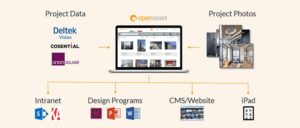
With a digital asset management solution like OpenAsset, it’s easier to upload documents (resumes, staff photos, certifications, etc.).

Step one: Tailor the resume section to the SOW

Relevance is key to creating a great resume proposal, and the same is true of the resume section. That’s why the first step in a great resume section is filtering for experience, skills, and relevant expertise. If the experience isn’t applicable to the scope of work, then it should be omitted. 

Step two: Provide concrete examples

Avoid language like “leveraged expertise and led development team to enhance system functionality.” It’s deliberately vague and means nothing to everybody. Instead, provide concrete examples of the expertise applied and areas of measurable improvement. Don’t forget to include the relevant facts and figures.  

Use past performance results to strengthen future proposals

It’s just as important to think about which examples you talk about. Any proposal writer is always watching for opportunities to leverage a unique connection. But it can sometimes feel a bit like playing a game of darts. There’s a lot of working off your gut, and if you don’t get any feedback, then you can’t even train your gut to make good guesses!

With robust analytics, however, you can rely on something a little more concrete than a good feeling. Every proposal you send is a data point, and once you get enough data points, you can start comparing which ones worked and why.

What did they have in common? Which arguments and accomplishments were in every winning proposal, and which never led anywhere? You might be surprised by the answers once you lay all the data out in front of you.

Step three: Be specific with certifications

Many RFPs, especially government RFPs, distinguish between certifications and training because evaluators look for industry-standard credentials. 

To give evaluators a better idea of a candidate’s skills, it’s best to list certifications apart from job experience. Listing them apart also makes it easier for evaluators to connect relevant certifications to job experience in a real-world setting. 

Step four: Emphasize what makes each team member great 

The best resume sections provide a brief paragraph describing the rationale for selecting this team member for the proposed role. Utilize the brightest moments of their relevant experience, as well as exceptional accomplishments, awards, and customer testimonials. 

Remember, evaluators need to read through a pile of resumes, which means they are likely to skim through most of your proposal.  It is, therefore, best to provide attention-grabbing accolades near the top of the page. Don’t forget to explain why individual team members are the perfect candidates for a proposed role.

Step five: Avoid jargon

Many proposal writers assume their audience is another architect/designer/builder like themselves. This is a misconception. Prospective clients have their own jargon and easily recognized acronyms. Therefore, it’s best to ensure the resume section of your proposal is written in plain language. In other words, put it in layman’s terms. 

Pricing

The pricing section of an AEC proposal is one of the trickiest sections because it contains the cost of the project, which is either too expensive or just right. It doesn’t matter how good your proposal is if your bid is five times more expensive than other firms. 

That said, the pricing section of your proposal still needs to be perfect. In general, there are three ways to price a project:

  • Lump Sum
  • Hourly
  • Hourly with a Not to Exceed Price.

If your firm has priced the project as a lump sum, it’s best to break down those costs in a table. Hourly pricing should be broken out into hourly rates for each category of staff working on the project. If you have any payment terms, like “net 30,” you need to state them in your pricing or attach terms and conditions.

Assumptions and clarifications should also be included in the pricing section. For example, if you are proposing to provide tree removal services, then one of your assumptions should be – “We assume there are no underground gas lines within five feet of this tree.” Don’t forget to identify every assumption and to be very clear about the services that your firm will not provide. 

Best practices for AEC proposal writing

Now that you know the structure of a winning proposal, the next step is to write and design it. Remember, the goal is not to write a contract or a summary document. The goal is to write a sales document that is meant to persuade the client that your firm is the right choice to complete the work.

  • Keep Pages to a Minimum – Unless a longer proposal is required as part of an RFP process, shorter is generally better when you consider people’s short attention spans.
  • Make sure your proposal is delivered correctly – Direct your proposal to the right person (or people) and include any necessary information at the start.
  • Keep Deliverables and Pricing Separate – Separate your offer into individual elements that prospects can relate to. 
  • Include a Range of Pricing Options – Many salespeople find success by offering a range of prices. When a reasonable offer is presented next to a higher-ticket option, it looks even more reasonable in comparison.
  • Utilize Copywriting Best Practices – Proposal language doesn’t have to be dry. Utilize relevant statistics to build authority, as well as specific language to paint a picture of the “before” and “after” conditions the client will experience. Include CTAs between sections to entice readers to move to the next section.
  • Don’t Promise. Prove – The best proposals include customer testimonials, case studies, and any other relevant content that proves you can deliver what you’re proposing.
  • Include Firm Information at the End – Don’t start your proposal with an “about us” or “who we are” section. Prospects don’t really care. It’s best to focus on the client and their problems rather than on your company and its background.
  • Consider How the Proposal Will be Read – It’s the modern age, which means there is a good chance that your proposal will be read on a device, like a phone, tablet, or laptop. Don’t frustrate them with a viewing experience that isn’t accessible across these different options.
  • Make it Signable – Capitalize on the excitement your proposal creates by making it signable. Several different SaaS proposal delivery programs exist today that will turn your proposal into a signable contract.

Are your proposals built on strategy, or held together by last-minute fixes?

In two minutes, get a full proposal process scorecard that reveals how close your current workflow is to supporting repeatable wins.

RFP response tips for architecture, engineering, and construction firms

There are a lot of ways to craft a winning RFP response, but writing the content of an AEC proposal is only one part of the proposal creation process. Second only to the content of your proposal is its design. The design also helps your proposal stand out from competing proposals and leaves the evaluators with a positive impression of your team. 

Use impactful photography

Wow prospective clients with a unique and impressive cover design that features a high-quality image of your best work. Feature impactful photography, videos, and other digital assets that showcase the skills of your firm. The first glance at your cover will decide if they want to pick up your proposal and read what you’ve got to offer.

Showcase your brand

Your branding serves to differentiate your firm from competing firms and helps evaluators recognize your proposal just by looking at your document. Do not be tempted to match your proposal’s design (colors, fonts, style) to the brand of the client. Remember, the goal is not to imitate the client but to impress them. 

Organize your proposal for easy scanning

Not every decision-maker is going to sit down and read every word of your proposal. Much as we may hate to admit it, it is important to tailor your proposal’s design so that you don’t lose the skimmers. In this case, white space is your best friend.

White space is your best friend

To make your proposal clean and easy to read, it’s best to let your designs breathe. Every element in your proposal (including logo, text, images, infographics, tables, etc) should have enough white space around it to ensure it isn’t confused with other elements. 

Pay attention to the font

Most AEC proposals are text-heavy. Include a hierarchy in your text by using a different font for headings or using a different weight of the font used in the body. This makes your proposal visually appealing and easy to read.

Use thoughtful graphics

Highlight important information in a compelling way by using thoughtful graphics, tables, charts, and other digital assets that draw the reader’s attention to the best parts of your proposal.

Design for digital reviews

Like most office work, many proposal reviews are done these days digitally.

This is not just limited to an electronic submission process. From start to finish, it is entirely possible that your proposal will only ever be viewed on a computer screen. And any software they might use to sort submissions puts additional layers of artifice in the way.

Any designer knows that the ideal layout changes based on the medium. What looks good on mobile looks completely different on a computer, which in turn would look completely different on paper. So you may want to tweak your designs to match this modern, digital era.

Most importantly: Is your proposal readable on a phone? It is not easy to design something that reads equally well on both phones and monitors, but not impossible.

You might need to simplify your column structure — multiple columns will lead to a lot of frustrating scrolling back and forth on a phone. You can also prioritize large font sizes with simple sans-serif fonts for more legible reading, or take advantage of common features in PDF readers like bookmarks and clickable tables of contents.

This can also include some bold, previously unthinkable adjustments like using a landscape orientation instead of portrait layouts. It would feel a little silly to submit a 50-page landscape proposal in print, but in digital, this can make a text-heavy document a little easier on the eyes. Remember what we just talked about with white space?

Best practices: Seven tips on how to make proposal writing easier in 2026

Proposal writing doesn’t have to be hard. In fact, easier proposals are often better proposals. Often, there are walls between us and good content.

As an example, take sourcing internal facts and figures. Say you know from experience exactly how long and what materials you will need to lay a concrete foundation for a particular job. You know this because your company has been doing this sort of construction industry work for decades. But it takes an hour digging through random databases and USB drives to find the facts to prove it in your proposal.

If you had an organized database that let you find those details in a heartbeat, that wouldn’t just make your job easier. Your proposals would also be better, because when those details are more easily accessible, they’ll get included more often, and you’ll have more time to improve the proposal in other ways on top!

1. Build and maintain your own specialized content library

So, that’s one good argument for why you should have an easily accessible content library, but there are other benefits.

A centralized library also makes it easier to sculpt and maintain your company’s image. You have one spot you can point to as the go-to folder for marketing materials and can ensure that everything in there is “on-brand.” You can sleep soundly knowing that whatever the rest of the team uses, it is already pre-approved and consistent with your other marketing.

It also reduces dependence on institutional knowledge and certain company veterans. If your organization’s method is “Frank is the guy who knows where all the photos are,” you’ll have to wait for Frank to source your photos every time you write a new proposal, and your entire pipeline will slow to a crawl. And god forbid he ever goes on vacation for a week!

How to maintain your own content library

If those sound like good reasons, then there’s the next question: How do you go about doing that?

The easiest way is to get a tool designed for the purpose. OpenAsset is a digital asset management (DAM) platform purpose-built for AEC firms, designed with this express goal. It lets your team store, tag, and organize project photos, employee profiles, certifications, and past proposal content in one centralized, cloud-based location.

This database can be accessed by anyone on your team, anytime, from anywhere. You can organize assets by project name, sector, location, or type, making it effortless to find old materials or facts you want to reference in new proposals.

2. Improving your efficiency with AI support tools

AI is an important support tool that is growing more powerful and effective all the time. While not a replacement for a thinking, professional expert, AI can improve your proposal writing efficiency in a lot of ways.

Think of it like a free intern, one that’s helpful, eager to please, and capable of an astounding amount of grunt work, but not one that should be making important decisions about the direction of your proposals or the future of your company.

Like DAM tools, AI is a timesaver. Tools like Shred.ai can support every step of the proposal process, making your life easier and your work go faster.

It won’t write the entire proposal for you, but it will help you source materials for that proposal, fill in boilerplate sections and paperwork that’s identical every time, automatically break down RFPs for compliance rules, and double-check your work to make sure it followed those rules later.

3. Collaborate with your technical team

Some of the best technical work in AEC never makes it into a proposal. Not because it isn’t impressive, but because the people who did it don’t have time to write about it, and the people writing the proposal don’t know enough to tell the story well.

This is reinforced by each group’s expertise. A technical expert usually doesn’t have a decade of experience writing marketing copy, and marketers don’t walk into the job with an encyclopedic knowledge of how the company’s industry works.

This gap is one of the most common friction points in the entire pursuit process, and in AEC, that friction is even more pronounced. Engineers and project managers are juggling active projects while marketers are racing against deadlines.

Neither has time to chase the other down.

How to communicate with your technical experts

When these two groups communicate well, proposals get sharper. A marketer who understands the project can frame it compellingly. A technical expert who understands what the evaluator needs can provide the right details the first time. The struggle is building a system where they can regularly talk, especially one that doesn’t derail their other responsibilities in the process.

  • Schedule regular touchpoints before a pursuit is live – Don’t wait for an RFP to land before looping in technical staff. Brief check-ins tied to project milestones mean marketers stay current on what the firm is actually building and winning.
  • Make it easy for technical experts to contribute – Asking an engineer to write an 800-word article from scratch rarely works. Asking them to spend 15–20 minutes in an interview, then letting marketing shape the content, usually does. The same logic applies to proposals: give SMEs a structured template or specific questions, not a blank page.

Use shared tools to reduce back-and-forth – When past project data, team bios, and proposal content live in a centralized platform accessible to both marketing and technical staff, fewer things fall through the cracks. The result is fewer emails asking, “Do you have the write-up from that healthcare project we did in 2022?”

Use the Right Tools

Designers can only create amazing work if they have the tools they need to create, share, and manage digital assets like videos, images, graphics, renderings, etc. Fortunately, there are a number of martech tools available that enable designers to create and collaborate with the entire firm. Learn more about helpful martech tools in our guide on How To Build a Marketing Technology (Martech) Stack.   

4. Edits and revisions: Proposal pre-delivery checklist

Like any sales document, an AEC proposal is not complete until it has been edited, revised, and proofed for mistakes. 

  • Spelling and Grammatical errors – Don’t lose business on mistakes that can be easily caught and fixed. Run a spell check to ensure a clean document.
  • Ensure That All Required Elements are Present – Review your proposal one final time against any specifications covered by the prospect’s RFP guidelines. Missing a single one could take you out of the running.
  • Ensure The Proposal Targets The Pain Points Identified By The Client – This point is so important, it’s worth a final check. Does your proposal speak more to your needs or your prospect’s needs? If it speaks to your needs, it needs to be revised. 
  • Ensure Timelines Are Reasonable – Don’t risk disappointing future customers by promising timelines you can’t realistically achieve.
  • Scan For Roadblocks – Have you created an experience that makes it as easy as possible for clients to do business with you? Clients shouldn’t need to do anything more than decide on specific offerings and sign off on the deal.

5. Submit your proposal and start reporting

If you have completed all of the above and you’re proud of the proposal, then it’s time to submit it and start reporting. For example, one might track the number of prospects who reach out with follow-up questions because something wasn’t clear. Try using a SaaS proposal program to monitor how much time prospects spend viewing your documents. You could also track:

  • Number of proposals sent
  • Number of RFP processes chosen as a finalist
  • Number of closed-won versus closed-lost deals

The more KPIs that you track, the better your chances are of creating a better proposal for the next RFP. 

6. Use analytics and track what’s winning

Marketing involves a lot of shots in the dark. We often have to rely on our gut to know whether something will work before we try it, but after the fact is another story. Gather enough data points from enough proposals, and you can start finding some correlations between which ones are winning and which ones aren’t.

The first step is tracking the right things. Hit rate is a start, but it has real limits. Scott D. Butcher at JDB Engineering offered other potential stats to keep an eye on. Chief among them is the total value of dollars won vs. the total proposed. He noted that a firm could win 60% of its proposals, but still struggle if it keeps losing all the biggest ones.

Other statistics you can track include:

  • Win/loss by sector and project type – Are you consistently shortlisted for healthcare but losing ground in higher education? Patterns by market tell you where your content and experience are resonating and where they need work.
  • Win/loss by client type – Research from QorusDocs in 2025 found that AEC firms attributed 50–74% of revenue to existing clients. For another 38%, the number was even higher. In the AEC industry, relationship history matters significantly. Tracking new versus repeat client win rates can clarify where your growth is actually coming from.
  • Shortlist rate vs. final win rate – Getting shortlisted regularly but losing at the final stage points to a different problem than not getting shortlisted at all. These are different conversations to have internally.
  • Cost to pursue – How many hours did your team spend on a proposal you lost? Tracking pursuit investment against outcome helps sharpen your go/no-go decisions over time.

If you’re not sure where to start studying your company’s effectiveness, OpenAsset can help.

Take the Proposal Power Index quiz and learn where your company is strongest and where your marketing team is running headlong into production bottlenecks. Based on your responses, you’ll get a personalized report of where you can start improving your proposal pipeline today.

7. Make your proposal process repeatable

The easiest way to save time is to have a system.

That can mean a few different things. Standard operating procedures mean you aren’t spending time reinventing the wheel every time you start a new proposal. And if you have a template for your proposals, a lot of the design work for each one has already been done ahead of time.

It is important, however, to treat your system more like guidelines.

You don’t want to copy and paste every word of your proposal and you don’t want to make the system so rigid that edge cases bring your entire proposal pipeline to a halt while the team waits for instructions. The system is where you start, but it can’t be the end-all be-all.

Shred.ai can help here again. One of the tool’s many features is to help you fill in common, boilerplate sections of a proposal. It can also help you surface old content. If that content is already formatted to work in one of your usual templates, it is also easy to repurpose for newer, similar projects.

Stay up to date on the latest proposal creation tips 

If you need more proposal tips, you can find articles covering every part of the proposal process, no matter what part of the AEC industry you might work in.

We hope this guide on how to create winning proposals was helpful. As you respond to RFPs, remember there are several solutions available to make better proposals and win more business. One helpful tool is OpenAsset, the only DAM solution designed specifically for firms in the built world. Contact OpenAsset today to schedule a demo.