







Free architecture proposal template: Win more work

Mar 30, 2026
8 min
Last Updated March 30, 2026
Architects play a pivotal role in shaping the built environment, and an effective proposal serves as a cornerstone for translating creative ideas into tangible projects. As the only DAM solution for the built world, we understand the impact of having a well-structured architecture proposal template, allowing architects to win more projects and grow their businesses.
With architecture proposal templates, architectural marketing specialists can create high-quality proposals in no time. With just a few clicks, individuals within your organization, regardless of their design expertise, can effortlessly generate customized, visually appealing materials within seconds. In this blog, we’ll provide insights on creating winning proposals and include a downloadable template.
Importance of architecture proposals
A design proposal in architecture refers to a comprehensive document that outlines the vision, concept, and approach for a specific architectural project. It serves as a formal presentation of ideas, solutions, and design strategies to clients, stakeholders, or decision-makers.
If you’re in the AEC industry, you understand that RFPs and proposals play a critical role in business development and take a considerable amount of time and effort to craft.
Types of architecture proposals
There are two main types of architectural proposals: letter proposals and request for proposal, or RFPs. Here’s how they differ.
Letter proposals
A letter proposal is a concise and persuasive letter written by a company or individual to present a specific idea, project, or service to a potential client or partner. Letter proposals typically outline the key benefits, costs, and terms of the proposal concisely. While a letter proposal is more informal and focuses on selling a particular concept, it should not be created or viewed in the same way as an RFP.
Request for proposal (RFP)
In comparison to other architectural proposals, a request for proposal (RFP) involves a more formal and intricate process. The RFP outlines specific guidelines for submitting an architectural proposal, with each client having unique requirements. When dealing with RFPs, one can anticipate increased competition and the need to highlight qualifications. It becomes essential to emphasize marketing strategies to promote the firm to the client effectively. Clients can get 30+ RFP responses, so making sure to stand out from the others should be top of mind.
Due to varying client requests, every proposal will possess a unique appearance. However, they should all incorporate similar components. By maintaining a record of successful proposals, you can access valuable templates that enable the efficient creation of winning architecture proposals in the future.
Have you thought about your RFP pipeline?
Answer a few questions and get a personalized report about how your processes compare to other architecture firms. See where you excel and where your blind spots might be.
How to write an architectural proposal (step-by-step)
Crafting visually appealing documents that resonate with customers is an important aspect of securing new business. However, the process itself can be an ongoing challenge because your materials must be well-formatted and customized to meet the specific requirements of your prospects.
This includes highlighting relevant projects and showcasing employees whose expertise aligns with the proposal. These documents must be created repeatedly, and therefore speed is a priority. This leads to the struggle of balancing quality and speed when developing their proposals.
This article will include a step-by-step process of how to write an architecture proposal, as well as a downloadable template architectural marketing professionals can use to speed up the process.
What to include in an architectural proposal (with examples)
Having a compelling proposal template at your disposal can be a valuable time and energy-saving asset when crafting architecture proposals. Our downloadable architecture proposal template will speed up the proposal creation process so it’s ready in no time.
Your architecture proposal template should include the elements below.
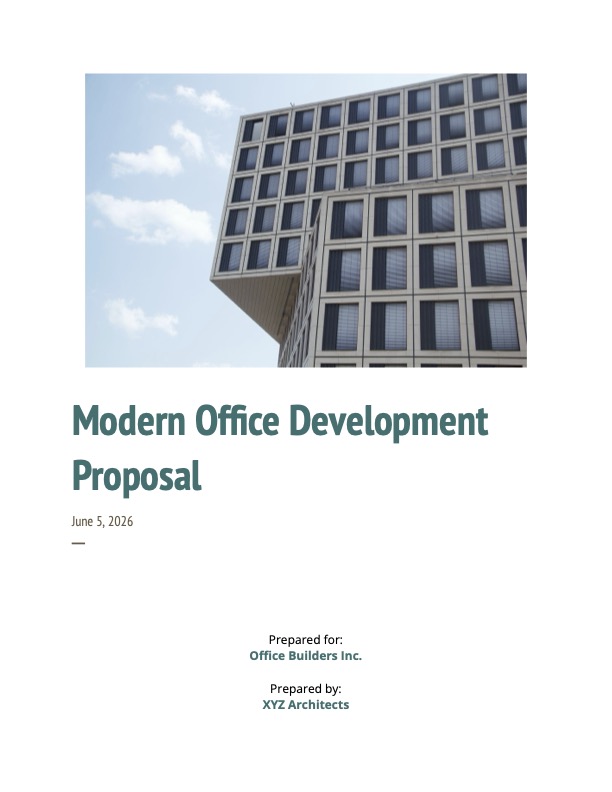
1. Cover page
The first impression your client will form is based on the visually appealing cover page of your architecture proposal. Architects should incorporate an appealing design on their cover page, whether it be colorful or minimalist. The cover page possesses the ability to captivate a reader’s interest.
2. Table of contents
Including a well-structured table of contents makes your architecture proposal scannable and easy to review. By incorporating a table of contents, your audience can read the proposal at their own pace and focus on the sections they consider most significant.
3. Executive summary
The executive summary should consist of a concise 100-500-word overview, providing a top-down perspective on the key aspects of the proposal. It should offer enough detail to outline the project and capture the reader’s interest, encouraging them to delve further into the architectural proposal. However, it should also be broad enough to give your audience a big-picture view of your firm’s reputability, vision, and value offering.
The executive summary should include an overview of the comprehensive proposal, introduce the firm, and highlight the expert team involved in the project. Additionally, it should include a summary of the sketches and plans, with some architectural proposals taking advantage of this opportunity to showcase high-resolution images from previous successful projects. Remember: the goal is to provide a summary, not list off every single detail of the proposal.
For example, a simple executive summary may look like:
| “This proposal presents the conceptual design for a 15,000-square-foot mixed-use building located in downtown Chicago, developed as a model for sustainable, cost-effective urban architecture. Our firm, recognized for delivering innovative and sustainable urban solutions, brings together a multidisciplinary team of architects, engineers, and urban planners with a proven track record in complex city projects. The project integrates residential, retail, and flexible community spaces to support a dynamic, walkable environment while responding to the evolving needs of modern city living and supporting environmental responsibility. Overall, this proposal demonstrates how thoughtful design can balance sustainability, economic feasibility, and urban vitality, serving as a replicable model for future mixed-use developments in dense metropolitan settings.“ |
4. Project description and approach
In this section, provide a detailed overview of the project, including its scope, objectives, and any unique challenges it presents. Describe your architectural vision and how it aligns with the client’s goals and the project’s context. This should not only cover the aesthetic aspects but also how functional requirements will be met.
Explain your approach to sustainability, innovation, and any methodologies you will employ to address specific project needs. It’s important to convey a clear understanding of the project and how your firm is uniquely equipped to deliver a successful outcome.
For example, an outline for this section may look like:
| Description: The building incorporates energy-efficient systems, sustainable materials, and passive design strategies to reduce long-term operational costs and environmental impact. Construction methods and material selections are carefully considered to maintain budget efficiency without compromising quality or performance… [Keep going for 2-3 more paragraphs] Approach: – [Describe sustainable materials, methods, and workflows] – [Describe passive design or any other key features that set you apart] – [Describe innovations and construction methods] – [Describe any unique challenges and how you’ll solve them] |
5. Scope of work and deliverables
In this section, you have the opportunity to provide a comprehensive explanation of what you will deliver. Here, you can outline the detailed strategies and approaches that will contribute to the success of the project, offering all the necessary details about the deliverables. It’s essential to present this detailed breakdown of the project in an organized manner for clarity and understanding.
Here are some aspects you may include in this section. Depending on your client and niche, you may or may not include all of them.
Concept design
The concept design is the foundational vision of the project. It focuses on big-picture thinking that aligns client goals with site context and design intent. It may include:
- Initial site analysis and feasibility review
- Preliminary spatial planning and layout options
- Early material and systems considerations
- Client presentations with visual concepts and feedback iterations
Schematic drawings
Schematic drawings translate the concept design into more defined architectural plans. This is where you’ll provide clarity on layout, scale, and functionality. They may include:
- Dimensioned floor plans, sections, and elevations
- Identification of key building components (rooms, lobbies, circulation, etc.)
- Preliminary structural and systems coordination
- Code compliance and zoning considerations
- Outline of major materials and construction approaches
Construction documentation
Construction documentation delivers the finalized, detailed technical drawings and specifications required for permitting and construction. It ensures all aspects of the design are clearly communicated to builders and contractors. Construction documentation typically includes:
- Comprehensive architectural drawings and detailed plans
- Specifications for materials, finishes, and systems
- Coordination with engineering disciplines (structural, MEP [mechanical, electrical, and plumbing )
- Documentation for permits and regulatory approvals
- Finalized construction cost estimates and schedules
- Clear instructions to support accurate project execution
Site visits
Site visits ensure that construction aligns with the design intent and quality standards established during earlier phases. They provide ongoing oversight and support throughout the build process, and include:
- Monitoring progress and quality as the project continues
- Coordination with contractors and project stakeholders
- Review of construction against drawings and specifications
- Identification and resolution of on-site challenges
- Documentation of progress and compliance
- Final walkthrough and project closeout support
In an architecture proposal, you should include a brief summary of how site visits will be managed.
6. Relevant experience
This section should include information about your firm. This includes your background and your qualifications, and highlighting why you are the top choice compared to your competitors. This is your opportunity to explain what unique qualities and capabilities you have, showcase any awards that validate your expertise, and express why you are the perfect match for fulfilling the client’s architectural requirements.
For example, you may include details like:
- Past projects (“Completed a 10,000 sq ft commercial office project within budget and 3 weeks ahead of schedule.”)
- Awards (“Winner of the 2026 Denver Architecture Award, 2025 Urban Design Award, etc.”)
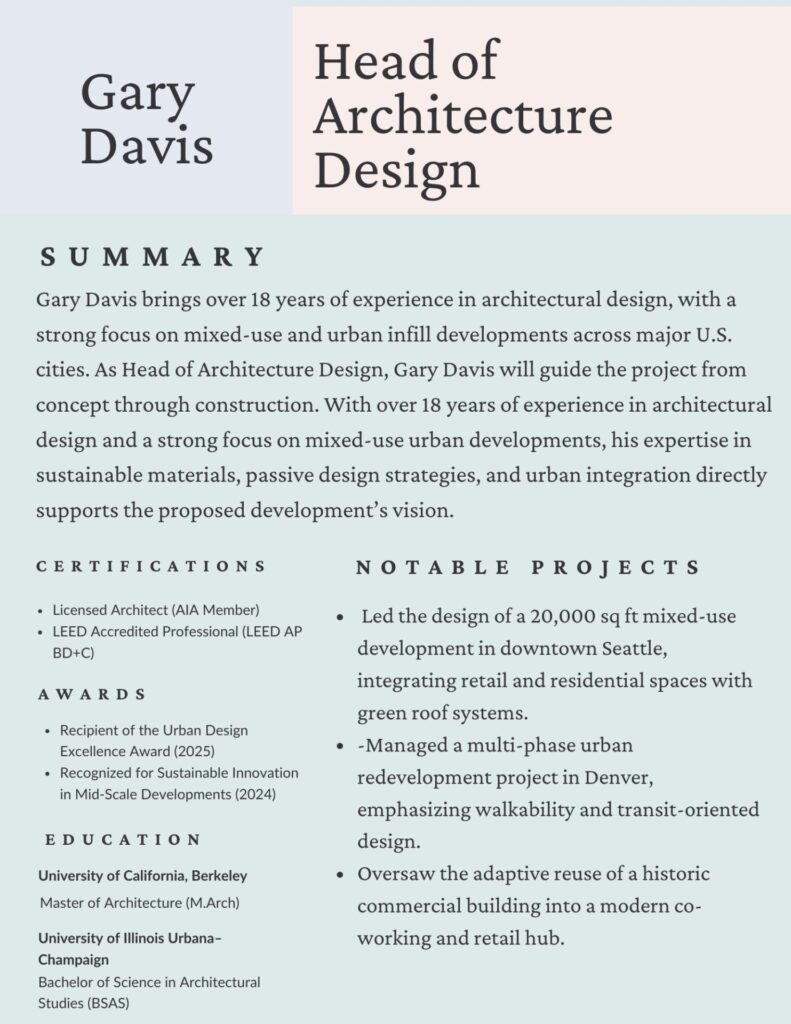
7. Expert team
This section should feature the expert team that will collaborate with prospective clients. It should include employee resume documents and relevant experience. This section of an architecture proposal provides the initial opportunity for the client to become acquainted with your team, particularly your key team members.
Moreover, it should include the team members along with their respective roles, showcasing their collective work experience, skill sets, and more. This section is the perfect opportunity to demonstrate your team’s capabilities and make clients feel confident when choosing to work with you.
You should include:
- The project planner, project principle, and head of architecture design
- Headshots (if available)
- Years of experience
- Education
- Certifications and awards
- A brief summary of relevant projects
- How each team member’s experience and skills translate to the project in the proposal
For example:
8. Timeline
This section covers the construction process and its duration. It involves engaging in discussions with your clients to determine the execution of the work. It is crucial to present a well-defined timeline that outlines each phase of the construction process.
Moreover, incorporating work planning into the proposal timeline is a critical step that demonstrates your firm’s strategic approach to project management and execution. This phase is where you outline the initial planning activities that will set the foundation for the entire project, including the allocation of resources, setting milestones, and defining key deliverables.
Specify the time for each construction phase, ranging from a few months to over a year or even more than two years. Being specific about the timeline is important, as clients and investors are unlikely to invest time, money, and effort into a project without a target completion date.
For example:
| Concept | 2 weeks |
| Design | 6 weeks |
| Construction | 6 months |
9. Pricing
The pricing section is frequently the first area of interest for many readers, serving as a crucial juncture where you have the opportunity to outline your pricing options and schedules. This transparency empowers clients to identify and choose the options that best align with their needs and budget, facilitating a smoother decision-making process. It also prevents your firm from moving forward with a project that doesn’t match your budget needs.
Including information about how the budget and fee structure have been tailored to accommodate different project scales and complexities can further enhance client confidence, demonstrating your firm’s flexibility and commitment to providing value at every level of investment.
For example:
| Phase | Description | Estimated Cost |
|---|---|---|
| Concept Design | Initial concepts, site analysis, and layouts | $5,000 |
| Schematic Design | Preliminary drawings and system coordination | $8,000 |
| Design Development | Refined plans, materials, and systems selection | $10,000 |
| Construction Documentation | Detailed technical drawings and specifications | $15,000 |
| Bidding & Permitting Support | Contractor coordination and permit assistance | $3,500 |
| Construction Administration | Site visits, oversight, and project coordination | $6,500 |
Total Estimated Fee: $48,000
Common architecture fee structures
Here are different fee structures to consider when crafting a winning proposal. The structure you use will depend on the project and your firm’s norms.
Fixed fee
A fixed fee structure provides a set price for the entire project or specific phases. This approach works best for well-defined projects with a clear scope. It minimizes surprises for both the client and the architectural team.
Percentage of total construction cost
In this model, the architect’s fee is calculated as a percentage of the overall construction cost, typically scaling with the size and complexity of the project. It aligns the architect’s compensation with the project value, making it a common choice for larger or more variable developments.
Hourly fees
Hourly billing is based on the actual time spent on a project, providing flexibility for projects with evolving scopes or undefined requirements. This structure is often used for consultations, smaller projects, or when additional services are needed beyond the original agreement.
Hybrid fees
A hybrid fee structure combines elements of fixed, percentage-based, and hourly pricing to create a customized approach. This model allows firms to balance predictability with flexibility, tailoring the fee structure to suit different phases or unique project needs.
10. Terms and conditions
Lastly, establish clear and mutually beneficial terms and conditions within the architecture proposal. These terms and conditions serve as a as a legal contract that governs the agreement between both parties.
Include:
- Contract terms
- Any fine print
- Signatures
- Potential consequences or sanctions if the terms are not met
11. Get it signed
This final section is where you call the client to action, encouraging them to formalize the engagement. Include clear instructions on how to sign the proposal, whether it’s a digital signature or a traditional ink signature. You may also want to outline the next steps post-signature, such as an initial meeting to kick off the project or a timeline for when work will begin.
Moreover, ensure that this section is straightforward, making it as easy as possible for the client to say yes and sign on the dotted line.
Architecture proposal template (mini example)
Here’s a very brief outline of what a proposal may look like using all of the above elements.
| Table of Contents List each section. Executive Summary A condensed summary of your proposal, firm, and offer. “This proposal presents the conceptual design for a 15,000-square-foot mixed-use building…” Description A more detailed explanation of your proposed design. “The building incorporates energy-efficient systems, sustainable materials, and passive design strategies…” Approach List materials and methods regarding sustainability, key features, innovations, and unique challenges. Scope of Work – Concept design – Construction drawings – Site inspections Relevant Experience – Summarize your firm’s vision and accolades. – List similar projects your firm has completed. The Team Resumes of key team members like the project planner, project principle, and head of architecture design. Timeline A summary of how long different parts of the project would take. “Design: 6 weeks Construction: 8 months” Pricing Fee structure and breakdown of fees. “Concept design: $5,000 Construction documentation: $15,000 Total fee: $45,000″ Terms And Conditions Explain legal terms and contingencies. |
Tips to win more architecture proposals
A strong architecture proposal goes beyond outlining services and technical specifications. It needs to communicate value, build trust, and clearly demonstrates why your firm is the right choice. The following tips can help improve your proposal’s effectiveness and increase your chances of winning new projects.
Tailoring it to the client
Avoid being too generic and thinking only about what your firm can do. Think about the client’s need as well. Customize your proposal to reflect the client’s goals, site conditions, and project priorities, showing that you understand their specific needs and vision.
For example, if your client values sustainability, focus on how your proposal uses sustainable construction materials or how your firm has successfully built energy-efficient buildings in the past.
Showing relevant projects
Highlight past work that closely aligns with the proposed project type, scale, or challenges. This builds credibility and reassures clients that your team has successfully delivered similar outcomes before.
Keeping it visual
A wall of text can quickly disengage your reader before they even understand the value you’re offering. Incorporate visuals such as sketches, renderings, and photos of past projects to make your proposal more engaging. If you can, add sleek design and formatting elements to the document itself as well. Strong visuals help clients quickly grasp your design approach and envision the final result.
Being clear on the scope
Clearly define what is included in your services, from concept through construction, to avoid confusion later in the process. A well-structured scope builds trust and sets accurate expectations for both parties, eliminating future issues with timelines, budget, and design.
Making pricing transparent
Present pricing in a clear, organized format that explains how fees are structured across different phases. Transparency helps clients feel confident in their investment and reduces friction during decision-making.
Downloadable architecture proposal template
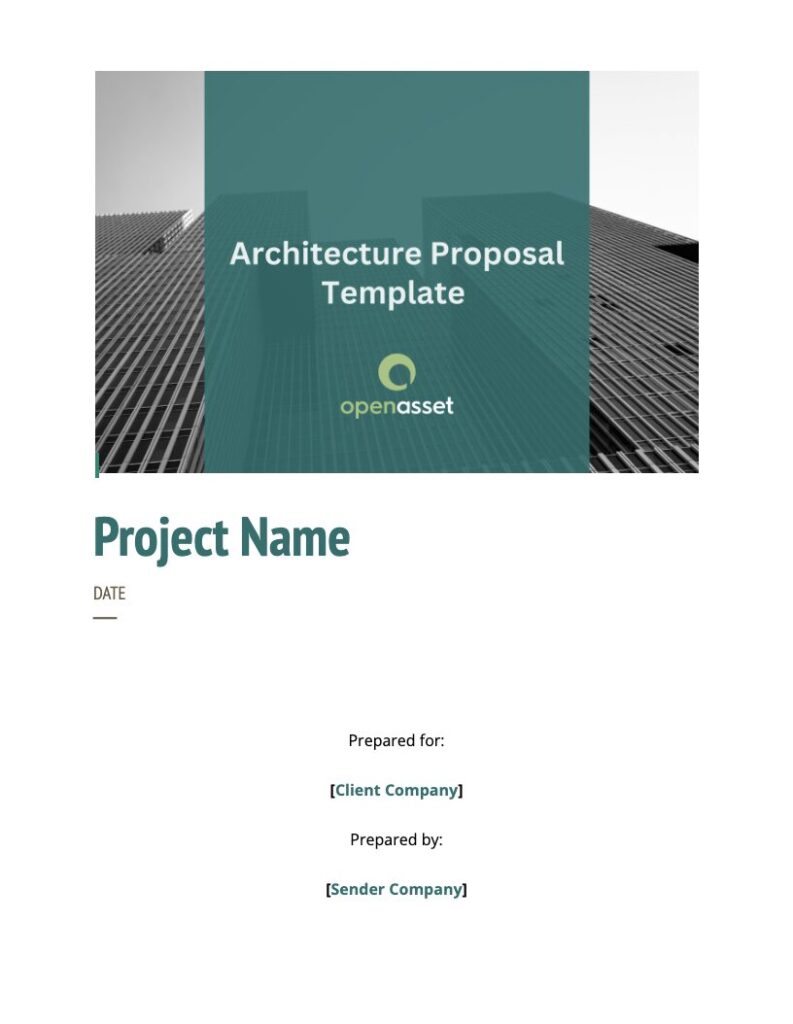
To save you valuable time, we’ve created a complete architecture proposal template that will help you win more clients. This template can be edited and used again to accommodate any RFP’s needs.
The benefits of leveraging architectural marketing technologies
Traditionally, writing proposals has been a time-consuming, lengthy process that involves a lot of searching for missing information and rewriting. Luckily, there are now Using Digital Asset Management (DAM) software for creating architecture proposals offers several benefits that streamline the process and enhance the quality of the proposals. Here are some key advantages:
- Efficient Organization and Retrieval: DAM systems allow for the centralized storage of digital assets. This centralization makes it easier to organize, search for, and retrieve assets quickly, saving valuable time during the proposal creation process.
- Improved Collaboration: Teams can access and work on proposal assets simultaneously, regardless of their location. This real-time collaboration ensures that everyone is working with the most up-to-date versions of assets, reducing errors and ensuring consistency across documents.
- Brand Consistency: With DAM software, firms can ensure that all proposal documents adhere to brand guidelines and that updated versions are being used.
- Streamlined Updates and Revisions: Updating proposals is straightforward with DAM software. Instead of searching through various files and folders, team members can quickly locate and update the necessary assets within the DAM, ensuring that proposals are always current and accurate.
- Time and Cost Savings: By reducing the time spent searching for assets, collaborating on documents, and ensuring brand consistency, DAM software can significantly cut down on the hours and resources dedicated to proposal creation. These savings can then be redirected toward other strategic activities.

| TIP: Find out more about the Most Important DAM Features every DAM solution should offer to help you win more business. |
Using AI to help you write architecture proposals
DAM software is even more effective when combined with AI. OpenAsset uses AI image recognition technology that makes searching significantly easier, allowing users to search intuitively by concept (like “glass building” or “concrete pour”) rather than relying on tagged keywords that don’t provide the full context of an image. OpenAsset also integrates seamlessly with Shred.AI, which allows you to easily add and format key assets and information like past projects, boilerplate text, and resumes into architecture proposals with just a few clicks.
Architectural proposal FAQs
If you still have unanswered questions about the proposal process for architecture, here are some of the top FAQs to guide you:
How long does it take to write an architect proposal?
According to the RFP statistics, the average time for writing a single RFP response is 32 hours or 25 minutes per question. This excludes the time required to evaluate the RFP, format the responses, or craft the cover letter.
Moreover, 45% of architecture RFPs take about 6–20 days to complete.
What is an architecture proposal?
An architecture proposal is a comprehensive document prepared by architects or architectural firms to outline their design solutions and strategies for a specific project. It serves as a bid or offer to take on a project and includes details such as:
- The project’s scope
- The architectural concept and design approach
- Timeline
- Cost estimates
- The team’s qualifications
- Additional information that demonstrates how the firm plans to meet the client’s needs and objectives
The proposal aims to convince the client that the architect or firm is the best choice for bringing their project to fruition.
Can architecture proposals be revised after they have been submitted?
Yes, architecture proposals can be revised after submission, especially in response to feedback from the client or changes in project requirements. Revisions might be necessary to address questions, refine the project scope, adjust cost estimates, or update timelines.
However, the ease and extent to which a proposal can be revised often depend on the terms agreed upon during the submission process and the flexibility of the client. Architects need to maintain open lines of communication with clients to facilitate any necessary adjustments.
What employees should be included in the proposal response?
When crafting an architect’s RFP response, select employees depending on the project’s specific demands and the stipulations of the RFP. To ensure the selection of the most appropriate team members for each RFP response, it’s crucial to adhere to the RFP’s instructions. Often, the RFP will detail the specific roles and expertise required for the project.
Typical roles that might be essential to include in your response to an Architecture, Engineering, and Construction (AEC) RFP are:
- Project Manager (PM)
- Architects
- Engineers (including Structural, Mechanical, Electrical, and Civil)
- Construction Manager
Remember, choosing team members should be based on their relevant experience and notable professional accomplishments, focusing on what they can contribute to the project’s success. This strategic selection ensures that your proposal team is ready to meet the RFP’s requirements and showcases the depth of your firm’s expertise and capacity to deliver on the project’s goals.
How OpenAsset helps you create architecture proposals faster
Creating compelling proposals is essential to winning clients and securing projects for your architecture firm. However, we recognize the obstacles you may encounter in this process. That’s why OpenAsset offers a project-based Digital Asset Management (DAM) platform designed to assist AEC firms.
Our platform enables you to create documents in seconds with templates and generate high-quality RFP responses efficiently and effortlessly. With a wide range of integrations and valuable top features, OpenAsset serves as the ideal marketing technology solution for creating persuasive content, proposals, presentations, and more.
Get your free sample of our downloadable architecture proposal template today.
And if you’d like to learn more about our DAM technology, you can reach out to our Support team, here or contact one of our digital asset experts today to schedule a demo.
Landon Iannamico is a content marketing expert with 6 years of experience helping B2B SaaS brands tell their stories and establish their verbal identities. He specializes in crafting brand narratives and producing content that breaks down complex concepts for highly specific, knowledgeable audiences across the data, AI, and engineering industries.