
AEC Marketing

How to write a construction proposal: Free template, examples & 8 tips

Mar 5, 2026

Businesswoman Working in The Office

Last Updated March 05, 2026

As a construction company or contractor, the first step in securing more projects is to craft a compelling construction proposal. This important document not only serves as one of the biggest selling tools for your construction company. However, participating in construction project bids can be a stressful journey. Crafting precise construction bids and submitting them to clients requires dedicated time, resources, and effort. 

To speed up the proposal creation process, we suggest having a construction proposal template ready. This proposal template should include all the essential elements of a winning proposal, so you don’t have to start from zero, and should also be customizable, so you can make it your own and add any changes you’d like. 

In this blog, we will teach you how to write an effective construction proposal that stands out from the competition. We will also provide you with examples of construction proposals, top tips to boost your chances of winning the bid, and a downloadable construction proposal template.

Key takeaways: construction proposals 

Persuasive proposals win construction bids: The best construction proposals showcase unique value and capabilities, and are customized to the client.
Pay attention to detail when covering RFP requirements: Contact info, scope of work, timeline, cost breakdown, terms, and warranties form the foundation of successful construction proposals.
Use AI-assisted proposal writing to scale high-quality proposals: Modern proposal tools, like Shred, can analyze RFP requirements, extract key details, and suggest winning content from past successful proposals.
Integrated digital asset management streamlines proposal creation: Platforms like OpenAsset enable teams to quickly access project visuals, team bios, and proposal templates for faster, higher-quality submissions.

Table of contents

What is a construction proposal?

  • What are construction bids?

What’s the difference between a construction proposal and a construction bid?

Why are construction proposals important?

  1. Brand identity and reputation
  2. Clarity and understanding
  3. Transparency and trust
  4. Project and resource planning
  5. Client decision-making
  6. Winning business and driving revenue

What is included in a construction proposal?

Construction proposal trends and updates for 2026

  • Timelines need to tighten up
  • AI could help — or hurt

How do you write a construction proposal?

  1. Specification of parties
  2. Contact information
  3. Scope of work
  4. Work schedule
  5. Relevant authorities
  6. Cost breakout
  7. Terms and conditions
  8. Warranty
  9. Signature line

Construction proposal templates for 2026

  • Commercial construction proposal template
  • Architecture firm proposal template
  • Residential construction proposal template
  • Roofing proposal template
  • Remodeling contract template
  • A digital-first construction proposal template
  • A heavily standardized template

Writing tips when using your construction bid template

  1. Customize your proposal
  2. Focus on the details
  3. Specificity
  4. Show project impact
  5. Demonstrate you understand the client’s pain points
  6. Set the timeline
  7. Make sure your data is accurate
  8. Leverage technology to create quality proposals at scale

How to use AI in construction proposal writing in 2026

  • How AI transforms the proposal process
  • A helping hand at your side
  • Integrating AI with digital asset management

Contractor proposal FAQs

  • What to avoid when writing construction contracts
  • What should a construction proposal look like?
  • How has proposal writing changed in 2026?
  • What proposal technology should I use in 2026?
  • What does proposal mean in construction?
  • How do I write an independent contractor proposal?
  • How do I respond to a construction request for proposal (RFP)?

Start your proposal for construction with OpenAsset

What is a construction proposal? 

A proposal for construction is a formal document submitted by a construction company or contractor to a client or project owner. Its purpose is to outline the details of a construction project, including the scope of work, cost estimates, timeline, materials, and other relevant information.

The proposal serves as a key communication tool between the construction firm and the client, providing a clear understanding of the project’s objectives and how it will be executed. Creating a construction proposal is easier when you have an effective construction proposal template you can customize.

What’s the difference between a construction proposal and a construction bid?

The term “construction proposal” is often used interchangeably with “construction bid” and “construction bid proposal.” However, a bid differs from a proposal. Proposals include all the details found in estimates, quotes, and bids but go beyond simple approximations. They are tailored and specific, highlighting the unique value that a construction company can provide to a potential client. 

A construction proposal is used as a persuasive tool to showcase the construction company’s capabilities and convince the client that they are the right choice for the project.

When submitting a proposal, you are likely to face competition from other companies that want to win a client’s business. Therefore, it is crucial to use a compelling construction proposal template and invest time in writing the details of the proposal to effectively showcase the value you can offer. 

What are construction bids?

On the other hand, a construction bid is used by the project owner to compare different offers from various contractors. After evaluating the bids, the project owner can select the most suitable and competitive bid to award the construction contract.

The construction bidding process is specifically common for larger projects. Sub-contractors frequently submit construction bids to general contractors to undertake specific portions of the project. This process has its own small industry of construction bidding websites you can take advantage of.

To summarize, bids and proposals are very similar, but proposals tend to be more detailed. Both are useful in different situations, and people will continue to use them interchangeably. 

Why are construction proposals important?

In 2025, 4BT found that the industry only averaged a 25% success rate in bidding. From their research, one primary reason behind this low average was poor preparation.

Construction proposals are the backbone of your entire digital marketing strategy. A well-prepared and considered proposal wins you business.

It’s also a way to show off your company. It reflects both what makes your company special and its overall image. A construction proposal plays a crucial role in the construction project’s success and the relationship between the construction company and the client. Here are some key reasons why construction proposals are important.

1. Brand identity and reputation 

Highlighting the construction company’s branding in the proposal reinforces its reputation and credibility. Using custom brand assets, colors, and other customized and personal elements can make a difference between winning or losing a potential client.

A strong brand identity, built on trust, reliability, and quality, can make you stand out from other bidders and instill confidence in the client and reassure them that they are choosing a reputable contractor.

2. Clarity and understanding 

A well-written construction proposal provides a clear and detailed outline of the project’s scope, timeline, and cost. This ensures that both the construction company and the client have a shared understanding of what will be delivered and at what cost.

3. Transparency and trust 

You should define client expectations and be straightforward about what you are going to provide for the client. A comprehensive construction proposal demonstrates transparency in the pricing and cost breakdown. When the client sees a detailed estimate, they are more likely to trust the construction company, leading to better client-contractor relationships.

4. Project and resource planning 

The proposal serves as a foundation for project planning and execution. It helps the construction company allocate resources, plan schedules, and coordinate tasks effectively.

5. Client decision-making 

For clients, reviewing proposals from different construction companies allows them to compare offerings and select the best-suited contractor for their project. The proposal becomes an important document in the client’s decision-making process.

6. Winning business and driving revenue

In 2025, only 2% of firms had a success rate over 80%, while a larger 4% only had a 10% success rate. By sharpening your proposal process, you can join this highly select group of elite firms that do almost nothing but win.

What is included in a construction proposal?

A construction proposal will typically include:

  1. Contact information
  2. Specification of parties 
  3. Scope of work 
  4. Work schedule
  5. Relevant authorities 
  6. Cost breakout 
  7. Terms and conditions 
  8. Warranty 
  9. Signature line 

Below, we’ll go into more detail on what information to include in each section.

Additionally, here are some optional construction proposal elements to consider: 

  • Exclusions: Provide information about work, materials, or equipment provided by others. 
  • Materials: Outline the specific materials that will be used on the project. 
  • Labor: Describe the type of labor for the project and how many hours for each.

Equipment: This is useful for contractors who require heavy equipment on the job.

Construction technology is always evolving, but in 2026, clients’ expectations and concerns are mostly the same as they have always been. Get it done on time, on budget, and correctly.

Anyone aware of the “fast, good, cheap” triangle knows that is a tall order. But what has changed is how that order is getting taller every year. Multiple reports have found that the industry is facing a scheduling epidemic.

Timelines need to tighten up

A 2025 report from SmartPM Technologies found a rather concerning statistic: 88% of baseline schedules “failed to meet industry-recognized quality benchmarks” such as the DCMA 14-point check.

It’s a statistic echoed by Amazing Architecture, claiming 98% of construction projects run late.

SmartPM explained that the issue was largely data-driven. In the current digital age, schedules are usually established off-site based on data analytics, but SmartPM claims that the data that informs all those schedules is often incomplete, misleading, or out of date.

With inaccurate data, we make inaccurate calls, and so we get SmartPM’s statistic.

AI could help — or hurt

There is hope that AI could reverse this trend. Several companies are designing AI programs that can monitor a construction site in real time and report a project’s progress. That means faster and, if the tech continues to develop, more accurate data.

SmartPM’s report, however, is a little less optimistic and rightly points out that AI is also only as good as the data you feed it. If the underlying data does not change, then AI would simply repeat the exact same mistakes with even more confidence than a person.

We find ourselves in an interesting situation where AI could improve the accuracy and impartiality of data, but AI programs one step further along the process could have the exact opposite effect if they’re fed bad information.

How do you write a construction proposal? 

Writing a construction proposal requires careful planning and attention to detail to ensure that all the necessary information is included. Here’s a step-by-step guide on how to create winning construction proposals

1. Specification of parties 

The first part of a construction proposal is to highlight the details of both parties involved. Identify the parties involved in the construction project, including the construction company (contractor) and the client (owner). 

2. Contact information 

Make sure to include both your contact information and the client’s on the first page of the proposal. Include both parties’ names, logos, addresses, phone numbers, email, and any other relevant contact details. 

3. Scope of work 

Describe in detail the scope of work that the construction company will undertake. Providing a detailed description of the work you’ll be performing is crucial in any construction proposal. This section should outline all the tasks and activities to be completed. We suggest dedicating a good amount of time to this section, ensuring it is highly detailed and comprehensive by listing all the services and tasks you offer. 

If you plan to use a sub-contractor for certain tasks you won’t be performing, make sure to include their information and estimated cost, clearly outlining the responsibilities of each party involved. These will be the “exclusions” to the scope of work, which includes work that will not be done by the general contractor. 

A thorough scope of work prevents any misunderstandings or unexpected tasks that may arise if it’s not properly outlined. 

4. Work schedule 

A realistic timeline is essential for successful project management. Present a realistic and detailed work schedule, including start and completion dates for each phase of the construction project. Make sure to include the time needed for obtaining permits and approvals, as well as the steps of the work and completion. Remember to account for potential delays due to weather, delivery services, and other external factors beyond your control. 

5. Relevant authorities 

Identify any relevant authorities or regulatory bodies that the construction project must comply with, such as building codes or permits required. The relevant authorities in a construction project refer to the roles and responsibilities of both your crew members and anyone else with decision-making power. This includes individuals at local municipalities, affiliates, and partners involved in the job. 

6. Cost breakout 

Also known as the administrative breakout, the cost breakout section should provide a comprehensive breakdown of the estimated costs for the entire project. This should include: 

  • Labor 
  • Materials 
  • Equipment 
  • Permits 
  • Any other relevant expenses 

It’s essential to have a payment schedule outlining how and when the client will compensate you for the work you are performing. 

Normally, the cost should be stated on the first page of the proposal. If your proposal extends beyond one page, include the total cost on the first page and the detailed breakout on the page where it falls naturally. 

7. Terms and conditions 

In this section, outline the legal and contractual terms and conditions that both parties must agree to before starting the project. This section may cover: 

  • Payment terms 
  • Insurance requirements 
  • Dispute resolution 
  • Other important aspects 

The more specific and clear the conditions, the smoother the outcome will be. Both parties must acknowledge and accept the scope of work, costs, and terms in writing to avoid potential legal disputes later in the project. 

8. Warranty 

Specify any warranties or guarantees offered on the completed work. Clearly state the duration and coverage of the warranty. In this section, you outline the specific work you are responsible for fixing and the conditions under which you will do so. Additionally, it clarifies the aspects you are not liable for. 

9. Signature line 

Lastly, there’s the acceptance of the proposal. Leave space for the authorized representatives of both parties to sign the proposal, indicating acceptance of the terms and agreement to move forward with the project. This will happen if the project owner is satisfied with the construction proposal. The signatures serve as the foundation for a legally binding document between the two parties, confirming their agreement to the terms and conditions specified. 

Are your construction proposals built on strategy, or held together by last-minute fixes?
Answer a few quick questions to get a personalized proposal process scorecard. You’ll find out where bottlenecks, gaps, and repeat work are slowing you down – and, how to fix them. 
Get my scorecard →

Construction proposal templates for 2026

Here are some construction proposal examples to help you get an idea of what your construction proposal should look like. 

Commercial construction proposal template 

Architecture firm proposal template

Residential construction proposal template

Source: Smartsheet

Roofing proposal template

Source: Smartsheet

Remodeling contract template

Source: Sample

Writing tips when using your construction proposal template 

There’s so much more to learn about the proposal creation process outside of meeting the basic requirements.

Although there are no guaranteed construction proposal templates that ensure you win every bid, writing customized, detailed, and accurate proposals that showcase your business increases your chances of securing the next project. Here are eight tips to help you craft a compelling and successful bid proposal:

1. Customize your proposal 

Tailor your bid proposal to the specific needs and requirements of the client and the project. Avoid using generic templates and instead, include personalized details that address the client’s goals and objectives. Show that you have taken the time to understand their vision and how your construction company is the best fit for their project.

2. Focus on the details 

Provide a comprehensive breakdown of the project’s cost estimate, including specific budgeting details. Clearly outline labor, materials, equipment, permits, and any other relevant expenses. Be transparent in your pricing and avoid vague or ambiguous figures. A well-detailed budget inspires confidence in your financial planning and helps the client make an informed decision.

3. Specificity 

Use specific language and avoid vague or general statements. Provide concrete examples and data to support your claims. Specificity adds credibility to your proposal and shows that you have a well-thought-out plan for the project.

4. Show project impact 

Highlight the positive impact your construction company’s work will have on the client’s project. Explain how your expertise and approach will lead to successful project outcomes, such as increased efficiency, improved functionality, or cost savings. 

5. Demonstrate you understand the client’s pain points 

Address the client’s pain points and challenges explicitly in your proposal. Show that you have a deep understanding of their needs and concerns and explain how your construction solutions will alleviate these issues. 

6. Set the timeline 

Present a clear and realistic timeline for the project, detailing each phase’s duration and key milestones. Ensure that the proposed timeline aligns with the client’s project objectives and any deadlines they have set.

7. Make sure your data is accurate 

Double-check all the data, figures, and information provided in the proposal. Inaccurate data can negatively affect the client’s confidence in your abilities and professionalism. Accuracy in your proposal reflects your attention to detail and commitment to delivering accurate results. 

8. Leverage technology to create quality proposals at scale

Proposal writing is, at least to some degree, a numbers game. Quality and personalization are both critical for ensuring each proposal has the best chance possible to win you business, but it cannot come at the cost of quantity. Or, god forbid, missing a golden opportunity entirely just because you can’t keep up with the rate of new projects.

Learning how to properly balance the two is a major talent that will take you far in this industry. Thankfully, there are ways to make that balance easier to maintain.

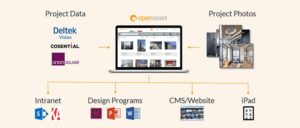
Digital asset management tools like OpenAsset give you the breathing room to craft phenomenal proposals without sacrificing speed by handling the busywork for you. OpenAsset organizes your company’s asset libraries, streamlines workflows, and can help generate professional internal documents in minutes.

And, of course, there is the newest frontier of support software: AI.

How to use AI in construction proposal writing in 2026

Everything productivity software does for you? Goes double for AI. You can use AI in construction to make your life far easier.

How AI transforms the proposal process

Contrary to popular belief, AI is not capable of doing your job for you. Instead, think of it like productivity software, but supercharged.

Just like other proposal software, it is designed to do away with repetitive box checking and administrative busywork.

Using OpenAsset’s Shred.ai as a powerful example, it can find media assets from past projects, and it can do it without relying on a strictly maintained database of tags! Instead of wasting an hour digging through old file directories for that one photo you swear is in there somewhere, Shred.ai can find what you are looking for at the speed of a Google search.

These are the sorts of things AI can do for proposal writers. All the background work you have to do every single time you start a new proposal, all the havoc caused by imperfect coworkers and disorganized workflows, can be solved by AI.

A helping hand at your side

Every step of the way, Shred.ai is here to help the writing process go more smoothly.

When you are in the planning stages, it can help you use old proposals to source winning content from similar projects. Just like how you can use a template to speed up proposal writing, you don’t need an entirely overhauled marketing strategy for every proposal. Instead, Shred.ai can quickly research past wins and compare those projects to current pitches to find helpful, related media.

Along the way, reference the compliance criteria that Shred.ai pulled, verbatim from the RFP, or perform a go/no-go analysis to determine if the bid you’re pursuing makes sense for your team. Quick, convenient, and easy, it is one more failsafe you can set up to stop jobs from slipping through your fingers because of a technicality.

Integrating AI with digital asset management

Software is only as good as the network of other programs it can communicate with. This is doubly true for AI, which works best with access to large datasets and a clearly defined role inside a larger network.

Shred.ai works seamlessly with OpenAsset’s DAM software, natively pulling content stored and organized by your DAM.

Construction proposal FAQs 

Here are some questions that may arise during your construction proposal creation journey. 

What to avoid when writing construction contracts? 

When writing construction contracts, avoid:

  • Ambiguous language
  • Incomplete scope of work
  • Unclear payment terms
  • Lack of change order procedures
  • Omitting penalties for delays
  • Insufficient insurance coverage
  • Ignoring local regulations
  • Incomplete indemnity and liability provisions
  • Unclear warranty terms
  • Neglecting dispute resolution mechanisms
  • Using templates that aren’t customizable 
  • Neglecting signatures and execution dates 

What should a construction proposal look like? 

Typically, a construction proposal can be a short one-page document (or a long, more in-depth proposal) that includes the contractor’s contact info, what work will be done (tasks, phases, and things to finish), cost breakdown (materials, supplies, equipment, and labor), payment plan, project schedule, rules, guarantee, dispute resolution, and signatures of both parties.

How has proposal writing changed in 2026?

In 2026, construction proposal writing is faster, more data-driven, and more strategic than ever. Teams are no longer starting from scratch or relying on static templates. Instead, proposals are built using centralized content libraries, structured RFP analysis, and AI-assisted workflows that surface the right experience, visuals, and narratives automatically.

What proposal technology should I use in 2026?

In 2026, the best proposal technology combines DAM, proposal intelligence, and AI; not as separate tools, but as a connected workflow. Construction firms should look for technology that centralizes past proposals, integrates with existing systems, and uses AI to reduce manual work without sacrificing accuracy or control.

What does proposal mean in construction? 

When a customer has a construction project, they create a job posting, and contractors submit their proposals. These proposals are formal documents outlining project details, scope of work, timeline, cost estimate, and payment terms. The proposal serves as a communication tool for the client to assess the company’s capabilities and make an informed decision about the project. The winning contractor is often the one with the lowest bid, making it somewhat like an auction. 

How do I write an independent contractor proposal? 

At the very least, a proposal for work, which becomes a legal contract when signed by both parties, must include the following:

  • Names and contact information of the owner and contractor
  • Work location
  • Detailed description of the work to be done (scope of work)
  • Cost of the work and payment schedule
  • Signatures of both parties and the date 

How do I respond to a construction request for proposal (RFP)? 

To respond to a construction request for proposal (RFP):

  1. Review the RFP thoroughly 
  2. Understand the client’s needs 
  3. Form a response team 
  4. Include an executive summary 
  5. Address each RFP requirement 
  6. Propose a comprehensive approach 
  7. Demonstrate expertise and past successes 
  8. Provide transparent budget and pricing details 
  9. Emphasize quality and safety measures 
  10. Introduce key team members 
  11. Include client references or testimonials 
  12. Use visuals for clarity 
  13. Proofread and edit your response 
  14. Submit on time and follow the instructions 

Start your proposal for construction with OpenAsset

To win clients and secure projects for your architecture firm, it’s essential to create compelling proposals. However, we recognize the obstacles you may encounter in this process. That’s why, unlike traditional DAM systems, OpenAsset offers a project-based DAM solution specifically designed for AEC marketers. With dozens of integrations and useful features, OpenAsset is the MarTech you need to create high-converting content, proposals, presentations, and much, much more. 

Get your free downloadable construction proposal template today. And if you’d like to learn more about our DAM technology, you can reach out to our Support team here or contact one of our digital asset experts today to schedule a demo