
B2B construction marketing: 11 strategies to win more projects
Nov 13, 2023
11 min
Last updated: June 12, 2026
In a perfect world, quality work should speak for itself.
In our modern one, however, it isn’t quite so simple. That work’s voice is easily drowned out amongst all the noise of the internet, social media, and thousands of other companies competing in your niche.
Your company needs a team to champion your hard work and shout about it from the rooftops so it can’t be ignored. But for many construction firms, marketing can feel overwhelming. If you aren’t sure how to promote yourself, here are 11 steps you can take to build a strong construction marketing plan.
Key takeaways: Construction marketing
- Construction marketing is critical for standing out and securing new projects.
- A strong strategy helps build credibility, attract qualified prospects, and win more projects.
- Common challenges include limited resources and lack of marketing knowledge.
- Consistent branding and targeted messaging drive long-term growth.
Table of contents
What is construction marketing and why is it important?
Challenges construction companies face when growing
The benefits of construction marketing
- Builds trust and credibility
- Growing awareness with target audience
- Close more deals
- Increased customer retention
Construction company marketing strategies and tactics
- 1. Build an optimized website
- 2. Social media marketing
- 3. Video marketing
- 4. Engage clients through email marketing
- 5. Build web traffic with quality SEO
- 6. Building trust with customer reviews and testimonials
- 7. Feature your employees in marketing materials
- 8. Reach new audiences with co-marketing and partnerships
- 9. Demonstrate your expertise with content marketing
- 10. Attend and speak at events
- 11. Keep branding consistent
Construction company marketing tips
- Set measurable marketing goals
- Only use high-resolution images
- Get specific with CTAs
- Utilize analytics and tracking
- Segment your audience for targeted marketing
- Secure features with building materials companies
Marketing for construction companies made easier
What is construction marketing and why is it important?
Construction marketing is the strategic planning and execution of communication and outreach efforts for a company or firm within the construction industry. This can include residential, commercial, or industrial building services, as well as infrastructure development. The main goals of construction marketing are to build brand awareness, nurture client relationships, and ultimately secure contracts for construction projects.
Marketing is more important than ever in the current market, which has held steady in recent years, neither growing nor shrinking. While recent reports still optimistically project the market will reach $16.11 trillion by 2030, the current market is fairly static and mostly held up by data center construction. It is more important than ever to get out there and find business yourself.
Marketing matters more than ever in today’s market. According to Deloitte’s Global Powers of Construction report, the global construction market is projected to grow from $11.39 trillion in 2024 to $16.11 trillion by 2030. But that growth isn’t evenly spread — much of the current activity is concentrated in data center construction according to the Dodge Construction Network. For most firms, that means you can’t wait for the market to bring you work. You have to go find it.
Construction marketing is important because it directly influences a company’s ability to secure new business and grow. In an industry saturated with competitors offering similar services, a well-crafted construction marketing strategy can set a company apart, showcasing its unique skills, advanced technologies, and successful projects.
Through targeted campaigns, customer testimonials, and a strong online presence, construction firms can build a reputation for reliability and quality, which is invaluable for winning bids and contracts.
Challenges construction companies face when growing
The market is often crowded, with many construction firms competing for the same projects. You want to win more business, but differentiating your services and value proposition from competitors can be difficult.
If you can make yourself stand out from the competition, you still have to continue building and maintaining a solid client base. This requires effective marketing and relationship management. Therefore, as your company grows, sustaining high levels of customer satisfaction and repeat business can become more challenging.
Here are some common marketing challenges construction companies may face:
- A production-focused mindset that downplays marketing’s importance.
- Lack of in-house marketing expertise.
- Limited time and budget for marketing.
- Conflating marketing and sales processes.
The benefits of construction marketing
Now that we’ve looked at some of the marketing-related challenges construction firms may face, let’s take a look at the benefits construction marketing can bring to your firm.
Different marketing benefits make up the marketing funnel for growing your construction business. While building trust and credibility is necessary throughout every stage of the funnel, each stage (from top to bottom) also focuses on a specific benefit.
As seen below, in the “Awareness” stage, you want to focus on brand awareness, in the “Consideration” stage, you want to focus on sourcing qualified leads, in the “Purpose” stage, you want to focus on closing more deals, and in the “Loyalty” stage, you want to focus on customer retention.

Builds trust and credibility
In the marketing funnel, trust and credibility are elements that apply to each stage of the funnel because of their importance throughout the entire marketing process. In the construction industry, trust is the cornerstone of success; only businesses that earn trust will consistently land bigger projects.
Establishing a trustworthy reputation is crucial for a construction business. It influences whether a potential client will choose your services or choose a competitor. Marketing plays a pivotal role in shaping your brand’s reputation, including aspects such as the quality of your work and how you take care of your customers.
One way to build trust and establish credibility? Content. Creating high-quality blogs and video content helps build company credibility. Besides blogs and video content, you should also leverage testimonials from satisfied customers to improve your brand’s credibility. Testimonials stand as the top case studies of success. Satisfied customers showcase the benefits your construction services have brought to their projects.
A well-executed marketing strategy in the construction sector helps establish a firm’s reputation as a reliable and professional entity. This foundation of trust is crucial in an industry where projects often involve significant financial commitments and safety considerations.
Growing awareness with target audience
Effective marketing increases a construction company’s visibility among its desired customer base. Through targeted advertising, SEO-optimized content, and a strong social media presence, firms can highlight their expertise and services to those most likely to need them. As brand awareness grows, so does the likelihood of securing new projects.
Engage your target audience by tailoring marketing strategies to suit their preferences, behaviors, and specific project requirements. By directly addressing the needs of these prospective clients, you’re more likely to capture their interest and increase the chances that they’ll use your services.
The advantage of using social platforms like Facebook and Instagram lies in their highly specific targeting capabilities. The initial step when leveraging these platforms should be to define the geographic location you want to reach.
Following location targeting, dig into the demographics (income, interests, behaviors, etc.) of your target audience. You may find that you have multiple target audiences, and it could be beneficial to craft different campaigns that resonate with each group. There are many choices at your disposal, so experiment to discover what is effective. This will lead to engagement directly with your intended audience and securing additional projects via social media.
Another method to enhance your visibility is by optimizing your online presence, starting with the creation of your Google Business Profile. GBP is Google’s designation for your business listing on their platform. Establishing your GBP and maintaining active social media accounts ensures that prospective clients can easily locate you on the internet.
Close more deals
As your construction business starts to draw in more qualified prospects, secures higher customer retention, and strengthens its brand, you’ll see an increase in sales. Consistency in marketing efforts is key to keeping this positive trend going.
With a strong marketing strategy, closing deals becomes a more streamlined process. Marketing materials and campaigns that clearly communicate a company’s value proposition can persuade prospects to choose one firm over another.
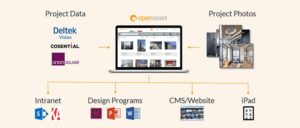
Moreover, leveraging tools like Digital Asset Management (DAM) software can enhance this benefit further. How? Well, it’s simple— Centralize AEC assets. Create more proposals. Win more business. With DAM for construction, you can make the construction proposal process simpler, faster, and more successful by closing more deals.
Increased customer retention
Marketing doesn’t end with a closed deal. Continuous engagement and post-project follow-ups can turn one-time clients into repeat customers. Engaging with customers contributes to their continued loyalty.
Moreover, as customers come to trust the consistent quality of your construction business, their loyalty to your brand grows. This heightened trust can make them more inclined to recommend your company to friends, colleagues, or relatives. Good marketing ensures customers feel valued and informed long after the initial sale, enhancing loyalty and encouraging word-of-mouth referrals.
Construction marketing can include creating newsletters, conducting satisfaction surveys, and providing maintenance tips, which keep your company in the client’s mind for future projects. A deeper understanding of your customer’s requirements, as informed by your buyer personas, will lead to the creation of more refined and satisfying customer experiences.
Construction company marketing strategies and tactics
Effective AEC marketing best practices are essential for construction companies wanting to carve out a significant presence in the competitive construction industry. A multi-faceted approach that leverages marketing strategies and tactics can help a company attract new clients, engage with current ones, and build a brand that’s synonymous with quality and reliability.
If you’re wondering how to market a construction company, here are 11 essential construction marketing ideas you should be implementing:
1. Build an optimized website
Your website serves as a crucial marketing hub for your construction business. For construction companies, a website serves as the digital storefront, offering a first impression that can either build interest or drive potential clients away.
These days, looking through your website is just basic due diligence for your clients. You can assume they’ll see it well before they ever decide to interact with you directly.
The cornerstone of any digital marketing strategy today is a well-optimized, user-friendly website. Quality design is essential, ensuring easy navigation with a well-structured menu that guides visitors to the information they’re seeking. Strategic use of calls-to-action (CTAs) can direct visitors towards contacting the company, requesting a quote, or viewing past projects, which moves them down the sales funnel.
Successful construction websites are more than aesthetic appeal; they actively encourage visitors to engage and initiate business with you. An effective website will combine aesthetic appeal with functionality, providing a foundation for the various elements that inform and engage visitors.
An optimized website includes the following:

About page
The “About” page is where a construction company can share its story, mission, and values. This section showcases what sets your business apart, spotlighting your company’s story and the core principles you uphold. It humanizes the company, introduces the leadership team, and details the firm’s history and achievements.
This page can forge a connection with the audience by conveying the company’s commitment to quality, safety, and customer satisfaction.
Services page
Clear and comprehensive “Services” pages are crucial. They should outline the full range of services offered, from initial design and planning to construction and post-construction follow-up.
Each service can be detailed with sub-pages that delve into the specifics of what the company offers, setting clear expectations for potential clients. This is a great way to inform your readers about what you offer.
Portfolio page
A “Portfolio” or “Projects” page acts as a showcase of the company’s capabilities and skills. High-quality images or videos of completed projects and past work allow potential clients to visualize the type of work the company produces. Include a range of projects from your best work to demonstrate versatility and experience.

Blogs
A regularly updated “Blog” page or “Resource Center” can provide valuable insights into the construction industry, offer advice, and highlight trends. It’s also a tool for improving SEO rankings by incorporating keywords that potential clients might use to find construction services. A blog positions the company as a thought leader and a reliable source of industry knowledge.
Content marketing is about providing valuable, relevant information on your construction website. When consumers search for solutions to their questions, they’re attracted to your site through SEO-optimized web copy or blog posts. As visitors gain familiarity with your brand and the services you provide, they may transition from casual viewers to paying clients.

Case studies and testimonials
As mentioned earlier, case studies and testimonials are powerful forms of social proof that build trust and credibility. Detailed case studies highlight particular projects, the challenges faced, and how they were overcome, showcasing the company’s problem-solving abilities. Testimonials from satisfied clients add a level of trust and personal recommendation that can be persuasive to prospects.
Gallery page
A “Gallery” page is ideal for showing pictures and videos that display your firm’s most impressive work. Filled with high-resolution images, this allows visitors to quickly see the extent of a company’s experience and quality. A well-organized gallery with categorized projects makes it easy for users to find relevant examples of the company’s work that align with their needs.
Contact page
Finally, a “Contact” page is necessary. It should provide multiple ways for a potential client to reach out, including a phone number, email address, contact form, and possibly a live chat feature.
The page can also include the physical address of the company’s office, a map, and even an FAQ section to address common inquiries. This page must be simple, intuitive, and function flawlessly to make it easy for prospective clients to reach out.
2. Social media marketing
In the digital age, social media marketing has become an indispensable tool for construction companies to reach and engage with their target audiences. It offers a dynamic platform for organic interaction and paid advertising, each serving distinct purposes within a comprehensive marketing strategy.
It’s no secret that social media is rapidly emerging as a highly effective digital marketing tool across various industries. These widely used platforms offer construction companies a direct line to potential clients, presenting a significant chance to establish trust with a targeted following.
Organic social is about authenticity and creating conversations, which can be crucial for building long-term brand loyalty and engaging with potential clients. It focuses on building and nurturing relationships with your audience without direct costs.
By posting regular updates, photos from construction sites, behind-the-scenes looks at projects, and sharing industry-related content, and more high-quality content, a construction company can grow its brand presence and establish a community around its work.
Additionally, social media serves as a strong referral tool, enabling followers to effortlessly share the content and pages of construction companies with their online networks. It also allows you to showcase your outstanding customer service by quickly answering messages and comments from customers.
Moreover, professional networking websites provide an excellent opportunity for large-scale construction firms to engage with businesses looking for project proposals and to join an online community of prospective vendors.
3. Video marketing
Use video to build your brand — and win bids
Video is one of the most powerful brand-building tools available to construction marketers. And unlike other channels, it works across the full range of what your team needs — from LinkedIn presence to proposal submissions.
On social media, LinkedIn is where construction video performs. The typical format that lands well: a project showcase that brings your client in front of the camera, tells the story of the work, and demonstrates what your firm actually delivered. It’s not a sales video. It’s proof.
As Amelie Barrau, former Head of Marketing & Communications at PRP Architects and ex-WSP media relations lead, puts it: “Everything you do is more about corporate comms and brand. Video is always a big part of a marketing strategy — it makes clients happy, and it showcases your expertise.”
That brand-building function is the point. A well-produced project video gets shared, gets liked, and gets your name in front of developers, project owners, and procurement teams who may one day send you a tender.
Video is showing up in bids, too.
This is a shift worth paying attention to. Increasingly, RFPs are requesting video as part of the submission — not as a general sizzle reel, but as a specific deliverable. Think: a short film shot in the local community, a visualization of what the project could look like, or leaders speaking to their environmental approach.
“In bids, we were starting to be asked for more video content as part of the proposal,” Barrau said. “If you don’t have video capability, that becomes hard — asking someone external costs a lot of money.”
Firms with in-house video capability have a real edge here. If yours doesn’t have it yet, it’s worth building before a high-stakes RFP requires it.
4. Engage clients through email marketing
Email marketing remains one of the most effective channels for direct communication with clients. Email is a versatile tool for reaching out to potential and existing customers at different points in the sales process.
The construction industry is built on relationships. Particularly once you start competing for million dollar plus contracts, most of your business won’t be coming from random site visitors. When that much money starts getting moved around, prospective clients tend to go with who they trust. And they trust the people they already know can get the job done.
Newsletters help you maintain those relationships after you’ve built them. While you will still want to keep brushing shoulders with your clients on the networking circuit, regular newsletters can keep you top of mind.
A consistent presence builds name recognition. Pair that with a positive in-person connection or a past job well done, you keep your client remembering you fondly until they’re ready to do another project. This is the essence of how you build “brand loyalty.”
5. Build web traffic with quality SEO
Search Engine Optimization (SEO) is critical for construction companies to improve their online visibility and attract more organic traffic.
According to Backlinko, only 0.63% of users searching on Google will go to the second page of results. Therefore, your construction website needs to achieve a ranking as high as possible in search results.
Essentially, your business should appear on the first page of Google search results when someone looks up construction companies or contractors in your area. To boost the SEO ranking of your construction firm, start prioritizing the following elements:
- Creating high-quality backlinks
- Writing meta descriptions
- Implementing internal linking
- Conducting keyword research
- Developing content based on specific keywords
- Enhancing image optimization
- Combining or removing repetitive content
- Refreshing and updating old content
To improve your position in SERPs and increase organic traffic to your website, think about conducting an SEO audit, particularly if you’re facing challenges in these areas.
By optimizing website content with relevant keywords, maintaining a mobile-friendly site, and producing regular, quality content, companies can rank higher in search engine results pages (SERPs). This increased visibility often translates into more website visits, inquiries, and, ultimately, conversions.
Local SEO
Local SEO is particularly important for construction firms looking to attract business in their neighborhood within a specific geographic area. It’s a more centralized approach to SEO. Conducting local keyword research and creating content tailored to your regional audience is recommended.
By optimizing for local search terms, maintaining accurate and complete Google Business Profile listings, and garnering local backlinks, companies can improve their visibility to nearby customers who are likely to require their services.
6. Building trust with customer reviews and testimonials
A great way to build trust is through customer reviews and testimonials. Testimonials can come in many forms: case studies, customer reviews on your website, letters of recommendation from past clients, even something as simple as before and after pictures of previous projects.
Whatever form they come in, testimonials are a powerful tool to keep in your back pocket for your next proposal. If the client doesn’t have any experience with you, the next best thing is a positive review from one of their peers.
Letters of recommendation are a powerful way to overcome a prospective client’s baseline skepticism. It’s one thing when you list your company’s many talents in a proposal, but it’s another entirely for a neutral third party to vouch for you.
7. Feature your employees in marketing materials
Developing an employee spotlight page is an effective approach to building your brand. Highlighting employees through marketing materials adds a personal touch to your company’s brand image. This makes your company appear more relatable to your audience, which in turn builds trust.
Featuring your employees offers an inside look at your company’s culture and the principles of your team members, building a sense of value and inclusivity among your employees while also giving viewers a glimpse into the heart of your brand.
Keep in mind that the primary objective of an employee spotlight is to highlight your company’s work culture and environment. As we touched on earlier, a great way to do this is through video! Videos can include team and workplace culture videos or videos discussing your company’s core values.
Sharing stories, accomplishments, and day-to-day experiences of employees not only demonstrates the company’s investment in its team but also humanizes the brand. This strategy can resonate with potential clients and improve employee morale, serving as a recruitment tool as well.
8. Reach new audiences with co-marketing and partnerships
By engaging in co-marketing and partnerships, construction companies can tap into new audience segments. Forming partnerships with like-minded businesses for community events, joint promotional campaigns, and advertisements enables construction companies to connect with potential clients who might have been out of reach otherwise.
Construction companies typically collaborate with brands that provide complementary services but are not direct competitors, have a big audience, and offer mutual benefits through the partnership. You can partner with local architects, designers, and suppliers to expand your network and introduce your services to a broader audience.
Co-marketing or partnership marketing can be an effective way for construction companies to expand their reach. By partnering with other businesses or industry influencers, companies can tap into new audiences, share resources for marketing campaigns, and increase their market presence. These partnerships can be especially beneficial for specialized projects or when entering new markets.
9. Demonstrate your expertise with content marketing
Content marketing helps construction companies to establish thought leadership and keep their audience engaged. The objective of this content is to deliver value to your audience. However, this will require keyword research to find out what your target market is actively searching for.
Content marketing for construction can include:
- Videos
- Blog posts
- Infographics
- eBooks
- White papers
- Case studies
- Guest posts
The backbone of most content strategies, however, will be blogs.
Blogs serve as a powerful marketing tool for any construction firm, enabling you to enhance your industry expertise, boost credibility, and drive more traffic to your website. With a dedicated blog section, construction firms can leverage greater opportunities to utilize impactful keywords and implement SEO techniques effectively.
Though sometimes easier said than done, the best blogs are both consistent and genuinely useful. An informative blog helps construction firms establish an image of professionalism and expertise, potentially leading to an increase in project opportunities.
Topics for your blog could range from “How to select the right construction firm” to “Latest construction trends in [specific area].” The key is to address common questions and pain points, establishing your brand as a helpful, knowledgeable authority in the field.
10. Attend and speak at events
As highlighted previously, construction is an industry built on relationships. And often, you start those relationships by meeting clients at events.
Whether they’re trade shows, conferences, or webinars, industry events are one of the best ways to meet people and make new business contacts. They won’t result in immediate income, but this is how you get your foot in the door and win more bids down the line.
Being a host or speaker for a prestigious event is often also a great way to build brand recognition and showcase your company’s expertise. The more of these events your company speaks at, the more you are positioned as one of the authorities in that field. That authority puts significant weight behind any proposals you write for work in that field. By doing this work now, you build the reputation that will successfully sell your proposal next year.
11. Keep branding consistent
If you haven’t paid much attention to your digital brand, or if your company’s branding is due for a refresh, it would be beneficial to prioritize this aspect.
But how do you define and present your brand? Defining and showcasing your brand involves several key elements. It requires a visually striking logo, a distinct brand voice or tone, and color choices that reflect your company’s core brand values.
Additionally, sharing your brand’s unique story is crucial, as it represents one of the most distinctive aspects of your construction company.
Consistency in branding is crucial for building recognition and trust. When customers repeatedly encounter the same visual elements and tone across different platforms, it builds a sense of familiarity and reliability. This is particularly important in an industry like construction, where brand consistency will help in distinguishing your firm from competitors.
How to maintain brand consistency
So, how can you achieve this level of brand consistency? To achieve this level of consistency, it’s essential to establish comprehensive brand guidelines. These should detail logo usage, color palette, typography, imagery style, and tone of voice for communications. Equally important is to educate and align your team with these guidelines to ensure a unified approach to branding.
Construction company marketing tips
For construction companies wanting to elevate their marketing efforts, these actionable tips can help refine strategies, engage with potential clients more effectively, and measure the success of marketing initiatives.
Set measurable marketing goals
For construction companies, setting measurable marketing goals might mean defining specific targets such as increasing website traffic by a certain percentage, generating a set number of new leads per month, or achieving a specific conversion rate for online inquiries.
Setting clear, measurable goals is the foundation of any successful AEC marketing strategy. They allow you to track progress, make data-driven decisions, and adjust your strategies to optimize results.
Only use high-resolution images
In an industry where visual impact is everything, using high-resolution images and graphics in marketing materials is essential. Every photograph should reflect your brand’s identity, and it’s important to consider whether you’d be satisfied to present these images to potential clients.
The use of photography can significantly influence the perception of your company by prospects. By incorporating professional photography, your construction company’s homepage, website, and social media channels can capture and attract more attention.
Keep your content rich with professional images to demonstrate your expertise and talent to prospective clients. Some ideas to do this include:
- Before-and-after images
- 360-degree images
- Drone photography
- Time-lapse images
Whether it’s showcasing completed projects or highlighting the progress of ongoing work, high-quality images convey professionalism and attention to detail, two attributes highly valued in construction.
Get specific with CTAs
When executed effectively, calls-to-action (CTAs) do more than just help in selling; they guide users through your website with clear, specific direction, turning visitors into qualified prospects.
Additionally, don’t forget to include a powerful CTA button in your newsletters and other email communications. This is a crucial element as it plays a key role in instructing prospects on the next steps.
Ensure CTAs are clear, compelling, and provide value. Rather than using generic CTA buttons, go for action phrases that emphasize the benefit to the customer. For example, replace a standard ‘Buy Now’ with something more compelling like ‘Claim My 30% Discount Now’.
Moreover, CTAs are critical for Conversion Rate Optimization (CRO). They guide potential clients through the buyer’s journey, from visitor to prospect to customer. A well-placed CTA can be the difference between a user leaving the site and one who contacts your firm for a quote.
Utilize analytics and tracking
To understand the effectiveness of marketing efforts, it’s important to utilize analytics and tracking. Keep track of and analyze user activities on your platforms to refine your marketing strategies.
Tracking and analyzing help you understand your audience better and enhance the service you provide to them. It also provides insights, such as when users complete a form or subscribe to a newsletter, helping you identify which marketing tactics are leading to the best results.
Tools like Google Analytics can provide insights into website traffic, user behavior, and campaign performance. By regularly reviewing this data, construction companies can identify what’s working, and what’s not, and where to invest their marketing budget for the highest return.
Segment your audience for targeted marketing
Targeting is about making sure the right people see your message. For paid social media advertising, a primary advantage of using it lies in the precision with which you can target specific markets for your ads. This capability enables companies to run campaigns tailored to distinct market segments, helping you reach highly qualified prospects.
By segmenting your audience based on demographics, location, or behavior, construction companies can create more personalized, effective marketing campaigns. For example, residential construction marketing will differ from commercial construction marketing in tone, content, and channels used.
Additionally, paid search advertising offers businesses the opportunity to promote their websites in response to specific search terms entered by users.
Secure features with building materials companies
Getting featured by building material companies can provide credibility and exposure. Collaborate with building material companies for mutual promotion. Highlight the products you use in your projects across your channels, and in turn, let these suppliers showcase your projects on their platforms.
By collaborating on projects and showcasing them, both your firm and the material suppliers can benefit. You can offer to feature their products in your case studies or blog posts in exchange for being featured on their platforms, potentially reaching a larger and more diverse audience.
Various building material companies maintain a directory of construction firms that use their supplies, offering an excellent opportunity to enhance your brand’s visibility.
So, how can you get featured? Put together a list of your suppliers of building materials and contact them with a concise, well-crafted email. In this communication, describe the value their products have brought to your business and ask if they would be willing to include your company on their website.
Marketing for construction companies made easier
The challenges in construction marketing are diverse, but the right tools make them manageable. OpenAsset is a digital asset management platform built for architecture, engineering, and construction firms. Construction marketing teams use OpenAsset to organize project photography, drone shots, completed-project galleries, and team headshots in one searchable library — then pull those assets straight into websites, social posts, proposals, and pitch decks. By keeping your best images organized and on-brand, OpenAsset frees your team to focus on the work itself.
Ready to grow your business?