
Proposal Writing Resources for AEC Firms

Top 10 most common business proposal writing mistakes (and how to avoid them)

Landon Iannamico
Content Strategist

Jun 18, 2026

10 min

A woman with curly hair, wearing a yellow turtleneck, sits at a desk and smiles at the camera while using a laptop to learn about mistakes to avoid in proposal writing. A computer mouse and pen holder are on the desk in a bright office with a large window.

Last Updated: June 18, 2026

When we talk about proposal management and writing, we like to focus on the positive things. The case studies that succeeded, the common traits between winning proposals, and the healthy habits proven to improve your win rate. Every now and then, however, it’s worth looking at the craft from the opposite side and studying how proposal processes can fall short.

The good news is that most proposal mistakes are fixable. They’re usually not the result of bad writers or bad ideas. They’re the result of bad habits, unexamined design processes, and the compromises we’re forced to make to keep up with the pace of deadlines. Once you start looking for these patterns, the solutions become readily evident.

With such large projects, there is always something that can be improved upon. From the cover page to the conclusion, every part of a proposal has its own do’s and don’ts. If you want to empower your proposal writing, these proposal tips might help you find a good place to start.

Key takeaways: Proposal writing mistakes

  • Most proposal writing mistakes stem from faulty systems and rushed compromises, not bad writers. Searching for patterns in the data will help you identify where your process is weakest.
  • Quality is important, but it does need to be balanced with efficiency. Thankfully, there are several ways you can make life easier later with a little work ahead of time.
  • AI is a great tool for spotting objective mistakes like compliance or grammatical errors, but it’s important to use it together with human experts, not instead of.

Table of contents

What are the most common mistakes in proposals?

The most common proposal mistakes are weak executive summaries, listing qualifications instead of tying them together into a single solution, and glossing over the client’s problem. A strong executive summary takes extra drafts and works best when written after the rest of the proposal. Your proposal should argue that you are the solution, not just an option. And before pitching yourself, show the client you understand their problem. That empathy builds trust fast.

1. Weak executive summaries

Executive summaries are one of the hardest parts of a proposal to get right. There’s a lot to cover in a small amount of space, and brevity is one of the hardest things to achieve in any field of writing.

This is complicated by the fact that executive summaries also exist side by side with cover letters, which are very similar, but serve a distinct purpose. Cover letters have more leeway for emotional appeals and references to personal connections with the client, while executive summaries are more formal and focused on objective details.

One thing many proposal writers don’t realize: on government and municipal RFPs, evaluators often score the executive summary independently before reading the rest of the proposal. It isn’t just a summary — it’s a scored deliverable that can win or lose points before your technical approach is ever read. That changes how much time it deserves.

When developing your executive summary, consider the following tips.

  • Don’t be afraid to reserve extra time for your executive summary. When every word is at a premium, it’s normal for the summary to take an extra draft or two to get right.
  • Consider writing out of order and doing your executive summary after you’ve already worked on some of the middle sections of the proposal. It’s easier to summarize a document you’ve already written than to try and imagine what that document will look like later.
  • If a topic is appropriate for the cover letter, it may be worth putting there instead to make more space for everything else you need to convey in your executive summary.

2. Providing a list of qualifications, not a solution

You might be shocked by how many proposals are submitted with no actual proposed solution.

“I’ve personally often seen firms submit proposals where the solution just isn’t there, either because the team thought it was clear enough for the client to connect the dots or because they were hesitant to provide a real solution until after contract award. More than half of the proposals I’ve seen go out over the years fall into this trap. It’s a tricky balance to strike!”

Rachelle Ray, Head of AEC Marketing Innovation, OpenAsset

It’s easy to get so wrapped up in selling your company’s strong points that you never get around to actually tying those strengths to the project at hand in the RFP. Those connections might feel obvious when you’re drafting the proposal because you’ve been thinking about that project nonstop for a week. But for a client who is just meeting you for the first time, they may not be unless you call attention to them.

Part of this can also be about how you frame your proposal. It’s possible to speak so neutrally and dispassionately about the many positives of a project that you start underselling yourself.

Instead of arguing that you are an option or a list of qualifications, argue that you are the solution. Make those connections explicit, tie them together into a single, comprehensive argument, and don’t be afraid to use positive language when discussing your company. Just make sure to stay professional while you do so.

3. Skipping the client’s problem

One of the easiest ways to get a potential client to take your proposal seriously is by showing that you, in turn, take your client seriously. And yet, so many proposal writers ignore the opportunity to use this superpower.

Too many proposals pay lip service to a client’s problem, like they’re checking a box before moving on to the next topic. Just repeating the problem back to a client is better than nothing, but if you can invest the time in genuinely understanding it, you’ll get better returns.

In AEC, the client’s problem is almost always a public issue — a community that needs safer roads, a municipality managing stormwater runoff, a transit authority trying to move more people with aging infrastructure. The proposals that win don’t just demonstrate technical responsiveness. They show that the firm understands who the project ultimately serves. That’s a different level of engagement than restating the scope, and evaluators notice it.

What mistakes hurt proposal efficiency?

Ignoring past wins, skipping templates, and failing to loop in subject matter experts are all common ways your process may be inefficient. Your past proposals hold proven arguments you can reuse and sharpen over time. Templates reduce decision fatigue and keep teams moving. And your coworkers’ technical expertise is your best primary source. Tap all three, and your proposal development process will get both faster and stronger. 

While obviously, everyone wants to make the best proposal possible, it is possible to focus too hard on perfection at the cost of proposal efficiency. While it’s easier said than done, you have to balance both to maintain a healthy flow of completed proposals heading out the door.

4. Ignoring past successes

A perfect example of inefficiency is trying to completely reinvent the wheel every time you start a new proposal. The more content you overhaul every time, the more time and manpower each project will take.

Your past proposals have a lot of information about what works, what doesn’t, and how to successfully sell your company. If you’re staring at a blank proposal with writer’s block, you have some research to do!

To make your life easier, establish a roster of “win themes.”

Look at your company: What are your strengths? Look at past successful proposals: Why did they win? The answers to these questions are your win themes, a list of the strengths you can proudly announce to anyone and everyone willing to listen.

Once you’ve found your win themes, build out a general argument around each one. Here again, if you already have a history of winning proposals, it’s easy to look at what worked there and just refine that. But even if you have to define your win themes from the ground up, you still only have to do it once. Once they’re codified, you can come back to them again and again.

Different projects will naturally ask you to emphasize different win themes, and you may even discover a niche competency that answers an extremely specific RFP. But the core arguments will largely stay the same, and as you make each argument repeatedly over the years, you will naturally sharpen it with each telling.

For example, one firm we’ve worked with was trying to break into public/civic work. They submitted dozens of proposals over the course of a year, and didn’t win any of them. They analyzed their proposal workflow and realized these losing proposals were built off of boilerplate text that was repurposed, often last-minute and with minimal necessary edits, to adhere to the new RFP.

To solve this issue, they took an inventory of all their old proposals and curated their strongest proof points into a few standing win themes (in their case, a narrative flow of client challenge → our approach → client benefit → proof), then checked those themes against the RFP’s evaluation criteria before drafting. The result was a proposal strategy built around repeatable arguments, rather than last-minute customization.

If you’re having trouble analyzing your past work for these win themes, OpenAsset Shred can help. It’s an AI-powered proposal tool built for AEC firms that searches your past proposal library for winning arguments, surfaces relevant project descriptions and case studies. It identifies patterns in what’s worked and what hasn’t to support your go/no-go decisions.

5. Not leveraging templates and reusable content

Just like win themes, templates are a great way to make your life easier and shouldn’t be neglected. Not having a template introduces all kinds of extra work. There’s the time spent reformatting every proposal from scratch, obviously, but also a significant amount of time wrapped up in just making decisions.

Think about the hundreds of decisions you need to make to get a proposal across the finish line. Not just about what to say, but even smaller formatting decisions like how many columns you organize each page into. Especially if you work at a large company, this inevitably leads to hours of meetings and administrative deadlock slowing things down.

Another way to think of templates is as pre-approved designs. Everybody has already talked through and approved a template, and so it’s easy to leap right into mocking up the next proposal, no committee necessary. That’s the true power of templates: The power to reduce the number of decisions you need to make.

Templates are all about doing a little work ahead of time to save yourself a lot of work down the road. This means carving out some extra time now, even if it won’t directly contribute to completing a proposal until next month.

You should also bear in mind that this is a process, not a one-and-done activity. Inevitably, the company’s direction and priorities will change, the market will demand new projects, and technology is always changing. Inevitably, you’ll discover inefficiencies or edge cases your templates don’t cover, and you’ll have to make an educated decision on whether those issues warrant more work on a new or improved template.

6. Not connecting with your subject matter experts

The richest untapped vein of efficiency is your own coworkers. Subject matter experts (SMEs) are a rich primary source for all things technical in your proposal. This is a particularly good proposal tip for civil engineering firms to pay attention to.

Their expertise is, essentially, the product you’re marketing in a proposal, and talking to them will teach you countless finer details about that product. Not just how their job works, but how they talk about it, what they think about when studying a project, and what hidden pitfalls they’ve learned to avoid.

There are numerous ways you can work with SMEs to unlock their full potential, but no matter how you do so, make sure you prepare accordingly. If you’re formally interviewing an SME, it’s important to have an idea of what you want to ask ahead of time. Get SMEs involved after you have an idea what ground your proposal is going to cover, and when you do, have a list of specific, targeted questions you want to ask. If that requires some research ahead of time, do that too.

It’s also important to remember that we’re all human here. Empathy and respect, particularly while under the stress of a tight deadline, are the glue that keeps all collaborative efforts together.

In AEC firms specifically, there’s also a structural reality worth understanding: your SMEs are licensed professionals whose time is tracked against billable projects. Asking a licensed engineer or architect to contribute to a proposal is asking them to do unbillable work, often under deadline pressure, on top of their project load. Treating that as purely a relationship problem misses the point. The firms that get consistent, quality SME input tend to build proposal contribution time into project budgets or establish a formal internal charge code for business development work. That makes the ask legitimate and trackable, not just a favor.

All of this requires time, but it will cost significantly less time than trying to find those same technical answers by wandering through your company’s documentation or the internet for an answer.

What compliance mistakes sink winning proposals?

Compliance mistakes most commonly sink otherwise winning proposals when companies skip compliance checks and are habitually rushed to meet deadlines. Errors are inevitable on complex projects, but the fix is building in guardrails, not just trying harder. Chronic deadline pressure is a pipeline problem, not a personal one. Look for patterns where your process slows down, then fix those bottlenecks.

7. Skimping on compliance checks

Errors happen. Proposals are complicated projects that a lot of different people touch. In all that hustle and bustle, the occasional mistake is pretty inevitable. Knowing this, the answer to compliance errors isn’t to just try harder and never make a mistake in the first place, but to set up guard rails to catch those mistakes.

It can be tempting to skimp on double-checking for compliance when you have a hundred other tasks to complete, but these checks are a vital part of the proposal process. Without them, you leave your proposal exposed to minor mistakes and forgotten details that can scupper weeks of otherwise quality, hard work.

Always go back and make sure that your proposal fully and accurately meets all legal standards, as well as any specific requirements your client may request. Before you send, always ensure that all requested attachments actually get attached to your proposal. Yes, this is tedious. Yes, it takes extra time. It is still worth doing.

For AEC firms pursuing government contracts, the compliance stakes are particularly high, and the requirements are specific. Federal architecture and engineering contracts typically require a completed SF-330 form — and errors or omissions on that form alone can disqualify an otherwise strong submission. State and municipal RFPs commonly require DBE (Disadvantaged Business Enterprise) or MBE (Minority Business Enterprise) subcontractor documentation, prevailing wage certifications, and proof of insurance minimums that vary by jurisdiction. None of these are forgettable details. Build a compliance checklist specific to the contract types you pursue most, and treat it as a non-negotiable final step before every submission.

Be especially wary of must-include compliance requirements that are non-standard, easy to miss, and trigger instant disqualification. For example, one firm we’ve worked with had an RFP that wanted the firm’s past 3 years of audited financial statements. This was an additional document that needed to be included in the final upload package, and if it wasn’t, the submission would be deemed non-responsive and tossed before it could be scored.

This is why experienced proposal teams treat compliance like a separate workstream. They don’t just write to the evaluation criteria, but build a checklist of mandatory attachments and “minimum requirements,” then re-verify them again after any addenda are issued, because a late addendum is often where new forms and required documentation get added or changed.

Double check. Get someone else to triple-check with fresh eyes. After that, get tools like OpenAsset Shred to check a fourth time for you. Non-compliance is the death of otherwise good proposals.

If compliance checks sound impractical or you’re having trouble finding the time to do them, you may well be experiencing the next issue on our list.

8. Rushing to hit a deadline

One of the biggest reasons people skimp on compliance checks is a tight deadline.

We’ve all been there. Proposals are large projects and their deadlines usually aren’t negotiable. As much as we may hate to admit it, everyone’s been under the gun and had to submit work they’re less than proud of at least once in their life to meet a deadline.

When it happens every once in a while, you’re allowed to give yourself some grace. But when rushed work becomes the rule, not the exception, your pipeline has a problem.

When tight timelines become habitual, one of the first things to disappear from your process is quality control. And, if it’s allowed to go on long enough, this will inevitably result in a compliance error.

How to troubleshoot a stressed pipeline

Ultimately, the solution to this problem heavily depends on the circumstances. Is your company experiencing a bottleneck down the line that leaves your proposal process crunched for time? Or are you buried under more work than you have people to handle? These are two completely different issues, but they lead to the same end result.

When investigating the problem, ask some of the following questions.

  • At what point in the proposal cycle does principal or partner review actually happen, and how far is that from when it’s supposed to happen? In most AEC firms, the biggest single source of deadline pressure isn’t the writing. It’s waiting on a senior reviewer who is also billable on active projects.
  • How many proposals are currently competing for the same senior technical staff? If your lead engineers or architects are named on three proposals with overlapping due dates, the bottleneck isn’t your process; it’s a resourcing problem that no workflow fix will solve.
  • When does the graphics and layout work begin? AEC proposals are heavily visual. If page design starts after the writing is done, you’ve already lost two to three days you don’t have.
  • How long does it take to get an updated project sheet or resume from the time it’s requested to the time it’s approved? If the answer is more than 48 hours, your content library is a pipeline problem waiting to happen.
  • At what stage is the go/no-go decision typically made? If it’s being made after significant work has already started, you’re spending resources on proposals you may not be committed to and compressing the timeline on the ones you are.

You might notice that all of these questions are looking for patterns. Those patterns will give you a good idea of where to start troubleshooting. Also, don’t forget to trade notes with your fellow proposal writers, particularly if the issue is in an area you don’t personally touch. Their first-hand experiences will probably tell you a lot about how to fix the issue.

If you’re having trouble figuring out why you’re always overwhelmed and rushed, OpenAsset can help. The Proposal Power Index is a quiz that can assess how strong your proposal workflow is and suggest where to start improving it. Spend a few minutes going through it, and you’ll get a customized scorecard that can be the first step towards improving your pipeline.

What common clarity, style, and presentation errors do proposal writers make?

Common clarity, style, and presentation errors in proposals include passive voice, vague language, ignoring your style guide, and poor visual flow. Active voice makes your writing sharper and easier to follow. Specific details beat generic claims every time. And design matters. Keep paragraphs short, use bold headers, and add color and visuals. Proposal readers sometimes skim. Make sure your proposal still lands when they do. 

9. Word choice

Proposal writers at AEC firms face a specific word choice challenge that general writing advice doesn’t address: the engineers and architects contributing to your proposal write in technical passive voice by default. “The design was developed using a phased approach” instead of “We designed it in phases.” “Site conditions were assessed” instead of “We assessed the site.” That habit is appropriate in technical reports. It kills proposals.

“Passive voice is a plague on proposals. Most SMEs’ only writing experience is from academia, where passive voice and formal prose is the norm. It directly counteracts the confident tone we’re aiming for in proposals.”

— Rachelle Ray, Head of AEC Marketing Innovation, OpenAsset

When you’re editing for word choice, watch for three patterns in particular:

  1. Passive construction in capability statements. Every sentence describing what your firm did or will do should have your firm as the subject. “We designed,” “we managed,” “our team delivered” — not “the project was completed” or “services were provided.” Evaluators are looking for confidence. Passive voice reads as hedging.
  2. Meaningless differentiators. “Innovative,” “collaborative,” “sustainable,” “integrated approach,” and “client-focused” appear in nearly every AEC proposal. They register as noise. Replace them with the specific thing that makes you different: the methodology, the team member, the past project, the proprietary process. If you can’t replace the buzzword with something concrete, the sentence probably shouldn’t be there.
  3. Over-qualification. Firms sometimes soften strong statements out of caution — “we believe we can,” “our goal is to,” “we would look to.” In a proposal, that reads as uncertainty. State your approach directly. If you can do it, say you can do it.

You also must ensure your proposal is generally clear and easy to read.

Because proposal reviewers often need to verify responsiveness quickly—and because missing or obscuring key requirements can put a submission at risk—strong proposals are designed to be skimmable: short paragraphs, clear headings, and obvious signposting that makes it easy to confirm you addressed each requirement.

10. Visual flow

Your proposal’s graphic design is as important as the writing. Particularly, one aspect of design that sometimes goes unexamined is how we use white space. Properly understanding white space can instantly improve your proposal’s legibility.

This is particularly important when considering a proposal’s audience. As much as we would love to think otherwise, we all know how much volume proposal readers have to deal with. It’s highly likely they’re not reading every single word of every proposal on their first pass. Rather than taking a chance that you’ll be one of the ones they’ll read in-depth, it’s more pragmatic to design a proposal that still reads well on a skim.

The most important thing to pay attention to is your paragraph density. You never want to let your paragraphs stretch much farther than 5-6 lines each, and when you introduce a new idea, you will want to have an accompanying paragraph break.

There are also a lot of small but universal tricks you can use when designing a proposal for easy legibility. Format large, bold headers, emphasize your most important details with color, and use visuals and graphs to break up text-heavy pages.

“Evaluators are busy. They have a stack of 10+ proposals to get through and while we all want to believe they read every single word, the truth is they’re only human. The proposals that make it easy for them to absorb the highlights, with bold headings, pops of color that direct them to key information, and short, snappy paragraphs, are the ones that have the best chance of winning.”

— Rachelle Ray, Head of AEC Marketing Innovation, OpenAsset

How can AI help you avoid mistakes?

AI helps proposal writers catch errors, speed up quality control, and surface relevant past content faster. It excels at objective tasks like checking grammar, flagging inconsistencies, and scanning for missing RFP requirements. Under tight deadlines, it can review a full draft in minutes instead of hours. That said, AI is a backup, not a replacement. Human review, especially for compliance, should always be a part of your process.

Identifying gaps, risks, and inconsistencies in drafts

One of the most valuable ways AI tools can contribute is by being a second pair of eyes. As we’ve covered, mistakes are an inevitable part of being human, and we safeguard against those mistakes by putting up guardrails to catch them.

AI works especially well for this purpose when you’re working inside a tight set of restrictions like a style guide. Like a lot of software, AI functions best when it has concrete, objective tasks to follow. Elements of writing that don’t change or depend on context, like grammar and style guides, are easy for them to track.

They’re also incredibly good at pattern recognition. They are good at finding objective inconsistencies between different sections of a draft, and if there is something specifically requested in your outline or the RFP, you can bet the AI will say something if it can’t find that detail. You should probably take an AI’s opinion with a grain of salt when discussing more subjective elements like tone, but in other matters, they can help keep you honest.

Supporting quality control under tight deadlines

If AI works well as a second pair of eyes, then a common sense place to use it is quality control. This is where its capacity for grunt work truly shines. It may take hours to do a close read of a full proposal for errors, but AI can check your work in minutes.

A word of warning, however: AI can lighten the load on a taxed proposal writer, but it is not an excuse to skip human review altogether. Compliance, especially, is too important to leave in the hands of a single failsafe, much less an automated one you don’t fully control.

AI is the backup, the just-in-case solution that can catch details that you missed. You absolutely do not want it to be the other way around.

Enabling faster access to relevant project data and visuals

Whether you’re researching old proposals to develop your win themes or go/no go strategy or searching for a visual to fill a vital section in your next proposal, AI-powered tools like Shred can find what you’re looking for faster and more easily than ever.

We know that for a lot of proposal writers, time is always at a premium. Using these tools can save you hours of time spent hunting through old libraries for a picture you half remember seeing a year ago, especially if your company has a less-than-perfect indexing system. AI tools can even recognize and locate media that’s fallen through the cracks and been forgotten.

Reduce mistakes with OpenAsset DAM and Shred

OpenAsset is digital asset management (DAM) and proposal writing platform built for proposal teams at architecture, engineering, and construction firms. We’ve spent over 20 years helping proposal writers across 1000+ AEC firms navigate tight deadlines, difficult pitches, and heavy proposal seasons, and we built our tools around the problems that show up most.

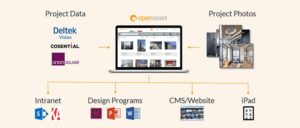
Our DAM solution gives your team a searchable library of past project photography, staff resumes, and performance data — so the right content for each RFP is a quick search away instead of buried in a shared drive. 

Shred, our AI-powered proposal writing platform, extracts requirements from your RFP and connects directly to our DAM (or your library of past proposals) to surface relevant projects, resumes, photos, and more to help you draft new winning proposals with ease.

Try us today, and see how tools like OpenAsset’s DAM and Shred can clear the way for creativity.

Landon Iannamico
Content Strategist

Landon Iannamico is a content marketing expert with 6 years of experience helping B2B SaaS brands tell their stories and establish their verbal identities. He specializes in crafting brand narratives and producing content that breaks down complex concepts for highly specific, knowledgeable audiences across the data, AI, and engineering industries.