






What AEC marketing leaders actually need to hear: 13 insights from Judy Sparks, Smartegies CEO

May 29, 2026
7 min
Last updated: May 29, 2026
Marketing in the AEC industry has long been treated as a support function — the team that handles proposals, keeps the website updated, and posts on LinkedIn when someone wins a project. But that model is breaking down fast.
For architecture, engineering, and construction firms that truly want to grow in 2026 and beyond, marketing needs to be at the forefront of their business strategy. The problem is, not all leadership teams realize this.
To dig into what’s holding AEC marketing back (and what it’ll take to change the paradigm) OpenAsset sat down with one of the most respected voices in the AEC marketing world: Judy Sparks.
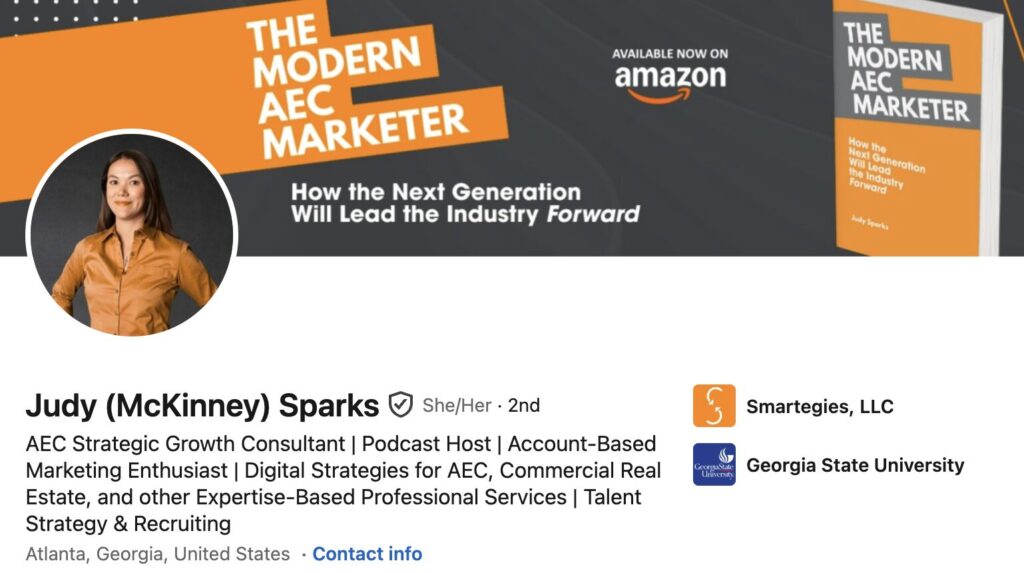
As founder and CEO of Smartegies, a marketing consulting firm for the AEC industry, Judy has 3 decades of experience advising over 300 architecture, engineering, construction, and commercial real estate firms across North America. She’s a fractional CMO, sought-after speaker, co-developer of the Construction Marketing curriculum at Georgia Tech, and author of The Modern AEC Marketer: How the Next Generation Will Lead the Industry Forward. She is also the creator of the Scalable 6™ Framework, a growth model built specifically for the built environment.
OpenAsset sat down with Judy for a Q&A regarding the top 13 concerns modern AEC marketers have about navigating their roles and building better marketing strategies. You can read them below, or watch them in our recent webinar with Judy.
Table of contents
- 1. What do you suggest for those feeling the growing pains of leadership changing the current state of things in their marketing departments?
- 2. As a freelancer, it’s hard to have pull with leadership. What would you recommend saying to firm leaders who know they need stronger marketing but are on the fence about fully investing?
- 3. What’s the biggest lie AEC firms tell themselves that keeps marketing stuck in a reactive, proposal-driven role?
- 4. What is your advice on shifting the mindset of leadership who still see marketing as support rather than strategic?
- 5. How do you recommend convincing leadership that a strong digital presence supports business development and growth?
- 6. How can mid-level marketers influence the C-suite to make these types of decisions?
- 7. What’s one thing small AEC firms should stop doing immediately in their marketing efforts?
- 8. Do you have any advice for a one-person marketing team?
- 9. What type of PR is most valuable for AEC marketers today?
- 10. Which paid ad channels do you use for hypertargeting in ABM?
- 11. Any advice for someone new to proposal coordination?
- 12. As AI reshapes how clients discover and evaluate firms online, what does it actually mean to be a top-of-mind AEC brand?
- 13. What are some good examples of reusable tools AEC marketers can use to get out of reactive mode?
Key takeaways
- Marketing is a growth driver, not a support function. AEC firms that rely solely on relationships and reactive proposals are already behind by the time an RFP hits.
- Focus beats volume for small teams. Sharp positioning and repeatable systems will always outperform trying to do everything at once.
- Bring business cases, not budget requests. Frame marketing gaps in terms of risk, missed opportunity, and competitive advantage to earn a stronger voice with leadership.
- Digital presence is a buyer behavior reality, not a preference. Your firm is being researched and evaluated long before anyone picks up the phone.
Working with leadership
1. What do you suggest for those feeling the growing pains of leadership changing the current state of things in their marketing departments?
First, recognize that growing pains are usually a sign that the firm is evolving. The hard part is that marketing often feels the pain before leadership fully understands its depth.
In many AEC firms, marketing was built to support business development — not help lead growth strategy. So when leadership starts asking for better positioning, stronger digital visibility, more proactive business development support, more automated processes, and better pursuit outcomes, the existing marketing structure often cannot keep up.
My advice is to stop treating the pain as a people and time problem and start diagnosing it as a system problem.
Ask leadership to look at the whole growth engine. I describe this in my book as the Scalable 6™ Framework. It guides questions like: Is the brand clear? Is the firm communicating consistently? Are you targeting the right clients before the RFP comes out (ABM)? Is digital helping to accelerate trust? Are seller-doers equipped with the right tools? Is the firm using marketing to attract and retain talent?
The best thing marketers can do is help leadership connect the dots between what they are asking for and what it takes to deliver it. Change gets a lot easier when everyone understands what is broken, what needs to change, what the firm is trying to build, how long it will take, and how much it will cost.
2. As a freelancer, it’s hard to have pull with leadership. What would you recommend saying to firm leaders who know they need stronger marketing but are on the fence about fully investing?
Start by positioning yourself as a consultant, not a freelancer. Then help them understand that the cost of weak marketing is usually much higher than the cost of investing in strong marketing.
Weak marketing shows up everywhere — in unclear messaging, poor differentiation, inconsistent client communication, reactive proposal efforts, weak digital visibility, missed opportunities with existing clients, and seller-doers who are expected to grow the firm without the right tools.
For firm leaders who are on the fence, avoid making the conversation about “more marketing.” That can sound like more spending, more content, more social posts, more overhead.
Instead, make it about better business decisions. I would say something like:
“You already know your marketing needs to be stronger. The real question is whether you want marketing to keep functioning as a support function, or whether you want it to help create demand, strengthen relationships, support business development, and make your firm more competitive before the RFP ever comes out.”
Freelancers may not have internal authority, but they can bring outside perspective. Sometimes leadership hears things differently when they’re framed around business risk, missed opportunity, and competitive advantage — rather than marketing activity.
3. What’s the biggest lie AEC firms tell themselves that keeps marketing stuck in a reactive, proposal-driven role?
The biggest lie is that relationships alone are enough.
Relationships still matter — they always will. But the way relationships are formed, nurtured, and validated has changed. Buyers are researching firms long before they reach out. They’re forming opinions based on what they see online, what they hear in the market, what your people are known for, and whether your firm appears to understand their world.
AEC firms get stuck when they believe marketing only becomes valuable once there is an RFQ on the street. By then, it may be too late.
Leaders must confront this by asking a harder question: Are we only responding to opportunities, or are we shaping them?
If marketing is only used at the proposal stage, the firm is asking marketing to win a race that started months or even years earlier. Strong firms use marketing to build visibility, trust, and preference long before procurement begins.
That is the shift. Marketing is not just there to make the proposal look good. Marketing should help make the firm the obvious choice before the shortlist is even formed.
4. What is your advice on shifting the mindset of leadership who still see marketing as support rather than strategic?
Do not try to convince leadership that marketing is strategic by talking about marketing. That is where a lot of marketers lose the room.
Talk about the business.
Talk about growth priorities. Client retention. Expanding share of wallet. Entering new markets. Recruiting. Missed opportunities. What competitors are doing to build trust and visibility earlier in the buyer’s journey.
Then connect marketing to those outcomes.
Most technical leaders don’t wake up thinking about brand architecture, content strategy, or digital campaigns. But they do care about winning better work, attracting better talent, protecting client relationships, and not being commoditized.
The job is to translate marketing into the language of business strategy.
Instead of saying, “We need a better content strategy,” say: “Our ideal clients are not hearing our point of view until the pursuit stage. We need to build visibility around our expertise earlier so our business development efforts have more air cover.”
5. How do you recommend convincing leadership that a strong digital presence supports business development and growth?
Do not position digital as a marketing preference or optional. Position it as a buyer behavior reality.
Today’s buyers don’t wait for a lunch, a golf outing, or a proposal to form an opinion about your firm. They research. They compare. They ask around. They look at your website. They check LinkedIn. They look for proof that you understand their challenges.
A weak digital presence creates doubt. A strong digital presence creates confidence.
For AEC firms, digital should not be about chasing vanity metrics. It should support trust, relevance, and relationship building. It should help your firm stay visible to the right clients, communicate your point of view, reinforce your expertise, and give business developers something meaningful to share before there is an active pursuit.
The best way to convince leadership is to tie digital directly to the buying process: digital helps your firm become known before the meeting, remembered after the meeting, and credible when the buyer is doing their own homework.
6. How can mid-level marketers influence the C-suite to make these types of decisions?
Mid-level marketers can influence the C-suite by bringing insight, not just requests.
Don’t go to leadership and say, “We need more budget” or “We need more authority.” Go in with a business case.
Show them what is happening. Where are proposals coming in cold? Where is the firm known for work it no longer wants to lead with? Where does the website not reflect the firm’s true expertise? Where are seller-doers recreating materials because they don’t have the right tools? Where are competitors showing up more clearly in the market?
Then connect those gaps to business impact. C-suite leaders respond better when marketers frame the conversation around risk, opportunity, and growth.
Start small. Pick one market, one client segment, or one growth priority. Build a case for how marketing can support it more proactively. Show what could be done before the RFP, not just after it.
Influence comes from helping leadership see what they cannot see yet. That is how marketers earn a stronger voice at the table.
Marketing best practices
7. What’s one thing small AEC firms should stop doing immediately in their marketing efforts?
Small AEC firms should stop trying to market to everyone.
When you are small, focus is your advantage. You do not have the budget, staff, or time to be everywhere, talk to everyone, and chase every opportunity. That is how marketing becomes scattered and exhausting.
Instead, get very clear on the clients, markets, and project types where you have the best chance to win and the strongest right to compete. Then build your marketing around those priorities.
Your messaging, website, LinkedIn content, thought leadership, business development efforts, and proposal strategy should all point in the same direction.
Small firms don’t need more random marketing activity. They need sharper positioning, better focus, and a more intentional way to stay visible with the right buyers before there is an active pursuit.
8. Do you have any advice for a one-person marketing team?
Yes. Stop trying to be an entire department.
A one-person marketing team cannot be the brand strategist, proposal coordinator, graphic designer, social media manager, CRM administrator, content writer, photographer, event planner, and leadership whisperer all at the same time. That is not a job description. That is a hostage situation.
The first thing I would do is get clear on priorities with leadership. What matters most to the business right now? Is it winning more work in a specific market? Improving proposal quality? Building visibility? Supporting recruiting?
Once that is clear, focus your time on the activities that most directly support those goals.
The second thing is to build repeatable systems. Templates, pursuit checklists, content calendars, project sheets, resumes, photography processes, and messaging libraries are not glamorous, but they are what keep a one-person team from drowning.
And finally, learn to say: “I can do that, but here is what moves down the list.” That is not being difficult — that is managing capacity like a professional. If you don’t have capacity, come to the table with a staffing solution, whether that’s temporary help, interns, or an agency partner.
9. What type of PR is most valuable for AEC marketers today?
The most valuable PR today is the kind that builds trust with the specific audiences you are trying to influence.
For most AEC firms, that means thought leadership is more valuable than traditional press coverage alone. A project announcement is nice, but a strong point of view is what makes people remember you.
Written thought leadership, conference presentations, podcasts, webinars, LinkedIn content, and contributed articles can all work. The question is not which tactic is best in isolation — it is which one gives your firm the best platform to demonstrate expertise in front of the right buyers.
The firms doing this well are not just saying, “Look what we designed” or “Look what we built.” They are helping the market understand what is changing, what owners should be thinking about, and how better decisions get made.
10. Which paid ad channels do you use for hypertargeting in ABM?
For AEC, LinkedIn is still one of the most practical channels for account-based targeting because it allows you to target by company, job title, industry, geography, seniority, and professional interest. It can get expensive quickly, but it is usually the best place to start when you are trying to reach specific decision-makers inside target accounts.
That said, the channel decision should never come first. Everything starts with the audience you are trying to reach and what they care about.
Before buying ads, you need to understand who the audience is, where they spend time, what information they are looking for, who influences them, and what message is most likely to earn their attention. That is why buyer personas and audience mapping are so important.
We also use email marketing, retargeting, and sometimes Google search, display, or programmatic platforms depending on the strategy — but I would not start with channels. I would start with the account list and audience map.
The mistake I see firms make is jumping straight to ads without enough strategy. Paid media will not fix unclear positioning. It will just make unclear positioning more expensive.
For ABM, your paid channels should reinforce a very focused message to a very specific audience over time. It is about creating familiarity, relevance, and trust with the accounts that matter most.
11. Any advice for someone new to proposal coordination?
The best proposal coordinators learn very quickly that the job is not just about deadlines and compliance. It is about helping the team make good decisions under pressure.
Become a student of the business. Learn how your firm makes money. Learn what makes one opportunity more valuable than another. Learn how clients select firms. Learn what your technical team does. Learn the difference between a compliant proposal and a compelling one.
When working with your team, don’t wait until the last minute to ask for information. Technical people are busy, and most of them are not trained to think like marketers. Give them structure. Ask better questions. Make it easier for them to give you the information you need.
If I could go back, I would tell myself to be more confident earlier. Proposal coordinators often see patterns before leadership does — where the firm is reactive, where messages are weak, where project information is missing. Do not underestimate the value of that perspective. Your role can become a pathway into strategy if you learn to connect the proposal process to the bigger business development picture.
AI and technology
12. As AI reshapes how clients discover and evaluate firms online, what does it actually mean to be a top-of-mind AEC brand?
To be top of mind today means your firm has a clear, consistent, and credible presence wherever buyers are forming opinions — conversations, referrals, conferences, LinkedIn, your website, search, media coverage, proposals, and increasingly, AI-powered discovery.
As buyers use tools like ChatGPT, Perplexity, and Google AI Overviews to research firms and expertise, AEC firms need to think differently about visibility. It is no longer enough to publish content that sounds good to humans. Your expertise also needs to be clear, structured, specific, and findable.
The principles are straightforward: if your firm wants to show up in the new discovery environment, your content needs to clearly answer the questions your buyers are asking. It needs to demonstrate expertise around specific markets, client challenges, project types, delivery models, and decision points. And it needs to be consistent across your website, thought leadership, leadership bios, project descriptions, media mentions, and social content.
AI does not create authority for you. It reflects the authority you have already built.
So the goal is not to chase the algorithm. The goal is to become so clear, credible, and useful in your area of expertise that both humans and machines can understand why your firm matters.
13. What are some good examples of reusable tools AEC marketers can use to get out of reactive mode?
Reusable tools are one of the most practical ways marketing teams can get out of constant reaction mode. A few examples that have worked well:
- A pursuit go/no-go scorecard that helps leadership make better decisions about which opportunities deserve time and resources.
- A proposal kickoff template that forces the team to define the winning strategy, client priorities, differentiators, risks, and key messages before anyone starts writing.
- A messaging library organized by market, service, client pain point, and proof point — so teams are not rewriting the same ideas from scratch every time.
- Project description and resume templates that are strategic, not just factual — capturing why the work mattered, what problems were solved, and what value was created.
- A content calendar tied to business development priorities, not random holidays or whatever someone remembered to post that week.
- An ABM account plan template that identifies the target client, decision-makers, relationship history, known opportunities, key issues, messaging strategy, touchpoints, and next best actions.
- A shortlist interview prep framework that helps teams move beyond “who says what” and focus on the story, audience, concerns, proof points, and emotional drivers behind the decision.
The point of reusable tools is not to create more forms for people to fill out. The point is to make good thinking repeatable. When the right tools are in place, marketing teams spend less time reinventing the wheel and more time helping the firm compete smarter.
Watch the full conversation
Interested in hearing more insights from Judy? Watch the full webinar below.
Want to see how OpenAsset helps AEC marketing teams stay organized, build more efficient workflows, and win more work? Explore our digital asset management and AI proposal writing tools that are built for the way AEC marketing teams actually work.
Landon Iannamico is a content marketing expert with 6 years of experience helping B2B SaaS brands tell their stories and establish their verbal identities. He specializes in crafting brand narratives and producing content that breaks down complex concepts for highly specific, knowledgeable audiences across the data, AI, and engineering industries.