






DAM Pricing Guide: How Much Does Digital Asset Management Cost?
May 1, 2026

So, you’ve decided a digital asset management (DAM) system is the right move to get your team’s files and branded assets organized. Now comes the big question: what’s it actually going to cost?
At OpenAsset, we’ve worked with hundreds of AEC teams to clean up messy file systems and streamline asset sharing. Along the way, we’ve seen exactly what affects DAM pricing—from storage and users to onboarding and hidden fees.
In this guide, we’ll break down what drives costs up (or keeps them down), what hidden charges to watch for, and what to ask when comparing vendors. We’ll also walk through the ROI you can expect—and how to make sure the investment pays off.
What factors make a DAM more expensive?
To begin, let’s account for what is arguably your biggest concern—the factors that can cause your total price to increase.
Expanded Users & Permission Levels
One of the biggest things that can drive up the cost of a DAM? Users—and how much access they need.
The more people you add to your system, the higher your price tag. That’s because every user typically comes with onboarding, support, and a seat in your subscription. It’s the same model used by tools like Canva, Microsoft, and Miro: more users = more resources.
But it’s not just about how many people you add—it’s also about what they can do. Certain team members need extra permissions (like editing or deleting assets); those roles often cost more. Some platforms charge a premium for “power users” or admins.
At OpenAsset, a basic user license runs around $200 per year, and we keep our pricing transparent so you know exactly what you’re getting.
Large Onboarding Class Size
Another factor that can drive up the cost of a DAM solution is the size of your onboarding class. If you have a significant number of employees that need to be onboarded onto the DAM system at once, you may need to pay extra for training materials, on-site training, or dedicated support during the onboarding process. Onboarding a few smaller groups of users over time and providing internal training from these experts to new users can reduce this expense.
Extensive Cloud Storage
The amount of cloud storage you need can also impact the total cost of a DAM solution. Many providers charge based on the amount of storage you use, and if you have a large library of high-resolution assets, you may need to anticipate paying a higher fee for additional storage space. Additionally, if you need to store assets for a long period of time, you may need to pay extra for archival storage or other long-term storage solutions.
Enterprise Subscriptions
Finally, if you’re a large enterprise with complex needs, you may need to invest in an enterprise-level subscription, which can be significantly more expensive than a basic subscription. Enterprise subscriptions often include additional features, capabilities, and support but also come with a higher price tag.
What factors make a DAM less expensive?
Once you’ve accounted for potential line items that make your price increase, you can look into the following areas to bring your total price down. However, it’s important to remember that less is not always more, and some providers do not offer a “middle ground” when it comes to their features.
Basic Users & Permissions
On the other hand, if you have a small team or only need to grant basic permissions to users, you may be able to save money on a DAM solution. Many providers offer tiered pricing plans based on the number of users and the level of permissions required, so if you don’t need extensive permissions or advanced features, you may be able to find a more affordable plan.
Small Onboarding Class Size
Similarly, if you have a small team or don’t require on-site training or dedicated support during the onboarding process, you may be able to save money on your DAM solution. Many providers offer self-service onboarding materials and support, which can be more cost-effective than hiring a dedicated trainer or support team.
Minimal to Average Cloud Storage Needed
If you have a small library of assets or don’t require high-resolution storage, you may be able to save money on your DAM solution by choosing a lower-tiered plan that includes less cloud storage. Many providers offer tiered pricing based on the amount of storage you need, so if you can get by with less storage, you may be able to find a more affordable plan.
Types of Digital Asset Management Pricing Structures
Choosing the right DAM starts with understanding how different pricing models work. Some are predictable. Others scale with your usage. Knowing the difference helps you stay on budget and avoid surprises later.
Usage-Based Pricing
With usage-based pricing, what you pay depends on how much you use—think number of users, storage, or even bandwidth.
This setup works well for growing teams or seasonal workloads, since it flexes with demand. But costs can spike if you’re not tracking usage closely.
Good fit for:
- Firms scaling fast
- Teams with fluctuating project loads
- Organizations with solid usage forecasting
Keep in mind:
- Your bill can change month to month
- Storage and “seat” overages can add up quickly
Fixed Pricing
Fixed pricing gives you a flat monthly or annual cost based on your chosen tier. That tier includes a set number of users, storage capacity, and features.
It’s predictable, which makes it easier to plan. You know what’s included and what’s not.
Good fit for:
- Teams with consistent needs
- Organizations working with strict budgets
- Stakeholders who prefer cost certainty
Keep in mind:
- You may pay for features or seats you don’t use
- Going beyond your tier could require an upgrade
Tiered and Custom Pricing
Many DAM vendors offer tiered plans—Starter, Pro, Enterprise—that bundle features, storage, and support levels. Some go a step further with custom pricing based on your specific needs.
If you need advanced integrations, API access, or onboarding for multiple departments, this model gives you flexibility without forcing a one-size-fits-all plan.
Good fit for:
- Multi-office or global teams
- Companies with specific compliance or security requirements
- Firms looking for a tailored onboarding or support experience
Keep in mind:
- Custom pricing can be opaque—ask detailed questions
- Long sales cycles may slow down onboarding
Potential Hidden Fees
As you navigate determining the cost of implementing a DAM solution, it’s important to remember that the number you’re quoted only reflects typical line items. Whether intentionally or not (we hope the latter is true of most solutions), it’s difficult to portray a total cost when some variables will be unknown until they come up in the course of onboarding or using the DAM. For example, if you needed to suddenly expand the number of team licenses, or didn’t account for an additional team’s storage needs, you might be looking at additional fees. This is why it’s vital that you review the potential fees associated with most DAM solutions.
Cloud Data Charges
One hidden fee to watch out for is cloud data charges. Some providers may charge additional fees for data transfer, storage, or egress (cost of retrieving data), which can quickly add up if you have a large library or even if you accidentally exceed your allotted storage amount in a given month. For example, at OpenAsset clients can expect to pay 1.40 USD per GB per month for the first 100GB used. As additional data is added, the total price of data becomes even more affordable.
“Super Users” or Expanded Permissions
Some DAM providers may charge extra fees for “super users” or expanded permissions beyond basic access. For larger teams or teams that plan to integrate multiple teams onto the tool, this is an important cost to consider. Discuss what is and is not included in the different permissions options with your DAM provider so you know the range of fees associated with different user types. At OpenAsset, we offer both basic and full user subscriptions. Basic users are typically one-third of the cost of full user subscriptions due to their administrative permissions that allow expanded editing. To determine which of your team members could benefit from a basic vs. a full license, check out our full vs. basic license explanation.
Gradual Price Increases After First Year
Some DAM providers may offer a low introductory rate for the first year but increase the price gradually each year after. As a seasoned DAM provider, potential customers often bring us competing quotes from competitors. Unfortunately, a huge line item that is hidden in these contracts is the provider’s ability to increase their rates after the introductory service year. When reviewing quotes from a provider that’s newer in the DAM space, be sure to consider the potential for price hikes after your renewal date.
Total Cost of Ownership
Now that you know the factors that contribute to your total cost, let’s see what a final calculation would look like for different-sized organizations. In our experience, a small firm with ten users and one or two enterprise subscriptions is looking at a range of 10k-18k annually, depending on the dam provider they choose. In comparison, a medium-sized firm with similar specifications should anticipate paying between 15k-24k annually, and a large enterprise might expect to pay between 30-50k. It’s also important to remember that these ranges cannot account for potential fees or overage charges that some DAM providers charge, but they can hopefully provide a baseline for budgeting exercises and future planning.
What is the ROI of a DAM?
Choosing a DAM solution is a thoughtful process, and often the decision includes cost, but to truly determine the total cost, you also need to know if your DAM could actually save you money. This is why we’re transparent about sharing the ways that an effective DAM should allow your organization to reduce cost and spending.
Streamline Processes
A DAM solution can streamline your file-sharing process and make it easier for team members to access the files they need. This can save time and reduce errors, ultimately leading to increased productivity. At OpenAsset, we’ve consistently heard that teams are able to create proposals in under an hour, whereas previously it took them more than four hours. When you magnify that time savings over multiple employees and multiple years, it’s easy to see how a DAM can speed up processes and reduce associated labor costs.
Accelerate Time to Market
With a DAM solution in place, you can quickly find and access the assets you need to create marketing materials or launch campaigns, which can help you get to market faster and stay ahead of the competition. Especially in the architecture, construction, and engineering industries, being faster and more efficient than your competitors is imperative for winning more work.
| TIP: with 63.2% of marketing teams dedicating more than half of their time to proposals, it’s crucial to understand where bottlenecks exist and how to optimize your workflow. Download The State of Proposals in AEC Marketing Report now and take the first step towards improving workflows and overall proposal strategy. |
Proposal Creation Rate & Time Saved
DAM solutions can also help speed up the creation of proposals and presentations by providing easy access to all necessary assets. Some providers even offer asset templates, which are invaluable in expediting resumes and one-pagers; content your team will consistently create.
Tools That Talk To One Another
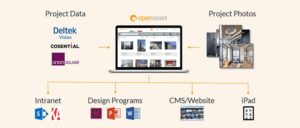
With a DAM solution, you should try to select a platform that integrates with the tools you already have to enhance the total impact of that solution. For example, OpenAsset has specific integrations that plug into AEC professionals’ most-coveted technology. By partnering with Procore, Adobe, Microsoft, WordPress, and more, we’re able to join forces with software that complements our own, creating an even easier transition across systems, less friction, and more complete implementation. These robust integrations prevent your team from spending even more on additional software when a DAM provider does not integrate. As you move forward in your decision-making, be sure to ask about any integrations that are imperative for your team’s daily tasks.
Now you know the components of asset management that factor into boosting your ROI, but how much can your organization really save? Check out our free ROI Calculator for tangible numbers you can show your team, today.
Questions To Ask a DAM Provider
After reviewing all the considerations that go into pricing a digital asset management solution, you might be wondering how to bring them up to the platform representative. Here is a list of questions you should ask your potential DAM provider to get an accurate cost estimate.
- How much do people typically spend?
It’s essential to understand the average cost of a DAM solution and whether or not it fits within your budget.
- What is the average amount of cloud storage?
Understanding the average cloud storage needed for a DAM solution can help you better estimate your own needs.
- How many users are in a “team subscription”?
Knowing how many users are included in a team subscription can help you determine if the solution is a good fit for your team size.
- How often do teams surpass their cloud storage allotment and what fees are associated?
Understanding the potential for exceeding your allotted storage and associated fees can help you plan for the future and avoid unexpected expenses.
- Does every user receive onboarding?
Knowing which users, if any are included in the onboarding process can help you determine the total cost of implementation.
- Does your DAM include integrations?
Understanding which integrations, if any come with a DAM solution can help you determine if it integrates with the other tools your team uses.
- Are subscriptions monthly, yearly, or something else?
Knowing the subscription terms can help you better budget for the cost of a DAM solution and avoid any unexpected expenses.
- How much does the average organization pay for your service?
While this number will vary based on the items we discussed earlier, you should be able to ask for an estimate of what to expect. For example, a 100-person company with ten users and a handful of integrations can expect to pay around 12,000-18,000 USD per year at OpenAsset, plus the cost of cloud data used.
Finding The Right Solution for You
Digital asset management (DAM) has become increasingly important for any business that handles a large number of digital assets and files, but the associated costs are as unique as the customer. Now you know what impacts pricing for a DAM solution, and what to ask as you narrow your search for the provider that’s right for your team. When you’re ready, reach out to us for a custom quote where we’ll discuss your specific goals and create a quote based on your needs.