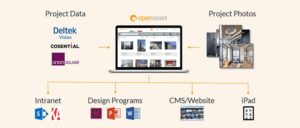








Getting Country right on every channel: Why your RAP needs more than good intentions

Jul 8, 2026
4 min

Australia is home to the world’s oldest continuous cultures. Aboriginal and Torres Strait Islander Peoples have maintained an unbroken connection to this land for over 65,000 years. The concept of Country sits at the heart of that relationship. Country goes far beyond a location. It is a living system of language, law, story, and responsibility. Each First Nations group holds a specific, named Country, and those boundaries have existed long before colonial borders were drawn.
In Australian professional life, acknowledging the traditional custodians of the land on which you work is both a cultural expectation and, increasingly, a formal requirement. It is how organisations demonstrate that they understand whose land they are on and take that recognition seriously.
Australia’s built environment sector is holding itself to a higher standard on this. Reconciliation Action Plans are now a baseline expectation for firms of any meaningful size, and the commitments inside them are showing up where they should: in tenders, on project websites, in award submissions, in social media content, and across every piece of marketing that carries your firm’s name.
That’s the opportunity. Here’s where it gets operationally complicated.
Those commitments are made at the executive level. Honouring them in practice lands with marketing coordinators, communications managers, and bid writers producing content daily across every channel. This article is about making that manageable and getting it right every time.
Key takeaways
- Reconciliation Action Plans are now a baseline expectation for built environment firms in Australia, with Acknowledgement of Country showing up across every marketing channel.
- Finding the correct Country name for a project location is not straightforward, and getting it wrong carries real reputational risk.
- Treating Country identification as verified metadata is the most effective way to ensure consistency at scale.
- Your RAP committee owns the data project. A DAM platform like OpenAsset is the infrastructure that makes it work across every channel from there.
What a RAP actually requires
A Reconciliation Action Plan is a structured framework developed in partnership with Reconciliation Australia, the national organisation that runs the RAP program. Firms at Reflect, Innovate, Stretch, or Elevate levels commit to specific, measurable actions across relationships, respect, and opportunities. One of the most visible: acknowledging the Country on which you work.
This is not optional, and it is not decorative. Clients notice when it is missing or wrong. The public notices. Award juries notice. Procurement panels can tell the difference between a practice that has embedded this into its operations and one that has grabbed boilerplate and pasted it in.
Getting it wrong carries real risk. There are three common ways this goes wrong: misspelling a Country name, attributing a project to the wrong group, or defaulting to a generic statement that doesn’t reflect the actual location. Each one signals exactly the kind of cultural greenwashing that undermines everything your RAP is trying to build. It also tells the client you do not know the location particularly well either.
The scale of what RAPs are doing
The 2025 RAP Impact Report, covering data from 2,190 organisations, puts the program’s reach into perspective.
One in five Australians now works or studies in an organisation with a RAP. More than 10 million people are members of a peak body or sporting club with one. Over 62,000 Aboriginal and Torres Strait Islander people are employed by RAP organisations. Nearly 24,500 partnerships exist between RAP organisations and First Nations businesses. And $5.6 billion worth of goods and services were procured from First Nations-owned businesses in a single year.
65% of organisations changed internal processes or policies as a direct result of their RAP.
RAPs are driving a structural shift in how Australian organisations operate, and the built environment is part of that shift. When your firm’s marketing reflects real engagement with Country, accurately and consistently, it is contributing to something with real, measurable impact.

Finding the right Country name is not always straightforward
I want to be clear about where I am writing from. I am not First Nations, and I am not a cultural authority on Country. I am a marketer who has worked inside the built environment for over twenty years, and I have navigated this operationally, imperfectly, and with a lot of learning along the way. What follows is practical guidance from that perspective, not a definitive cultural resource.
Traditional Owner boundaries do not follow state borders or postcodes. Each named Country belongs to a specific First Nations group, and one project site may sit across the Country of two or more groups. A project in outer Melbourne or regional New South Wales may require specific local knowledge that does not surface in a standard search.
Google Maps will not give you this. Wikipedia may be outdated or contested. Generic acknowledgement resources, like the AIATSIS Map of Indigenous Australia, provide broad coverage but not the site-specific accuracy your marketing requires.
The gold standard is direct engagement with the relevant First Nations community. That work sits with your project and design teams, who connect with local Traditional Owner Corporations, Local Aboriginal Land Councils, or Registered Aboriginal Parties early in the project lifecycle. If that engagement has happened, the outcomes should be documented, and the verified Country information flows through to every piece of content produced.
This is the beginning of an ongoing relationship between your firm and the First Nations People of that Country. Your communications should reflect that.
Not every firm has the resources or project timeline to do this at the outset. The relevant local council is a practical starting point. Most councils across Australia have dedicated Indigenous engagement teams and published resources that can help orient your research. Treat these as a starting point only. Council-mediated information is not always complete or community-endorsed, and should always be cross-referenced.
The inconsistency problem is bigger than you think
Do not leave sourcing to individual team members working independently under pressure. That is how errors happen, and how well-intentioned firms end up with three different spellings of the same Country name across their website, their Instagram, and their latest capability statement.
Here is what that looks like in practice.
A project gets published on your website with one Country name. Six months later, the same project appears in an award submission with a slightly different version. A marketer writing a LinkedIn post googles it quickly and uses a third variation. A new team member produces a project sheet and starts from scratch.
None of these people are being careless. They are working without infrastructure.
This matters first because it is the right thing to do. Country acknowledgement is a mark of genuine respect for the oldest living cultures on earth, and operational inconsistency undermines that. A slow accumulation of errors and variations across every channel signals to clients, communities, and the public that your RAP commitment has not made it past the executive announcement.
The fix is building a system that makes the right thing the easy thing.
Build a single source of truth
When I was leading marketing at Plus Studio, an architecture practice, this was the problem we were solving across eleven studios producing content simultaneously: tenders, project sheets, award submissions, website updates, and social media. No guarantee that the Country acknowledgement on a project in one place matched another.
The fix was treating Country as a data asset.
We were already using OpenAsset as our digital asset management platform. The shift was making Country a mandatory metadata field, the same way we treated sector, project value, or location. Every new project logged required it. Standardised. Verified once. Stored centrally.
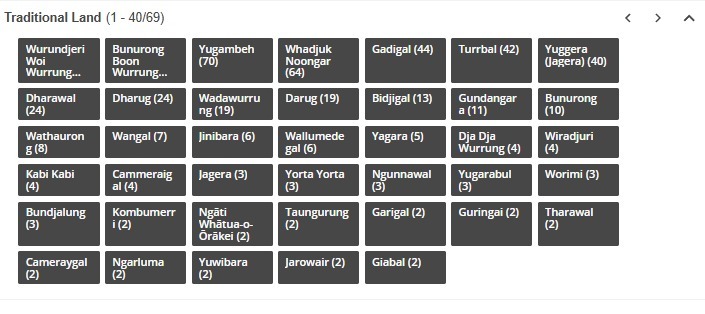
From that point, when anyone pulled a project to build a capability statement, update the website, write a social post, or produce a tender, the correct Country name was already there. No last-minute searching. No inconsistency across channels. No risk of your Instagram contradicting your award submission for the same project.
Country acknowledgement stops being an individual writing task. It becomes a shared data responsibility.
Where to start
Most firms with a RAP already have a RAP committee and working groups operating across their locations, often with local champions in place. That is your starting point, not the marketing team.
Work with your RAP committee to establish a working group responsible for the initial data audit and population. They are best placed to verify Country names accurately, engage with the right people, and build the registry with the cultural credibility it needs. Once that foundation is in place, marketing and bids teams can draw from it with confidence.
Establish that registry as a single central source, maintained by the working group, that every team member draws from rather than sourcing independently.
If you are using a DAM platform, make Country a mandatory metadata field at project intake. Once the registry exists, populating it becomes straightforward. That one decision removes the problem downstream across every channel, every time. If you are already using OpenAsset, our Customer Success team can help with setting up the fields and populating the data in bulk once your team has completed this project.
The practices building genuine reputations in this market have turned their RAP commitments into operational infrastructure. Not a policy on a shelf. A system that embeds respect into the way your team works every day, across every channel, without thinking twice.
Caroline Caneva has spent over twenty years inside the architecture, design, and construction industry — working alongside the practitioners, understanding the pressures, and building the kind of marketing that moves things forward in this sector. Her career spans marketing and growth leadership at some of Australasia’s most recognised design practices, including a full rebrand across eleven studios at Plus Studio. Seven years at the Design Institute of Australia gave her a sector-wide view of the professional community, and her contribution to Australian design was awarded with an Honorary Fellowship (FDIA hon).
Caroline’s experience now informs her work as a speaker, writer, and advocate for how technology and AI can practically transform the way built environment firms market themselves and win work.