






Fixing the friction: The push for procurement reform in Australia’s public infrastructure sector

Jun 26, 2026
1 min
If you’ve ever lost time, margin, or momentum to government procurement complexity, this one’s for you.
Construction costs are high. Productivity is suffering. And how governments procure is contributing to both.
Why procurement matters at scale
Public procurement across Australia and New Zealand represents close to 16% of GDP. At that scale, the way governments buy shapes markets, influences prices, and determines delivery performance. Getting it right matters.
What the ACIF/APCC survey is examining
The Australian Construction Industry Forum (ACIF) and the Australasian Procurement and Construction Council (APCC) have launched a national survey to examine exactly what’s driving that friction: procurement complexity, misaligned incentives, risk allocation, and contract design. The full lifecycle.
From compliance to value creation
From where I sit, the conversation is shifting from compliance to value creation. Compliance matters, but when procurement effort concentrates only on risk avoidance and assurance, productivity suffers. Better outcomes come from aligning incentives, allocating risk to whoever is best placed to manage it, and designing contracts to enable performance rather than protect position.
Similar priority shifts are occurring with procurement in the UK.
Why your input matters
I hear this constantly from bid teams and project leads across the practices I work with: the people closest to the work are rarely the ones shaping the policy that governs it. What’s missing from the evidence base shaping this reform is that voice. Whether you’re on a bid team chasing public tenders, leading project delivery, managing procurement, or providing design, engineering or consultancy services across civil infrastructure or non-residential construction — your experience is exactly what this survey needs.
What I’m seeing on the ground
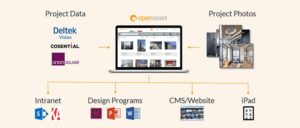
In my conversations with bid and marketing teams across OpenAsset‘s Asia-Pacific network, I see this play out in how practices manage their project data and workflows when pursuing public contracts. The administrative overhead is real, and procurement complexity compounds it. If the frameworks only work for one segment of the market, the whole supply chain feels it, whether you’re in Sydney, London, or Chicago.
This survey is Australia-focused, but the findings will matter beyond it. Productive procurement that works for the full breadth of the industry is a model worth watching.
Have your say
30–60 minutes to have your say.
Complete the survey: https://survey.apcc.gov.au/zs/t7BUrn
Questions or additional input: [email protected]
Caroline Caneva has spent over twenty years inside the architecture, design, and construction industry — working alongside the practitioners, understanding the pressures, and building the kind of marketing that moves things forward in this sector. Her career spans marketing and growth leadership at some of Australasia’s most recognised design practices, including a full rebrand across eleven studios at Plus Studio. Seven years at the Design Institute of Australia gave her a sector-wide view of the professional community, and her contribution to Australian design was awarded with an Honorary Fellowship (FDIA hon).
Caroline’s experience now informs her work as a speaker, writer, and advocate for how technology and AI can practically transform the way built environment firms market themselves and win work.