






10 things I’ve learned from winning 100+ architecture awards (and what most practices get wrong)

Jul 2, 2026
3 min
After 15 years heading up marketing in architecture and engineering, and over 100 awards won, I can tell you the difference between a winning submission and a wasted entry fee almost always comes down to one thing: whether anyone actually planned for it.
Here’s what genuinely works:
1. Start early
Start in November, not the night before the deadline. Awards season kicks off earlier than most people think. The Planning Awards, for instance, typically open in the new year with a final deadline in February. If you haven’t identified your strongest projects by November, you’re probably already behind. Sit down with your leadership team, agree on your flagship projects for the year ahead, and build a proper awards calendar.
You’re looking for projects with a real human story, a strong sustainability thread, or something architecturally distinctive that makes a judge stop mid-scroll. Lock those down early.
It’s not glamorous work. It’s how you win.
Download the 2026 UK Awards Calendar
To help you plan ahead this awards season, we’ve put together this calendar of every important UK architecture award in 2026, including each award’s:
- Submission deadline.
- Audience.
- Key Criteria for submissions.
- Prestige level.
- Strategic notes.
Download it for free below.
2. Choose awards based on fit, not prestige
Choose the right awards, not just the industry ones. Yes, a RIBA, a New London Architecture Award, a Dezeen Award, or a BCO Award carries genuine weight. These can bring press coverage alongside the industry credibility so your project could end up in a broadsheet, not just the trade press.
But if you’re trying to grow your business, ask yourself who’s in the room. An award where every single entrant is a fellow architect might tick a box internally (and that matters too for employee morale), but it won’t put you in front of the clients and developers you’re trying to impress.
Think about the audience, not just the prestige.
3. When it comes to projects, less is more
Don’t cannibalise yourself. And yes, I’ve had this argument many times. This is a contentious one. I’ve sat in rooms with the leadership team where the logic goes: submit more projects, increase the chances of winning something.
That’s wrong. Better to submit one genuinely strong project than to dilute the vote across three. And here’s the truth: if you’re debating which project to enter, there’s usually one that’s always stronger. Submitting the others alongside it doesn’t make you look ambitious. It makes you look like you couldn’t decide.
Pick the best one and back it properly. It also means your team isn’t stretched across ten submissions for the same award.
4. Build a proper awards committee
Marketing doesn’t hold all the keys. We can shape the narrative and write the copy, as we do for compelling architecture proposals, but the people who know what genuinely made a project different, technically, creatively, in terms of community impact, are the architects, the engineers, the project leads. Get them in the room. Create a small committee that reviews the text and the visuals before anything goes out. Yes, those teams are busy. Yes, deadlines are brutal.
But awards win work (it often comes up as a question in tenders, as a matter of fact). Brand recognition compounds over time, and walking into a pitch as an award-winning practice means something to the client sitting across the table. Especially if it’s an award that matters to them too.
I know from our experience, for instance, that our clients were always keen on a RIBA or an NLA award.
5. Prioritize photography that humanizes your projects
Get your photography right. Strong, professional photography is non-negotiable.
And here’s the thing everyone gets wrong: put people in the shots. Empty spaces look unloved. A building with humans in it tells a story. Judges respond to that.
6. Get your digital assets sorted before the last-minute scramble
Sort your digital asset management library before you need it. If you’re hunting through shared drives at 11 pm looking for the right image or a project data sheet from three years ago, you’ve already lost time you didn’t have.
A well-organised DAM system means your first draft comes together in hours, not days: the imagery, the key specs, the past submission text, all of it in one place and findable. Learn more about AEC DAM use cases beyond proposals here.
7. Prove your projects’ worth with data
Prove what you say, with actual data. Don’t describe how beautiful the architecture is. Don’t waffle. Tell the judges what it delivered. What did it bring to the community? What are the sustainability numbers?
An NLA award, for example, will typically ask you to demonstrate the tangible benefits a project has brought to the people who use and live around it. That’s not something you can retrofit at the submission stage. Build it into your project delivery from the start. Agree with your client what you’re measuring, track it, and consider doing a post-occupancy evaluation (the latter you’ll definitely need for a RIBA award).
“If you haven’t measured it, you can’t prove it. And if you can’t prove it, you won’t win it.” — Amélie Barrau, OpenAsset Head of Marketing, EMEA
8. Get inspired by past winners
Look at past winners before you write a single word. Study who won, what they entered, and how they framed their story. Spot the trends.
If the same type of practice keeps winning a particular category, that tells you something about what the judges are looking for, and whether it’s genuinely worth your time entering.
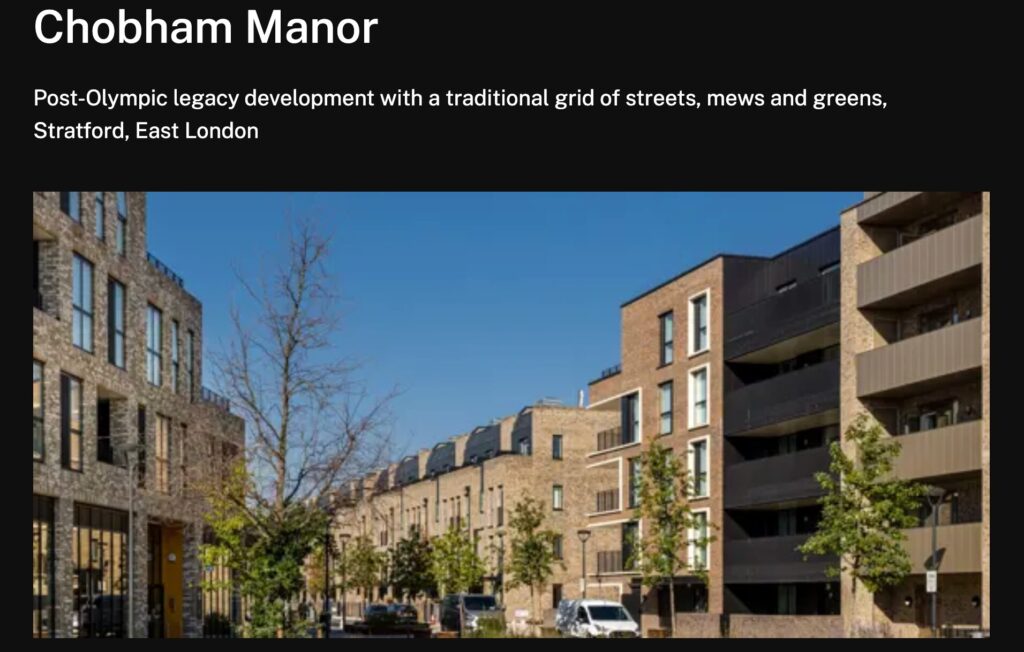
For inspiration of the kind of projects that win prestigious awards like RIBA, 2023 London Award Winner Chobham Manor, by PRP and Make, is a good example. Notice their striking photography here.
9. Invite your client to the ceremony
Even if you don’t win at the awards ceremony, it’s a room full of the right people.
Bring your client, sit them at your table, and use the night for what it actually is: a chance to get to know each other beyond the day-to-day of project delivery. No agenda, no formal meeting, just good conversation over dinner. That kind of relationship-building is hard to manufacture and easy to underestimate.
And who knows… the project you get chatting about over dessert might be the next one you work on together.
10. When you don’t win, find out why
Do the debrief. When you don’t get shortlisted, find out why. Some award bodies will give feedback if you ask for it. Take it seriously. Next year’s submission depends on understanding where this one fell short.
Awards are not a vanity exercise. The right ones bring real attention and real new business. But only if you treat the process with the same rigour you’d bring to a bid submission.
Download the 2026 UK Architecture Awards Calendar
Want help keeping track of all the industry awards this season? Download our 2026 awards calendar.
Amélie Barrau de Backer is Head of Marketing, EMEA at OpenAsset, bringing over 15 years of senior marketing and communications experience across the built environment. An award-winning communicator, she has led marketing strategy at some of the sector’s most respected names, including Gensler, WSP, and PRP, delivering campaigns that have featured in the BBC, The Times, and the Guardian.