






Bid teams are under more pressure than ever. AI won’t change that. Better information might.

Aug 11, 2026
2 min

Most conversations about artificial intelligence in the built environment centre on one question: will it replace professional judgement?
Spend time with bid teams and a different story emerges. AI won’t win work by writing a better answer to a question. It’ll help bid teams keep pace with a procurement environment that has got harder over the past few years.
What’s changed in UK procurement, and why bids now need more evidence
The UK development market has changed. Viability has stalled schemes, squeezed by rising costs, delayed planning, tougher regulation and limited funding.
Building safety has raised the bar as well. Since Grenfell Tower, the regime brought in by the Building Safety Act 2022 has increased the evidence clients expect from their design and construction partners.
Sustainability requirements keep moving. Biodiversity Net Gain, whole-life carbon and net zero targets are now embedded across many submissions rather than sitting in a standalone section.
Procurement is changing too. In August 2026 the Cabinet Office published PPN 026, the revised Social Value Model.
For central government procurements starting on or after 1 January 2027:
- Contracts of £5 million or more must apply a minimum social value weighting of 20 per cent, double the current floor
- Contracts between £1 million and £5 million keep the existing 10 per cent minimum
That’ll mean more evidence gathering and more tailoring for every submission.
I’ve written before about how social value works in UK public procurement and what else has changed for built environment bid teams.
Meanwhile, the Burnham Government’s drive to boost affordable housing has created clear opportunities for well-positioned practices.
The advantage will go to firms that can evidence their capabilities with greater consistency, speed and accuracy than before.
Bid teams’ real bottleneck is finding what they already have
Since joining OpenAsset, I’ve spent the past few months talking to bid leaders and marketing teams across architecture, engineering and construction about AI.
Almost none of those conversations were about writing. They were about finding information.
Most firms already own the knowledge they need. Years of successful framework submissions, technical responses, project sheets, CVs, award submissions and case studies hold the answers to most of the questions they’ll be asked next.
Much of it is inaccessible. It sits in shared drives, legacy document management systems, folders and individual inboxes.
It’s a common problem. When I ran marketing in the industry, barely a week went by without someone in bids asking whether we’d built a Passivhaus scheme, a net zero development, or a project with the specific element a client wanted evidence of.
We usually had. The problem was finding it and getting it to them quickly enough.
Anyone who’s dealt with legacy systems like Newforma will understand the frustration.
I used to joke that once something disappeared into the system, it entered no man’s land.
Important emails became hard to find and project information was fragmented. Bid teams regularly ended up messaging colleagues to ask whether anyone knew where a particular case study lived, losing hours to information the business already owned.
Clients are starting to ask whether AI wrote your bid
The bid leads I spoke to raised trust in almost every conversation.
More and more clients are asking whether AI has been used in preparing bids. Many bid leads are unsure how much to disclose, and where clients draw the line between using AI as a productivity tool and relying on it to produce substantive responses.
Most were comfortable using it to search for information, summarise documents and structure content. Fewer were comfortable letting it draft technical responses without substantial review.
That’s sensible.
The risk isn’t the technology. It’s the assumption that speed can substitute for judgement.
A large language model doesn’t know:
- whether an accreditation has expired
- whether a project value has changed
- whether legislation has been updated
- what a community feels or has experienced
- whether the case study you’ve selected is the right one for that client
Those calls still need professional experience, and knowledge of the project, the area and the procurement process.
Where AI is saving bid teams the most time
The firms getting the most out of AI have understood where that judgement line sits.
One bid lead told me it had cut certain admin tasks from hours to minutes.
Another told me the real benefit wasn’t faster writing. It was removing the time lost searching for previous submissions and the evidence behind them.
As prompting gets more refined and governance improves, the biggest productivity gains are coming from workflow efficiency.
How Shred works with a firm’s own bid library
Reaching a firm’s own past submissions is the challenge OpenAsset set out to solve with Shred, its AI-powered proposal tool for architecture, engineering and construction firms.
Rather than generating generic responses from publicly available data, Shred works with your own company’s intellectual property. Successful submissions are imported into a searchable bid library so they can be reused, updated and adapted rather than rebuilt from scratch.
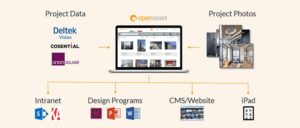
Because Shred sits on top of OpenAsset’s digital asset management platform, it can pull relevant project experience, imagery and CVs alongside the content.
The latest release reflects a year of customer conversations:
- Multi-file updates allow simultaneous editing of PQQs, ITTs, clarifications and other supporting documents, which makes submissions easier to keep consistent.
- UK English is standard.
- Direct export to Adobe InDesign removes a large share of the manual formatting work.
- An enhanced conversational interface lets bid teams search years of bid knowledge without digging through folder structures.
Judgement still decides who wins the work
AI doesn’t remove the need for experienced bid teams. It shouldn’t. Winning work takes judgement, collaboration and a proper understanding of what the client wants.
What technology can do is strip out the inefficiencies that have quietly cost bid teams hours for years.
In a market where every submission demands more evidence, more compliance and faster turnarounds, that’s the most useful thing I’ve seen AI do.
Amélie Barrau de Backer is Head of Marketing, EMEA at OpenAsset, bringing over 15 years of senior marketing and communications experience across the built environment. An award-winning communicator, she has led marketing strategy at some of the sector’s most respected names, including Gensler, WSP, and PRP, delivering campaigns that have featured in the BBC, The Times, and the Guardian.