






8 questions with AEC proposal expert, Rachelle Ray
Jun 30, 2026
3 min
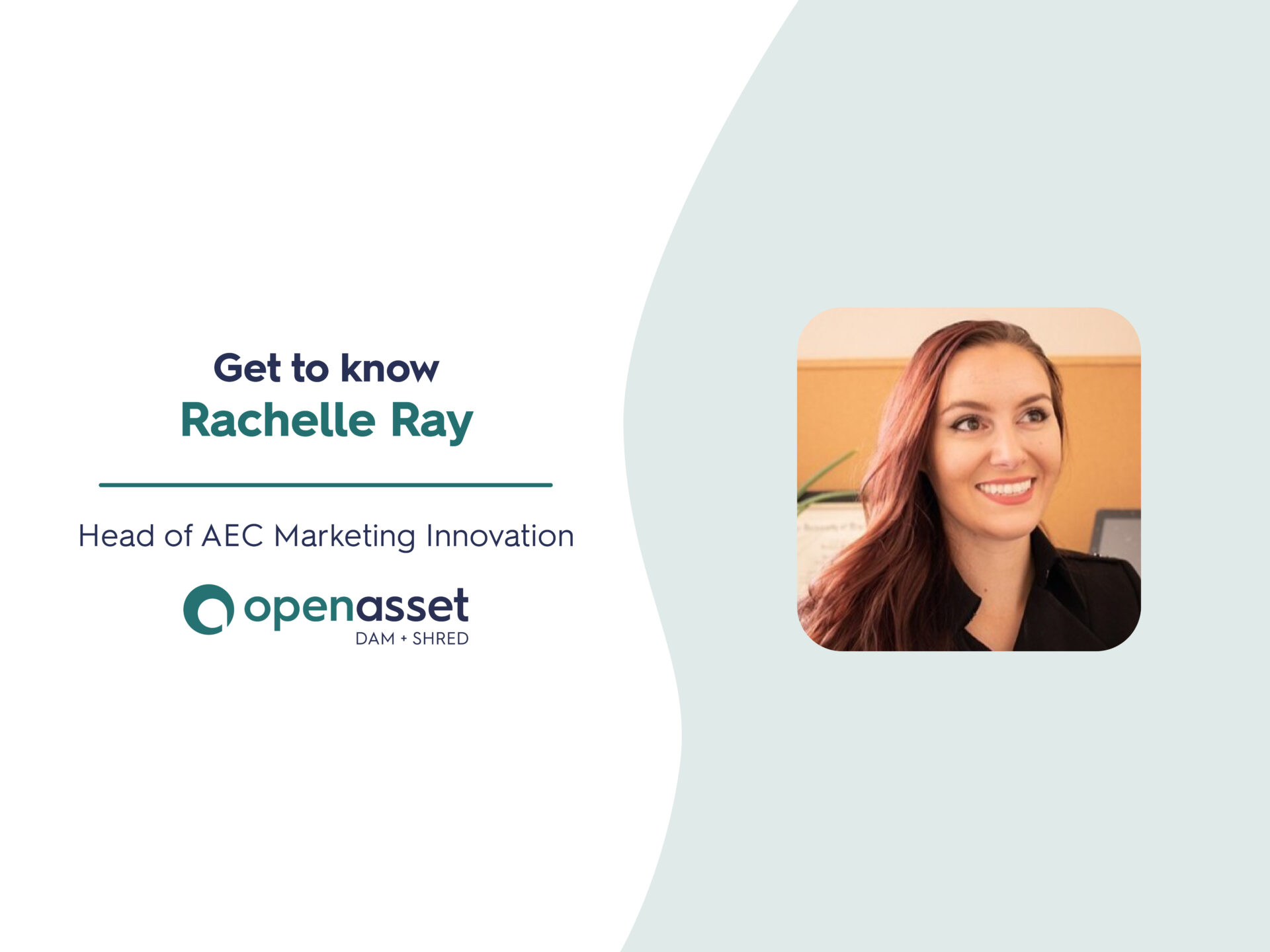
Rachelle Ray has spent over 15 years transforming how the built environment wins work.
From her first RFP handed across a desk at a local architecture firm with zero training and a stack of old proposals to guide her, to co-founding Proposal Industry Experts and now serving as Head of AEC Marketing Innovation at OpenAsset, Rachelle has built her career solving the problems that keep proposal teams up at night. Burnout. Disconnected data. The pressure of back-to-back deadlines with too few resources.
Since joining OpenAsset in early 2025, she has been working at the intersection of pursuit strategy, purpose-built technology, and the well-being of the people who power it all.
We sat down with Rachelle to hear about her accidental entry into the industry, the lessons she has carried from small firms to large corporations, and why she believes the future of proposals belongs to those who refuse to settle for generic.
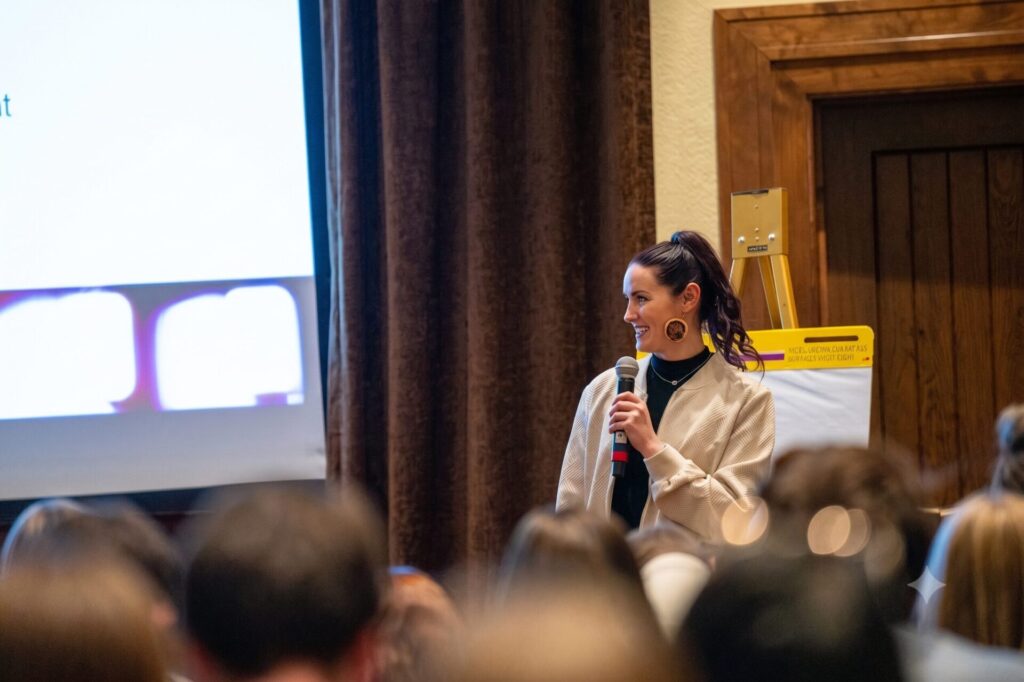
1. You fell into AEC marketing. What happened and what kept you?
I sure did! I was an office intern at a small architectural firm in college when someone said, “Aren’t you an English major?” and handed me an RFP, because obviously one semester of college courses qualified me to write proposals! My first one was honestly terrible. But I started seeing them as puzzles, stories waiting to be written. Then a client emailed my boss to say one of my proposals was the most well-written proposal they’d ever received. That was it, I was hooked.
2. Small firms versus large corporations. What did each teach you?
Working at a small firm taught me to be agile, scrappy, and bold. We didn’t have a lot of resources, but we also didn’t have significant risk, so we got to experiment. Some of the things we tried worked, others didn’t, but that relentless “innovate and experiment” mindset has followed me everywhere. Large firms taught me process, data management, and how to functionally work across multiple teams. One experience gave me permission to play and experiment, and the other gave me the bones and infrastructure to scale. That combo led to a very successful proposal career.
3. You co-founded Proposal Industry Experts. What problem were you solving?
I’m a self-taught marketer. Starting out, there were no accessible resources for proposal professionals — everything useful was behind a paywall or simply didn’t exist. I figured out what worked by tinkering: borrowing concepts from advertising, PR, storytelling, psychology, and magazine design. We created PIE so no one else would have to do that alone. They could join an inclusive community where proposal professionals could freely share knowledge, ask questions, and actually support each other. Did we solve it? I think we changed the expectation of what access to education in this industry could look like. That feels pretty close.
4. You’re a strong advocate for purpose-built technology over generic AI tools. What does that actually mean for proposal teams?
For me, purpose-built means the tool already knows where you want to go and what you need to do to get there. It understands your workflow well enough to anticipate your next step. You’re not prompting it along — you’re feeding it strategy and letting it run, directing customization at the appropriate moments. For proposal teams specifically, it means a tool that doesn’t just understand proposals, but the industry context and the complex relationships baked into every pursuit. Generic tools make you translate your work into their logic. Purpose-built tools speak your language from the start.
5. You helped shape OpenAsset Shred from the inside. What did you bring to that?
Fifteen years of juggling proposals, wrangling SMEs, and organizing content. I’d been in the trenches: the late nights, the impossible timelines, the 200-page RFPs that landed on a Friday afternoon. I knew exactly where generic AI would fail proposal teams: the rigid compliance requirements, the go/no-go decisions that need real strategic weight, the firm-specific context that makes one submission feel completely different from the next. I knew what proposal teams actually needed. And that’s what we built.
6. What trends are you seeing right now across AEC (architecture, engineering, and construction) marketing and bids teams in North America?
Marketing teams continue to do more with less, managing more pursuits than ever with the same or fewer people. Competition is intensifying. AI-generated proposals are flooding the market, leaving clients wading through submissions that range from masterfully tailored to AI fluff.
The firms winning work are the ones breaking through the noise with genuine human expertise and authentic relationships — the things AI can’t replicate. The smartest teams are using purpose-built tools and agentic workflows to handle the heavy lifting on proposal production, freeing senior staff for the strategy and storytelling that actually differentiates.
7. What does life away from AEC marketing look like for you?
Exploring new trails and traveling to new places whenever I can. There’s something about being out in the landscape around Albuquerque that completely resets my thinking. Fresh air and a bit of altitude do what no amount of time at a desk ever could. Some of my best ideas have come mid-hike, nowhere near a screen. I always come back with more clarity than I left with.
8. Over a year at OpenAsset. What are you building next?
Just over a year, and what a wild ride it’s been! Making the jump to tech has been an interesting transition — this industry moves so much faster than the built environment. I’ve learned so much about what it actually takes to dream up and build a product from scratch.
What I’m most focused on right now is anticipating what marketers are going to need over the next few years, and making sure OpenAsset not only meets those needs but sets them up for something greater than they imagined possible. Every step we take is a step closer to creating a true AI partner that fully empowers AEC marketers.
To hear more from Rachelle, read her earlier Q&A on proposal writing and follow her on LinkedIn.
Caroline Caneva has spent over twenty years inside the architecture, design, and construction industry — working alongside the practitioners, understanding the pressures, and building the kind of marketing that moves things forward in this sector. Her career spans marketing and growth leadership at some of Australasia’s most recognised design practices, including a full rebrand across eleven studios at Plus Studio. Seven years at the Design Institute of Australia gave her a sector-wide view of the professional community, and her contribution to Australian design was awarded with an Honorary Fellowship (FDIA hon).
Caroline’s experience now informs her work as a speaker, writer, and advocate for how technology and AI can practically transform the way built environment firms market themselves and win work.