






Your digital asset management system is doing more than you think — Or at least it should

May 29, 2026
2 min

Press, awards, and institutional memory: the AEC DAM use cases most firms undervalue
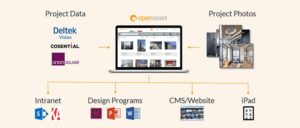
There’s a conversation that happens in almost every architecture, engineering, and construction (AEC) firm at some point. Leadership asks why marketing needs a dedicated Digital Asset Management (DAM) system. The pushback is often the same: Can’t we just use Microsoft SharePoint or (gasp!) shared drives? The answer that comes back is usually some version of, “It’s where we keep everything for bids and graphics.” Not wrong. But it undersells the point by about half.
I’ve spent 15 years in marketing and communications across architecture and engineering, at WSP, a global engineering and professional services firm, Gensler, the global architecture and design practice, and most recently as head of marketing at PRP, a London-based architecture firm. I never worked on tenders. Not once. My world was media relations, brand, social media, campaigns, events and awards. And OpenAsset, an AEC-specific digital asset management platform, was open on my screen almost every single day.
So what was I actually using it for?
Pitching to the press, for a start. Architectural journalism moves fast, and journalists don’t wait. When someone from the Architects’ Journal or BD is writing about housing delivery and wants a strong London project to illustrate it, you have a very short window. You need the right images, the right resolution, the planning story, the headline numbers, maybe a quote from the project lead. If that information is scattered across shared drives and the inboxes of people who left two years ago, you’ve missed it. The news story is now old. A well-organised DAM means you can respond the same day, with something you’re actually confident sending.
Then there are awards. We all know how difficult it can be to put a submission together. The project team is up against delivery deadlines and simply doesn’t have the bandwidth to help, which means you end up drafting it yourself based on whatever you already have. You need the right photography, outcome data, consultant credits, sometimes planning committee records from three years ago, all pulled together without being able to lean on the people who actually built the thing.
And if you’re going for something like a RIBA Award — the Royal Institute of British Architects’ flagship recognition for architectural excellence — the bar is significantly higher. Post occupancy evaluations, energy performance data, water consumption figures, detailed environmental metrics. The kind of information that lives in twenty different places if you’re lucky, and nowhere at all if you’re not. Getting that wrong means a submission that doesn’t do the project justice, which is a waste of everyone’s time, company money, and a missed opportunity.
There’s also a whole category of documents that never get mentioned in these conversations: design and access statements, community engagement presentations, capability statements, client-facing materials, and the short-notice briefing papers that somehow always get requested on a Friday afternoon for a Monday morning meeting. All of them need the same thing: the right information, found quickly, presented well.
“The firms that get the most out of a DAM are the ones who treat it as the backbone of the whole communications function, not a filing cabinet they open when a tender lands.”
The thing nobody talks about enough is institutional memory. People leave. Senior associates, project leads, the person who carried your most complex public sector scheme in their head for ten years. When they go, that knowledge doesn’t stay behind automatically. A good DAM won’t replace them, but it means their work stays findable, usable, and useful long after they’ve moved on. You don’t realise how much this matters until the moment you desperately need it and it isn’t there.
And then there’s just the everyday stuff. Checking image rights before something goes on the website (or risk getting into serious trouble). Pulling together a sector brochure. Finding a photo of a completed scheme that a client wants to use in their own communications. None of it is glamorous, but it’s the actual texture of AEC marketing, and all of it goes faster when your house is in order.
The bid is the obvious use case. But it’s one output of a much bigger machine. The firms that get the most out of a DAM are the ones who treat it as the backbone of the whole communications function, not a filing cabinet they open when a tender lands. And that only works if there’s a company-wide strategy behind it: someone needs to own it, everyone needs to feed it, and it needs to happen continuously, not in a panic the week before a major submission.
One last thought. As of 2026, AI tools are moving fast into the bid and marketing process, and everyone is paying attention to that. But in my experience, the quality of what any AI produces is only as good as the data behind it. If your project information is incomplete, inconsistently tagged, or buried across three different systems, the AI output will show it. Getting the DAM right isn’t just good housekeeping. It’s the foundation your AI depends on.
Looking for a DAM built for AEC? Try OpenAsset DAM today.
Amélie Barrau de Backer is Head of Marketing, EMEA at OpenAsset, bringing over 15 years of senior marketing and communications experience across the built environment. An award-winning communicator, she has led marketing strategy at some of the sector’s most respected names, including Gensler, WSP, and PRP, delivering campaigns that have featured in the BBC, The Times, and the Guardian.